This is a supplemental to the article Notes on the International Question, recently published in an issue of Fightback, collating a loose collection of notes, material cut from the article, and conversations had on the article in the intervening month. As such the format will be less formal than the prior article, and there won’t be much point reading this without reading it first.
First on the matter of movements. I’ve long been of the opinion that a movement cannot be declared, only observed once it has come into being. Pressure groups, activist networks, and organisations of all kinds which hope one day to be in the leading position of a social movement may well see that movement materialise quite rapidly if the issue and the conditions are right. Yet it is still a matter that the movement can only be identified as such once it has come into being, and until that point declarations of a new movement are at best premature and at worst hubris or even egomania. This is a lesson I think many would do well to learn. Social movements are all too often treated not as complex socio-political phenomena but as something which can be simply magicked out of thin air, as though they do not involve the combined activity of real human beings. Even highly astroturfed campaigns, if they are capable of drawing out a great mass of real people into the real world even for a brief time, must draw upon a real feeling among the strata of people mobilised. And let it not go without saying that what sometimes start as astroturfed campaigns evolve into lives of their own, way out of the control of their initiators. As much has been noted of the Tea Party movement of the late-’00s/early-’10s in the United States.
This is, in part, why I made the distinction between a movement-in-being and a movement-in-waiting when discussing the concept of an internationalist movement in New Zealand. Perhaps some of the composite parts, the barebones, of such a movement exist in this country today. But it is merely social potential as it stands, it has not cohered from the various expatriate communities and the handful of principled internationalists into a movement which actually exists. That potential does exist, however, and there are people who would consider themselves a part of one should it come into existence. Considering a movement-in-waiting is not wishing it into existence or analyzing nothing, but grappling with the absence of that which would give form to ideas which most certainly are percolating among some expatriate communities, cultural bodies, some indigenous activists, the (tiny) socialist left, and certain corners of the wider extra-parliamentary left. It is not a movement-in-being, that is a social movement which has fully come into existence, but the potential for one for which the composite parts have not cohered into a body with form and longevity which might be defined as such.
What I proposed in the prior article was not a movement, but merely a synaptic node which would exist within such a movement were it to exist. Simply a network, nothing more, which might provide the infrastructure to allow for international news to be shared, analyzed, and digested by those to whom it interests (and those to whom it may be of the most dire importance). I am careful not to proclaim a movement, or call for one, and am deliberate about doing so in large part for the reasons outlined. However, I do believe an internationalist forum or network could be of use in this country both in disseminating and analyzing events as they unfold, and as a means of finding a basis for interconnection and collaboration with and between transnational workers within New Zealand. At the very least, it couldn’t hurt.
Now, to the international question proper. I feel first that I must say that when I identify a kind of ‘internationalist myopia’, it is not that the causes célèbre in question are unimportant. Quite the opposite! It is that without an holistic approach which accounts for temporary or lesser known movements, conflicts, issues, important interconnections cannot be revealed. Again, it is not that every person must take all the worlds ills upon their shoulders all the time, but that the movement in waiting must perform its function as the social brain by which all these things can be considered in their full context. We perform at our best when our intellectual efforts are combined in such ways that reveal what we each individually may miss, and our efforts thereof are strengthened as such. The potential movement, or movement-in-waiting, has great gaps where some form of organised effort to at least relay and digest information should be. Myanmar, as mentioned in the previous article, is roiled by an ongoing insurgency against the bloody regime which took power early last year. Solidarity efforts have been, to my understanding, patchy in the intervening year and a half in this country from an initial stirring of activity to long periods of quiet. This is, in part, because those initial stirrings among the expatriate Burmese community found earnest internationalists who wished to support their cause, but lacking in any infrastructure or resources to put that desire into action. This is not the case with other conflicts and movements, take for example the local Philippine community and its supporters who have managed to develop the infrastructure necessary to maintain a sustained interest in internal goings-on in that country.
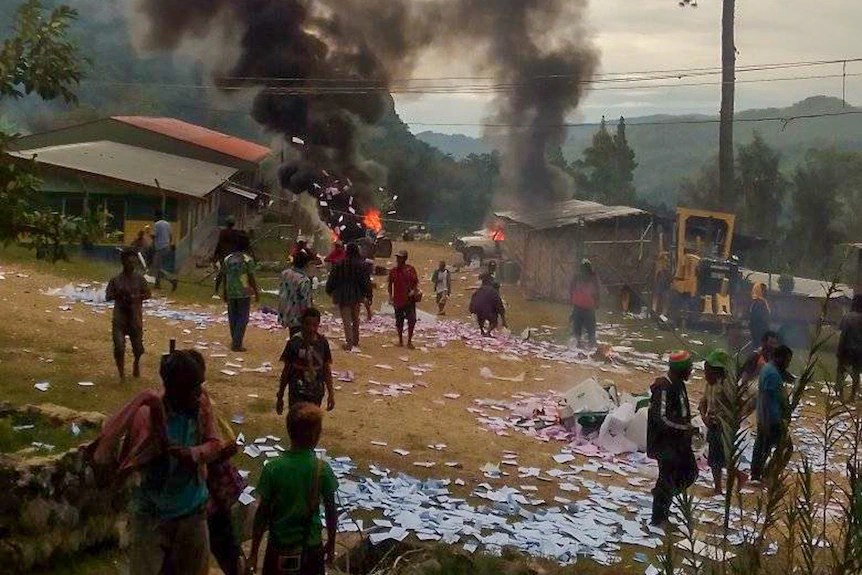
Furthermore, it is not merely crises of exceptional note that must draw notice. The recent elections in Australia, Papua New Guinea (which did take on an exceptional character), and even the Cook Islands drew at best the most cursory interest among the socialist left and indeed the wider extra-parliamentary left. Now one might be of an anti-electoral persuasion and in that case I think it perfectly reasonable to be indifferent to the results of such elections, but asides some comment on the Australian election the lot of them largely passed by without interest from much of the extra-parliamentary left. And, again, this is reasonable for a political scene stretched thin across the country numbering few and far between. This is not condemnation, just a suggestion for an ameliorant. We live in exceptional times. Unrest, conflict, crises and dislocation are becoming increasingly common and their effects are transnational. These things will not play nice by being neatly restricted behind this or that border. This will impact our domestic considerations to a considerable degree as time goes on. We had best be prepared for such eventualities.

 Notes South from Nowhere
Leave a comment