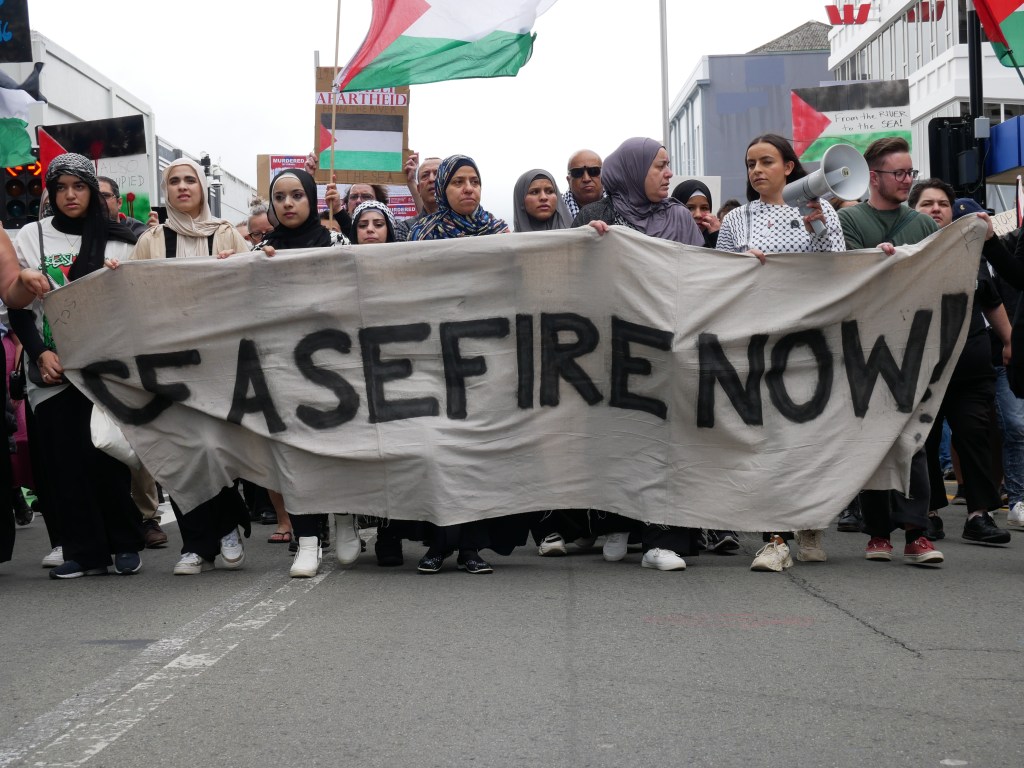
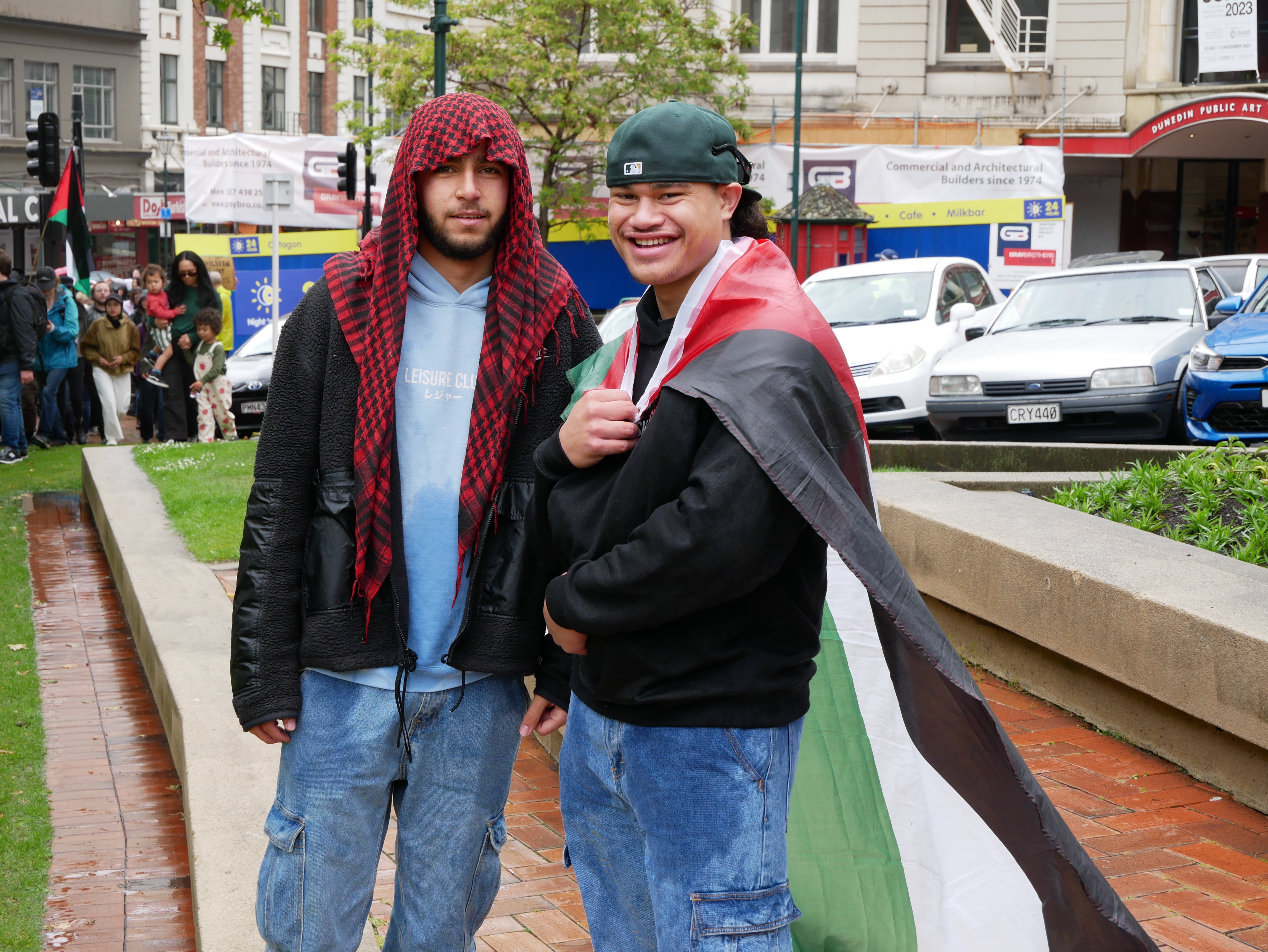
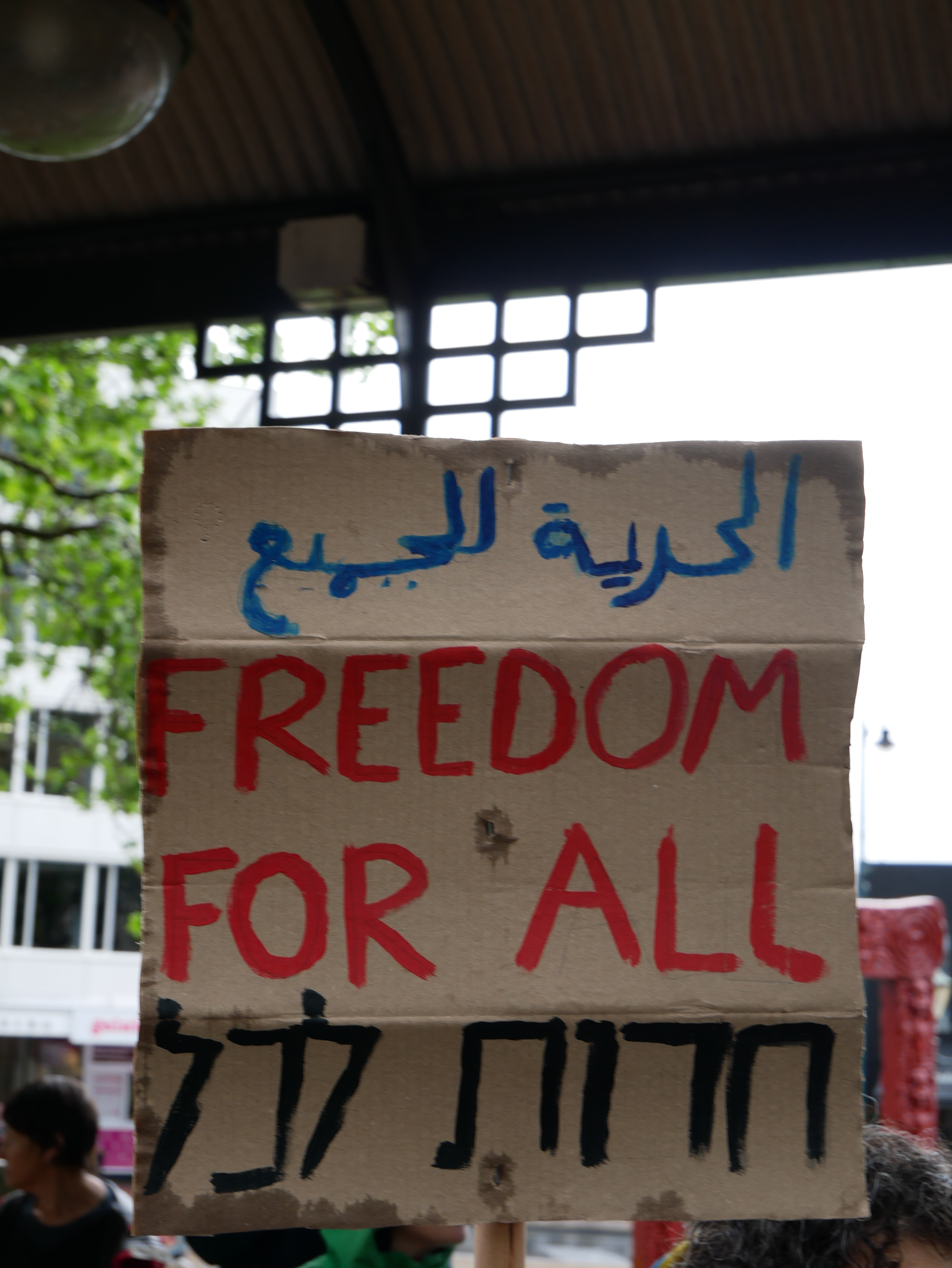
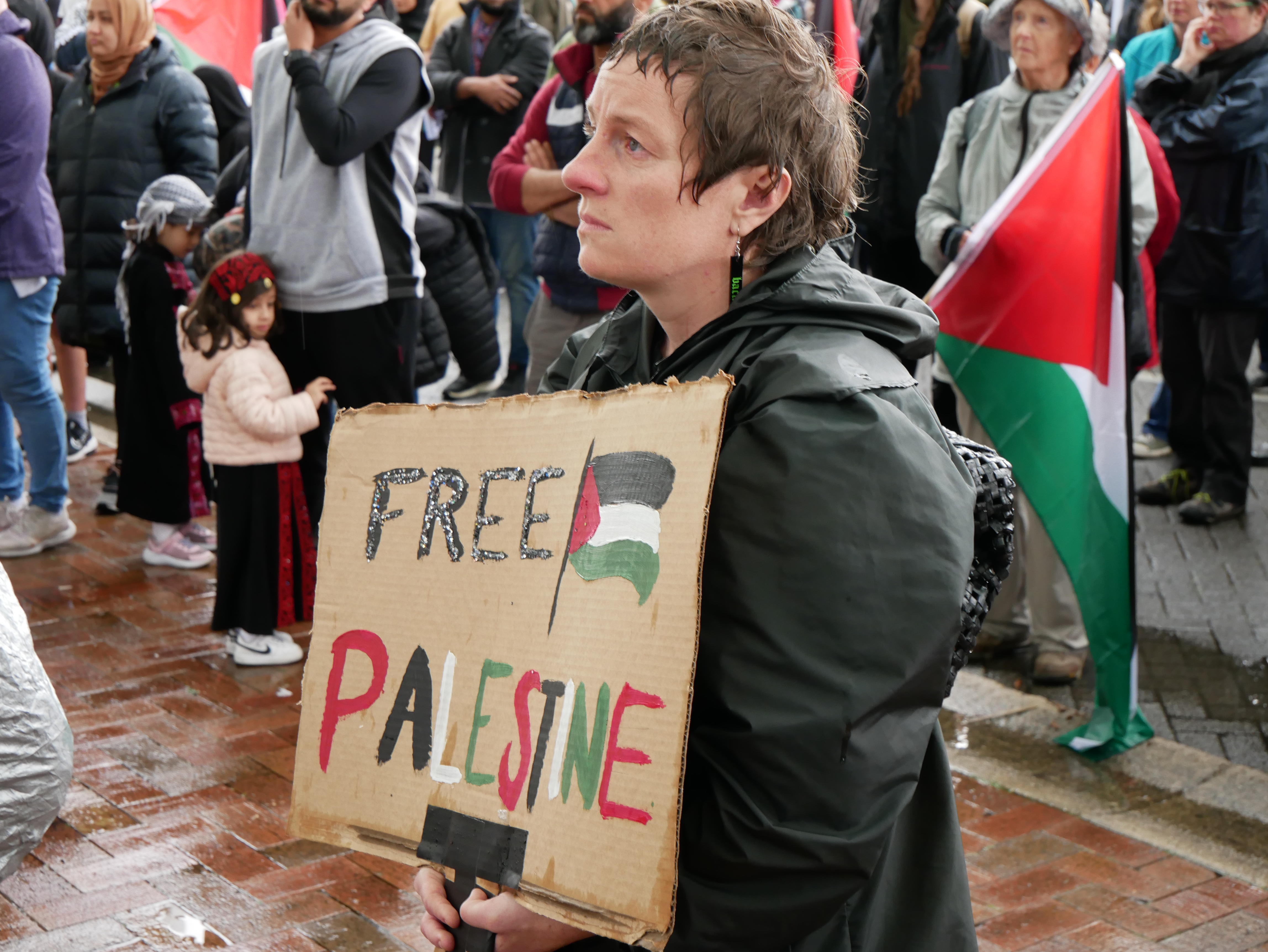
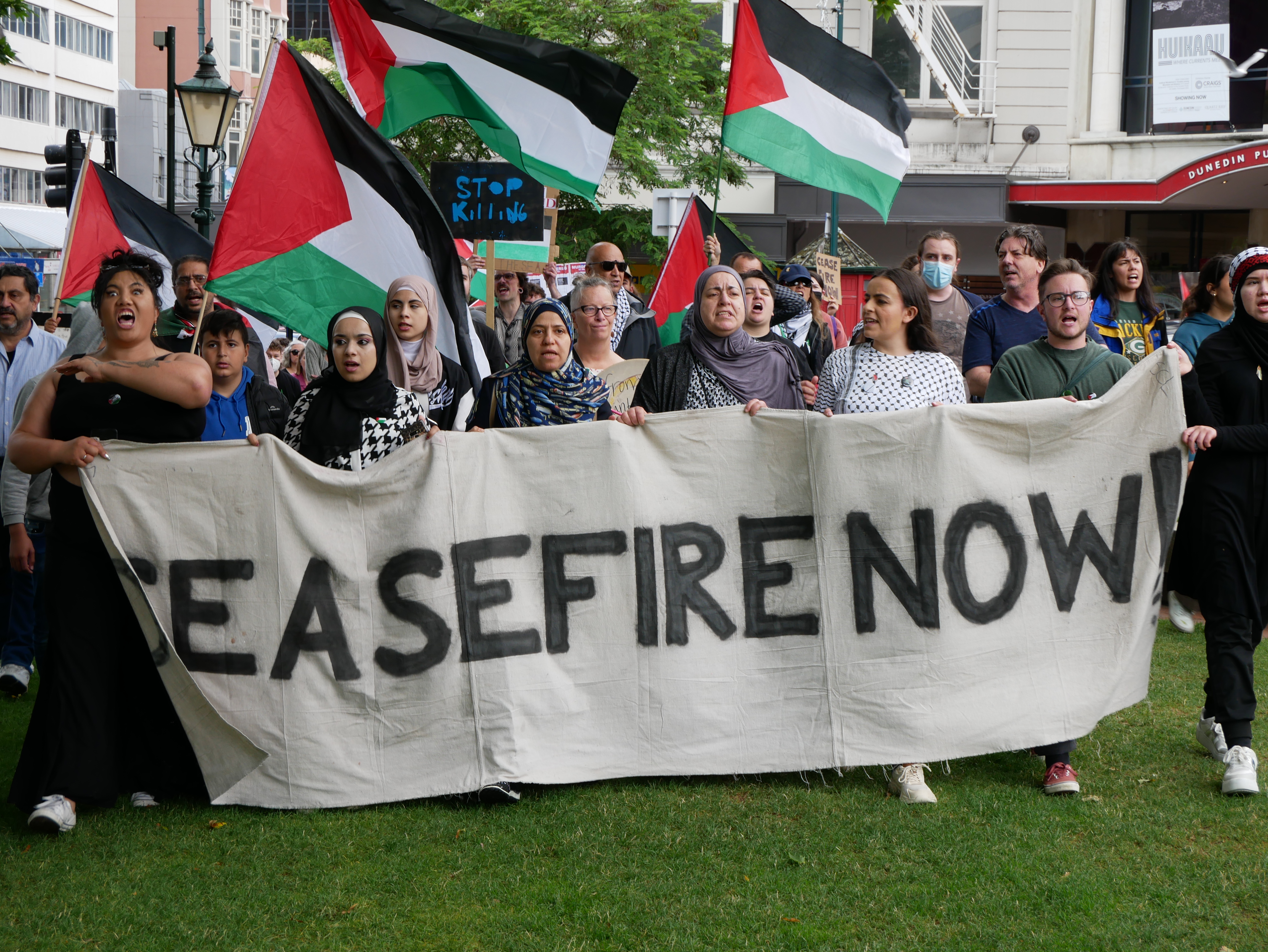
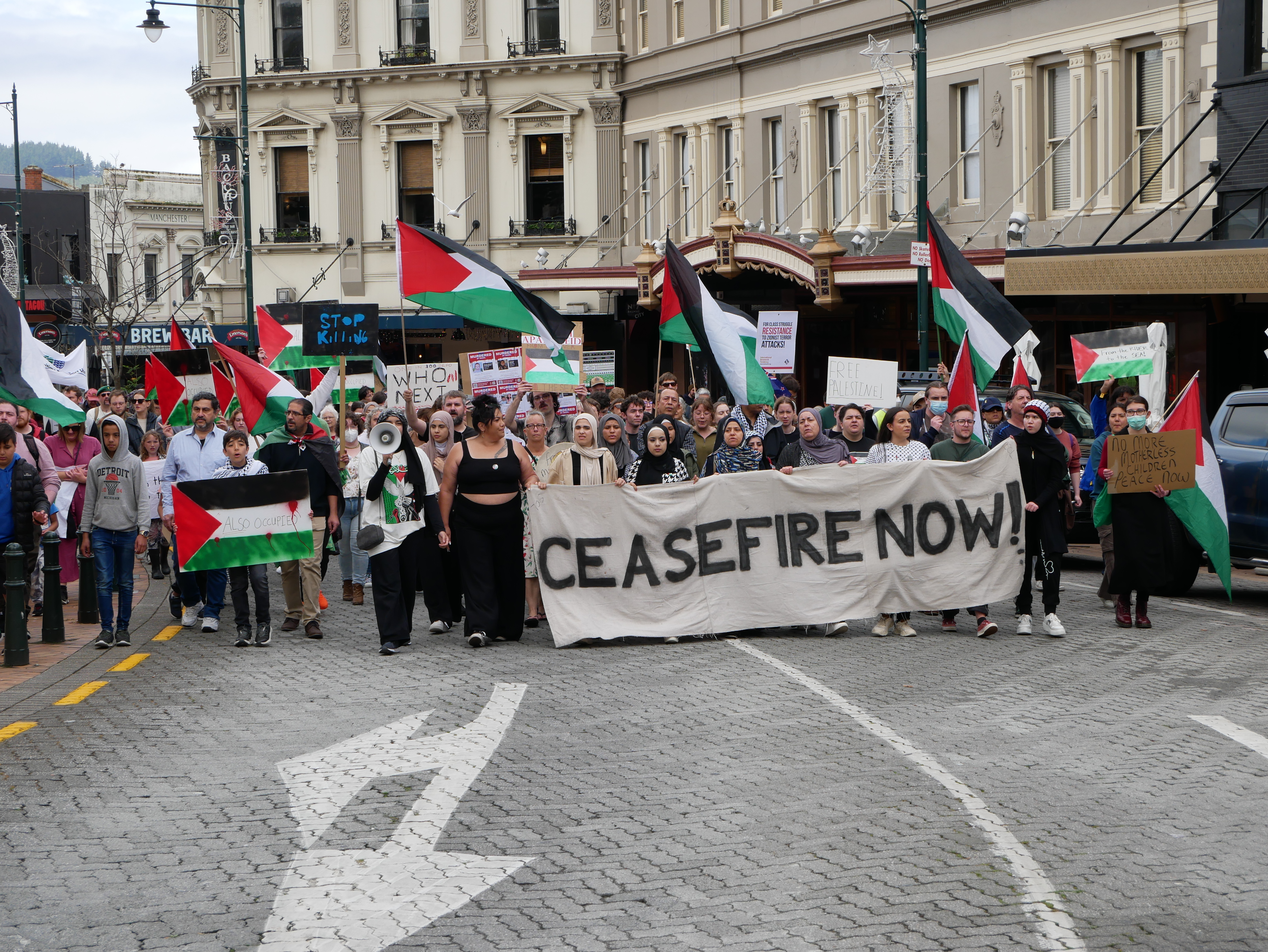
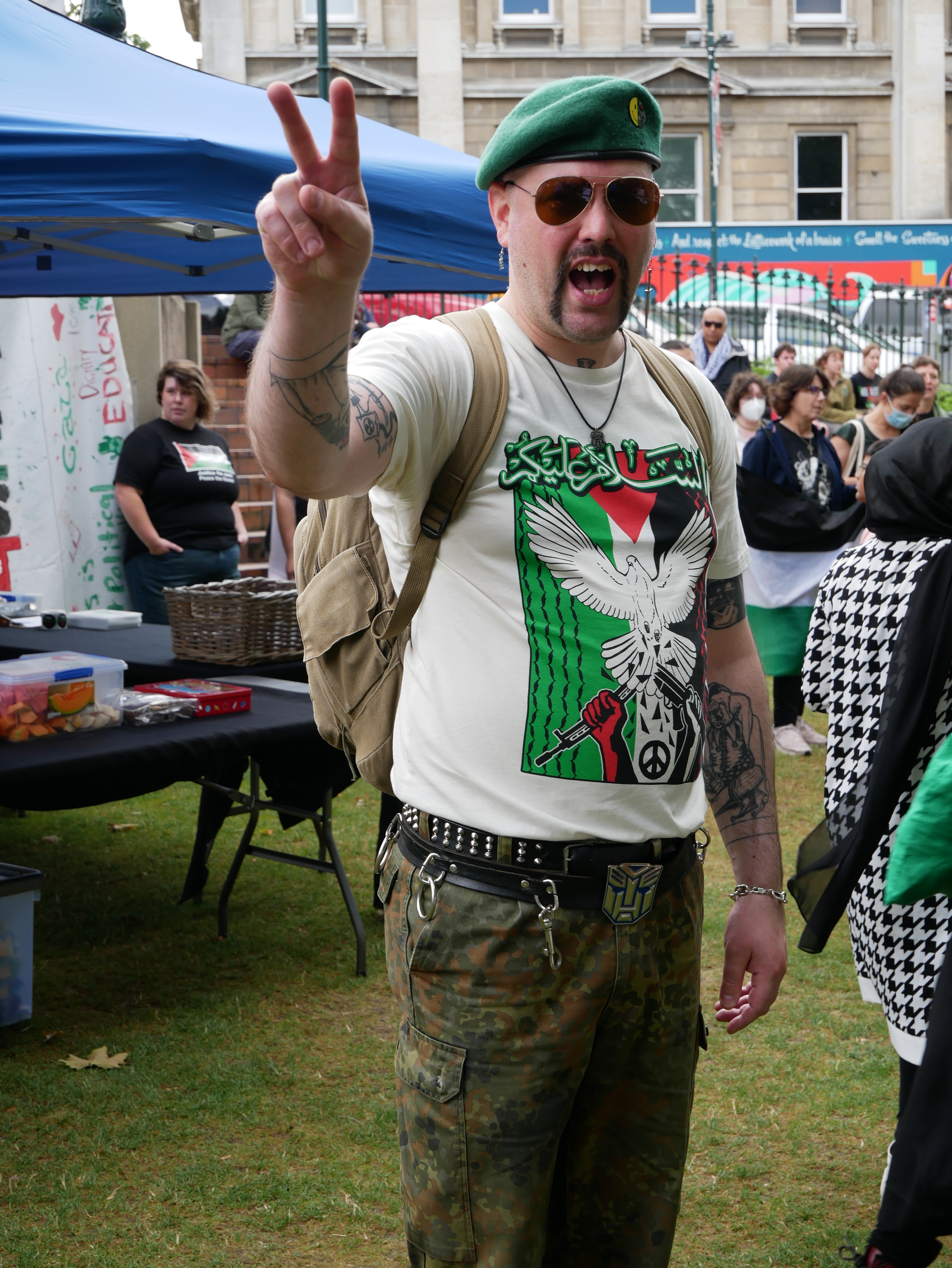
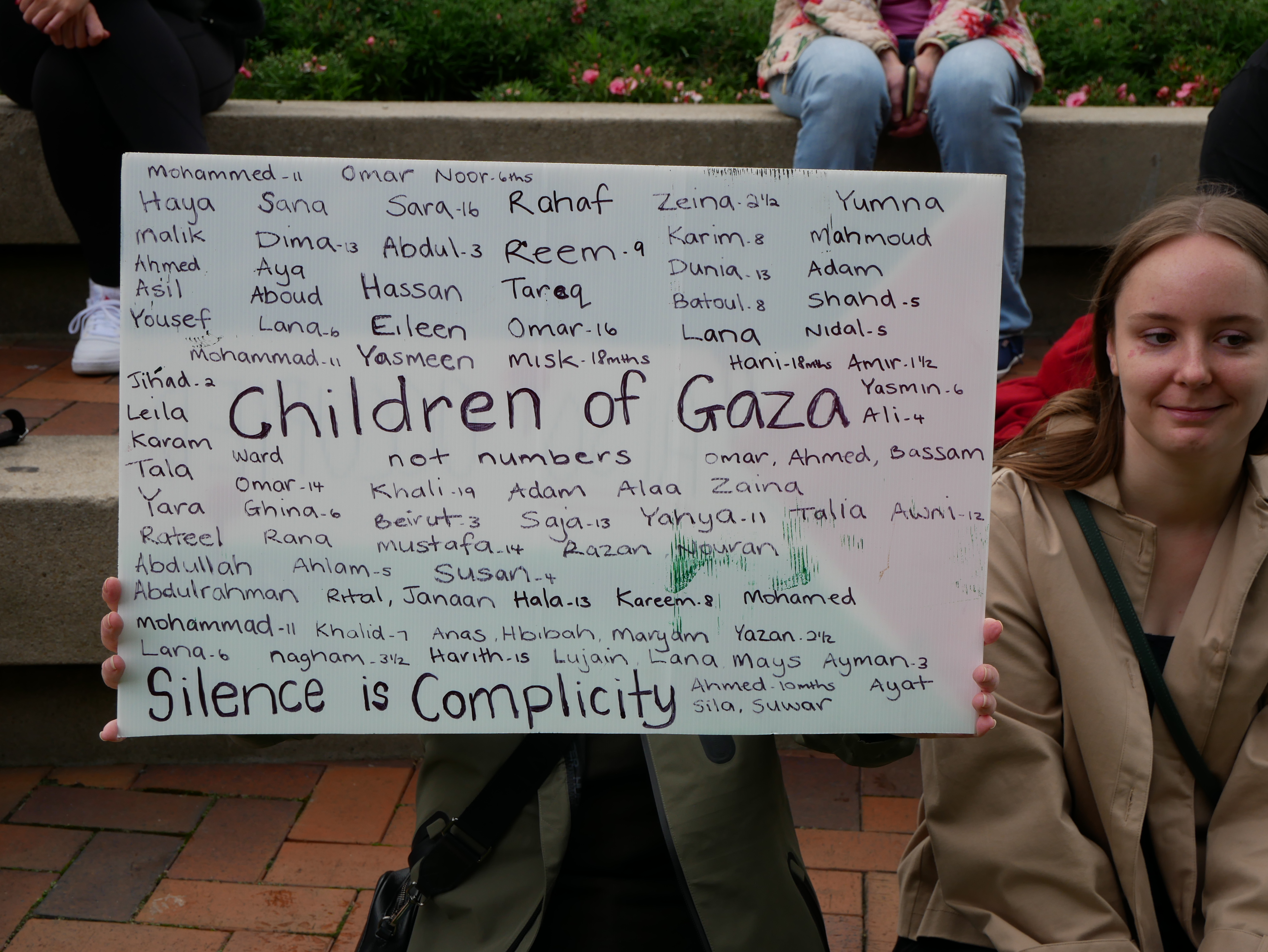
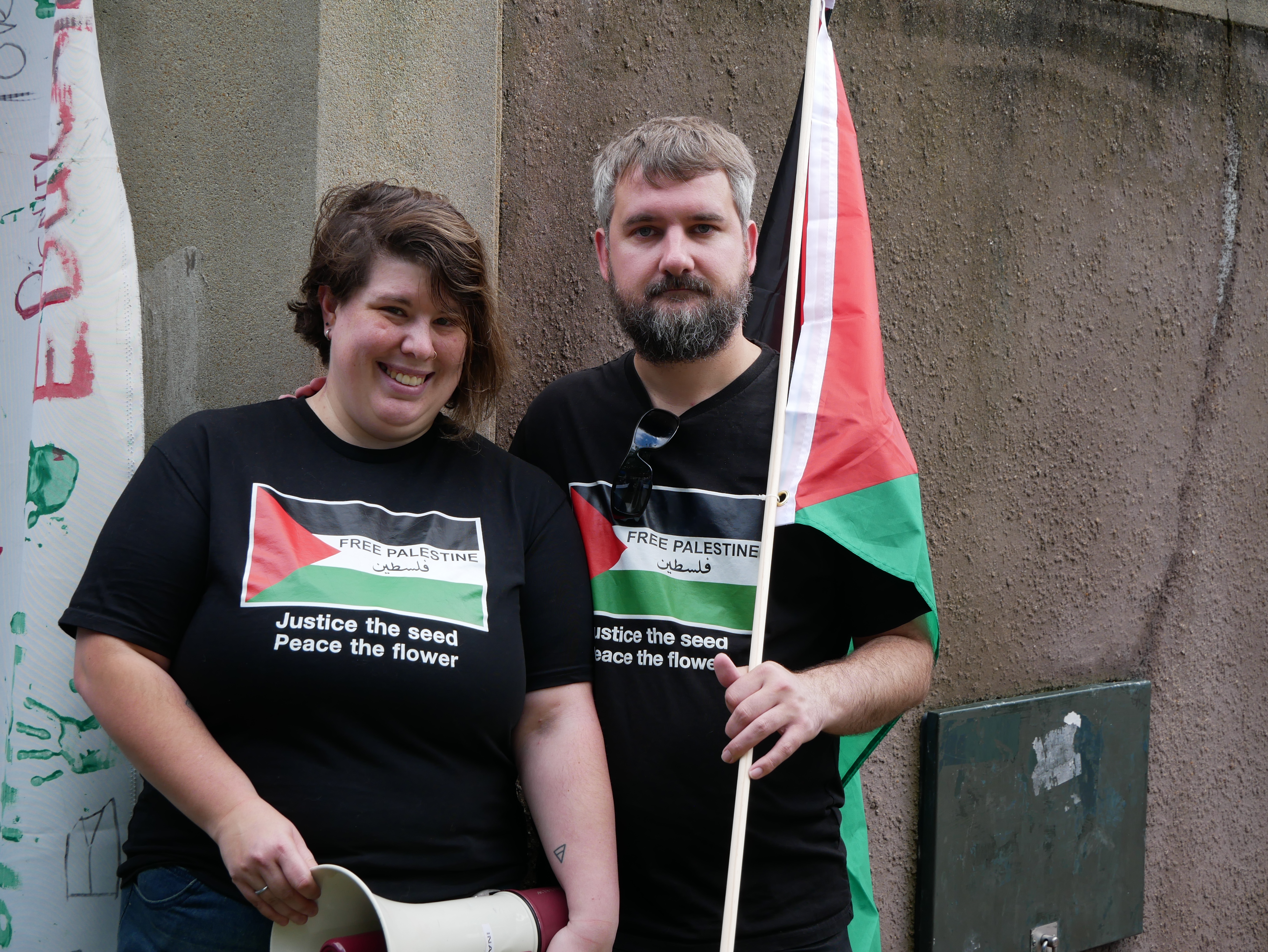
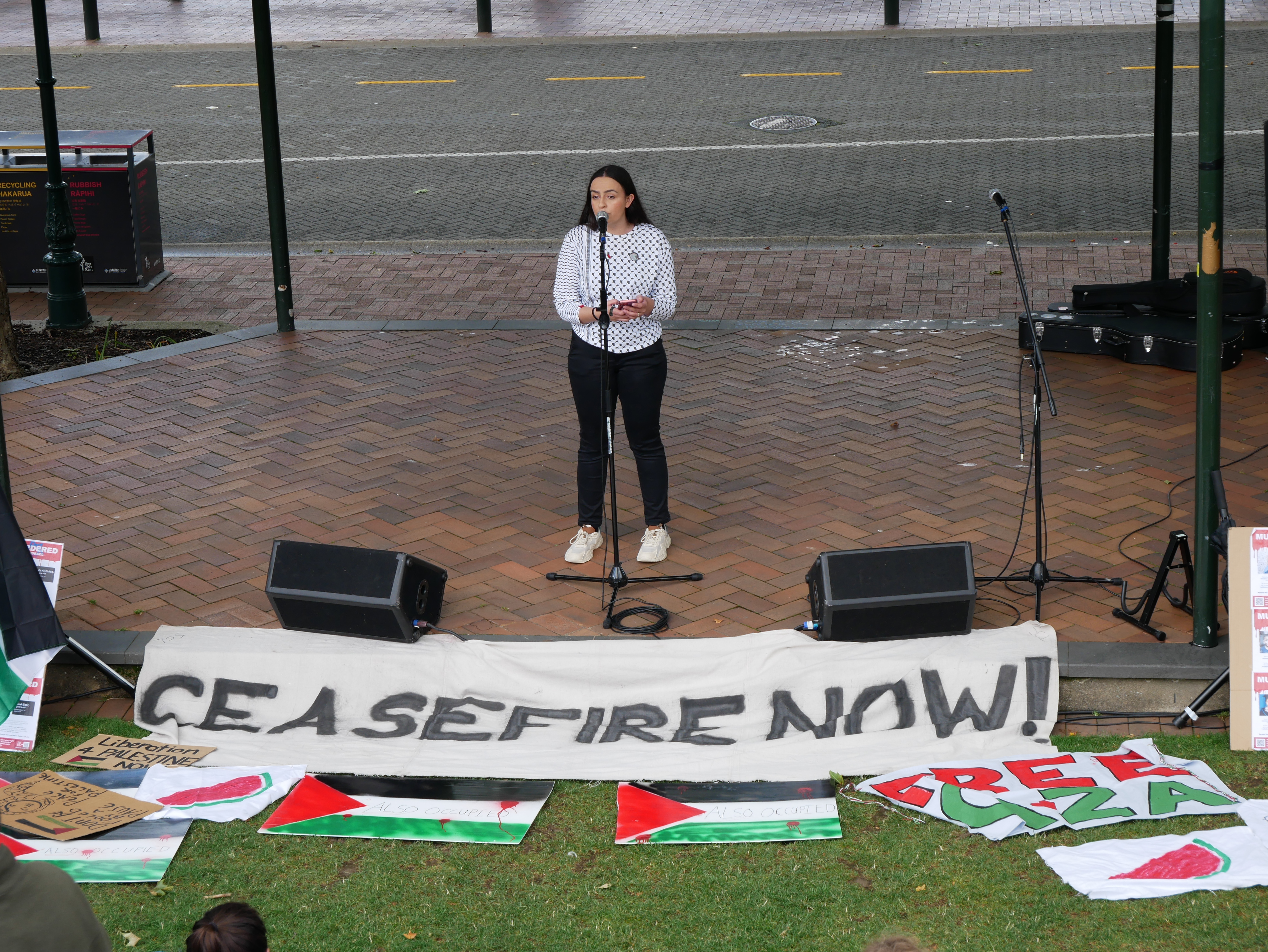
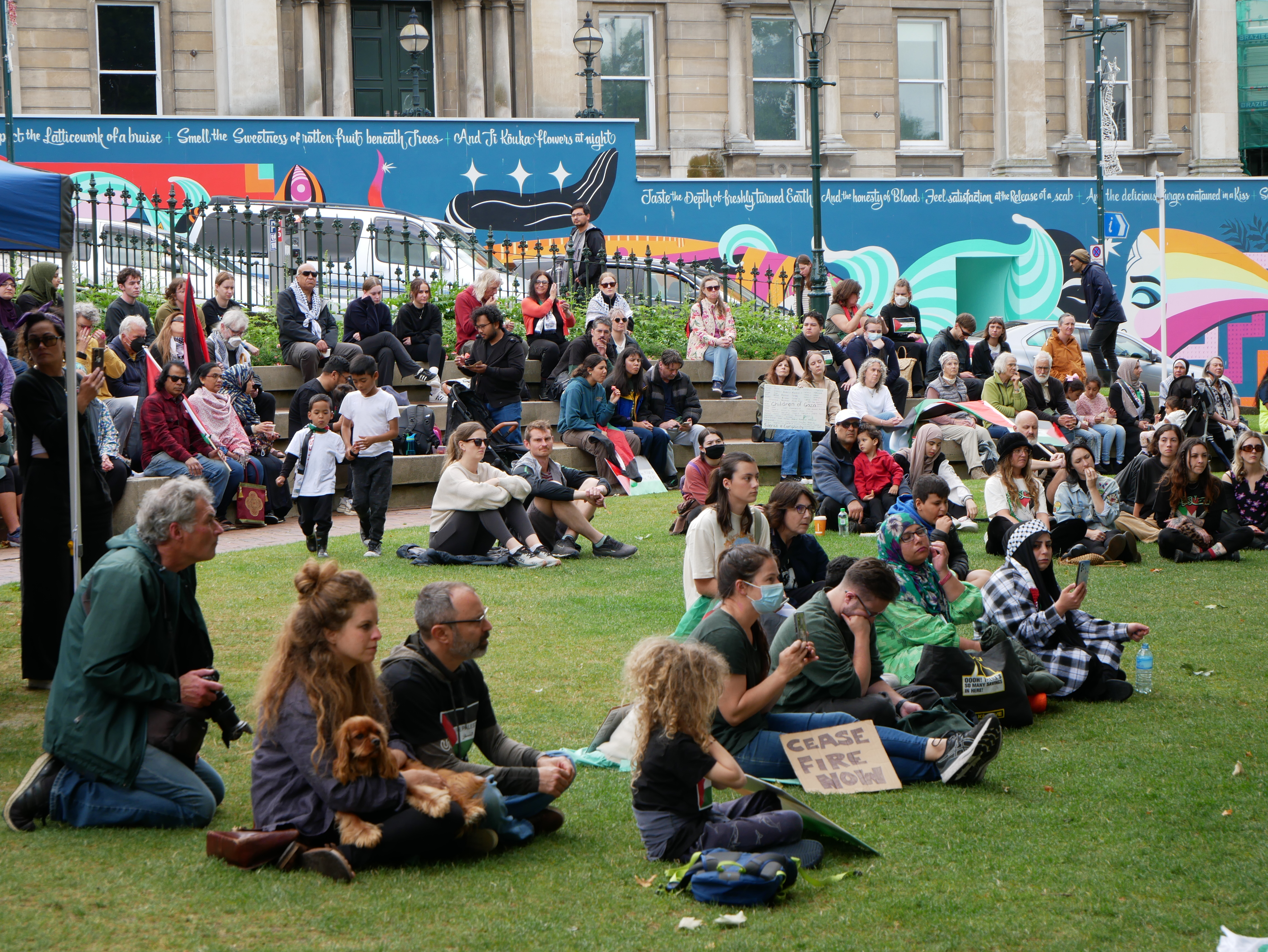
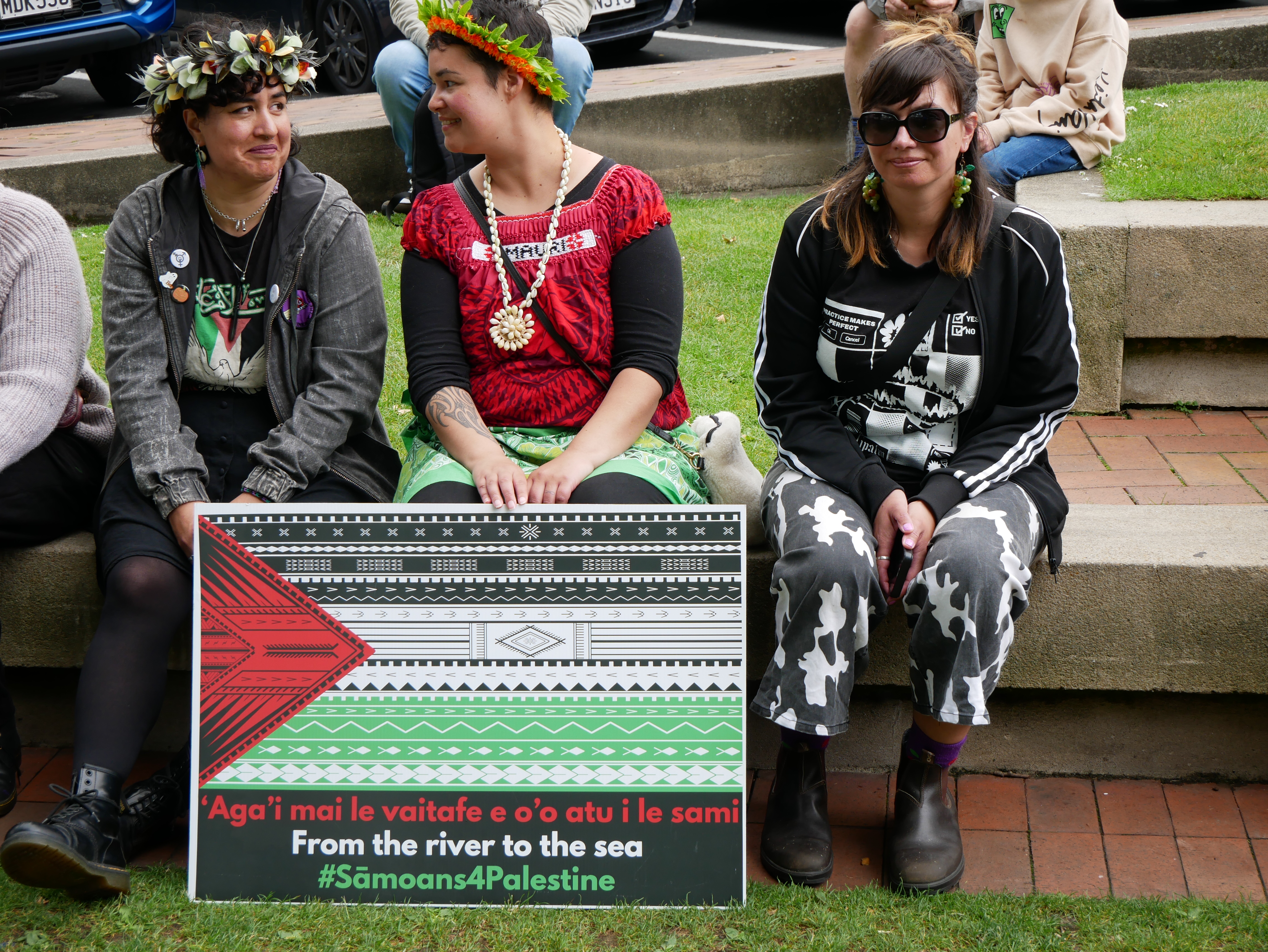
I had intended to publish this around a month ago, but unfortunately life gets ahead at times. C’est la vie, I suppose. In keeping with the local demonstration photo galleries I posted in 2022, this will be a mixture of the actual protest photography itself and some musings on my part from the perspective of considering the Palestine solidarity movement in this country as a social movement. As such, there is a bit of writing on my part accompanying these galleries. But if you’re just here to see some protest shots, by all means scroll down to the bottom of this article. A couple quick notes before the main body. I approach these photo essays (if I’m being very generous to my amateur hobbyist talents) in keeping with the standard for such street demo journalism in this country, for close up profile shots from within the crowd I tend to see if the subject is keen to be photographed in a manner that distinguishes them from the assembled. As such, crowd shots are just that but the close up profile stuff is pretty much always something I’ve in some way communicated to the subject with in the moment. Further, if you see a photo you particularly fancy do feel free to share as you wish. I just ask that you credit the blog as the origin point of the image. Anyway, onward…
A Short Reflection on a Social Movement
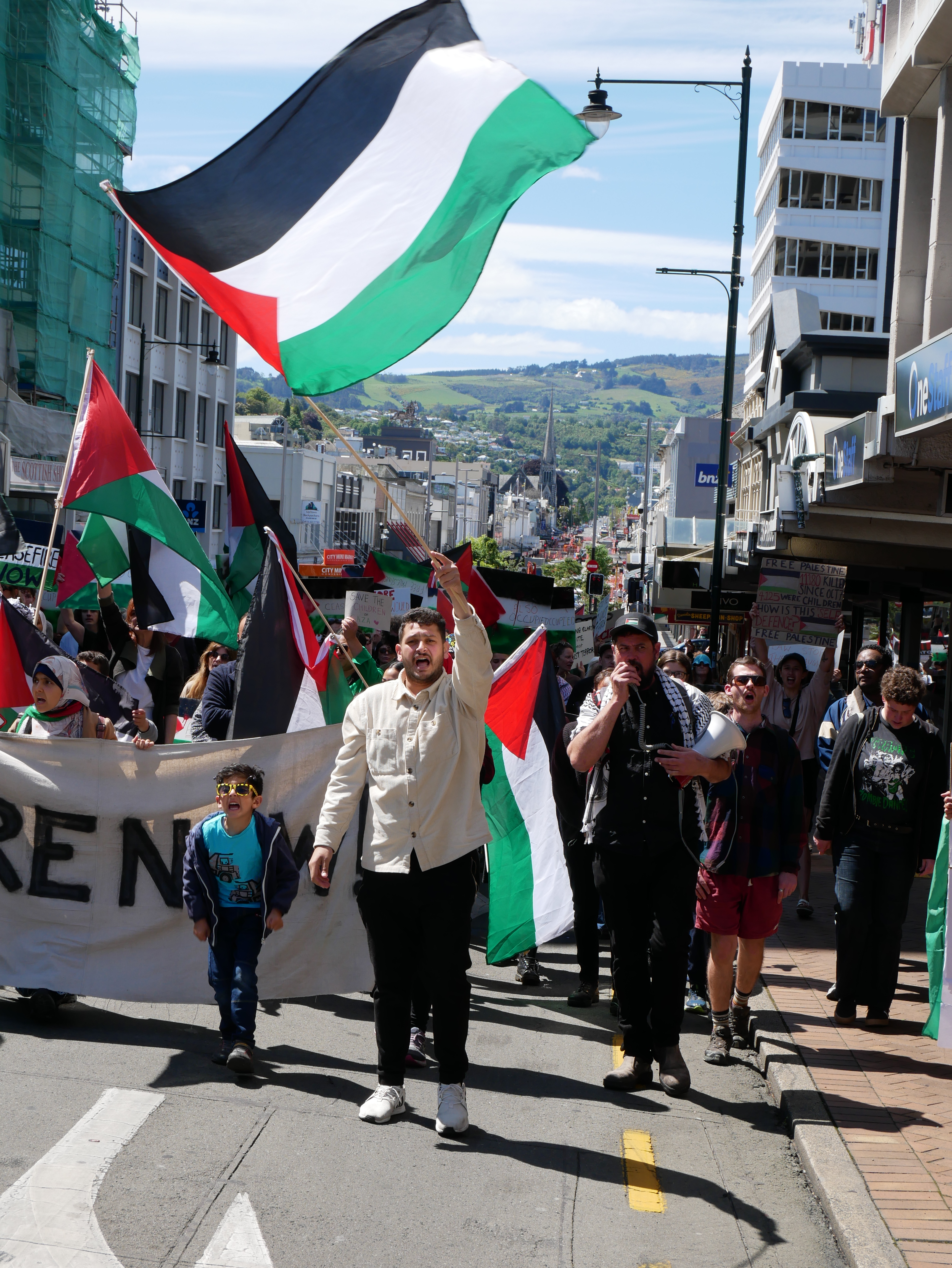
In the aftermath of the 7th October surprise offensive into Israeli territory spearheaded by Hamas last year, and especially subsequent to the beginning of armed operations in Gaza itself in the form of a brutish ongoing bombing campaign, worldwide demonstrations calling for a ceasefire have occurred on a near continuous basis with varying degrees of scale and intensity. While the mass demonstrations seen in major global cities in the initial month or two after 7th October have subsided, a not insignificant and highly durable social movement in New Zealand has emerged out of the extensive activist networks which have built up in solidarity with Palestine since at least the Second Intifada (2000-2005). This new phase (more on this in a little bit) marks probably the most intense and sustained period of protest activity the general Palestine solidarity movement has ever experienced in this country. This article is primarily concerned with the experience of the initial three months after the 7th October to the end of 2023 (the photos below are intended to give a taste of this experience), but it is worth noting that as of writing in mid-February 2024, the numbers remain relatively high for a movement organising demonstrations on a weekly basis as well as other events besides.
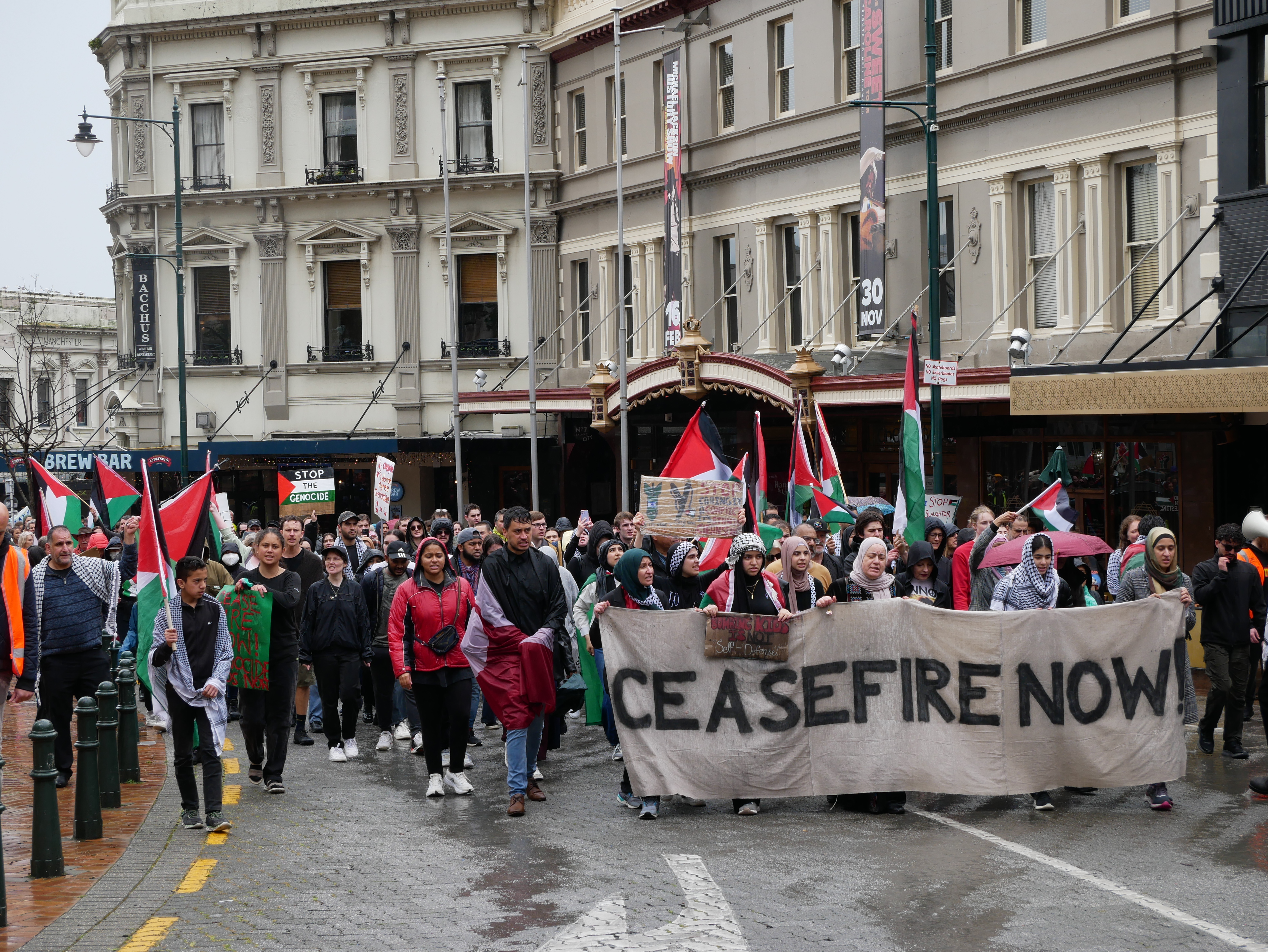
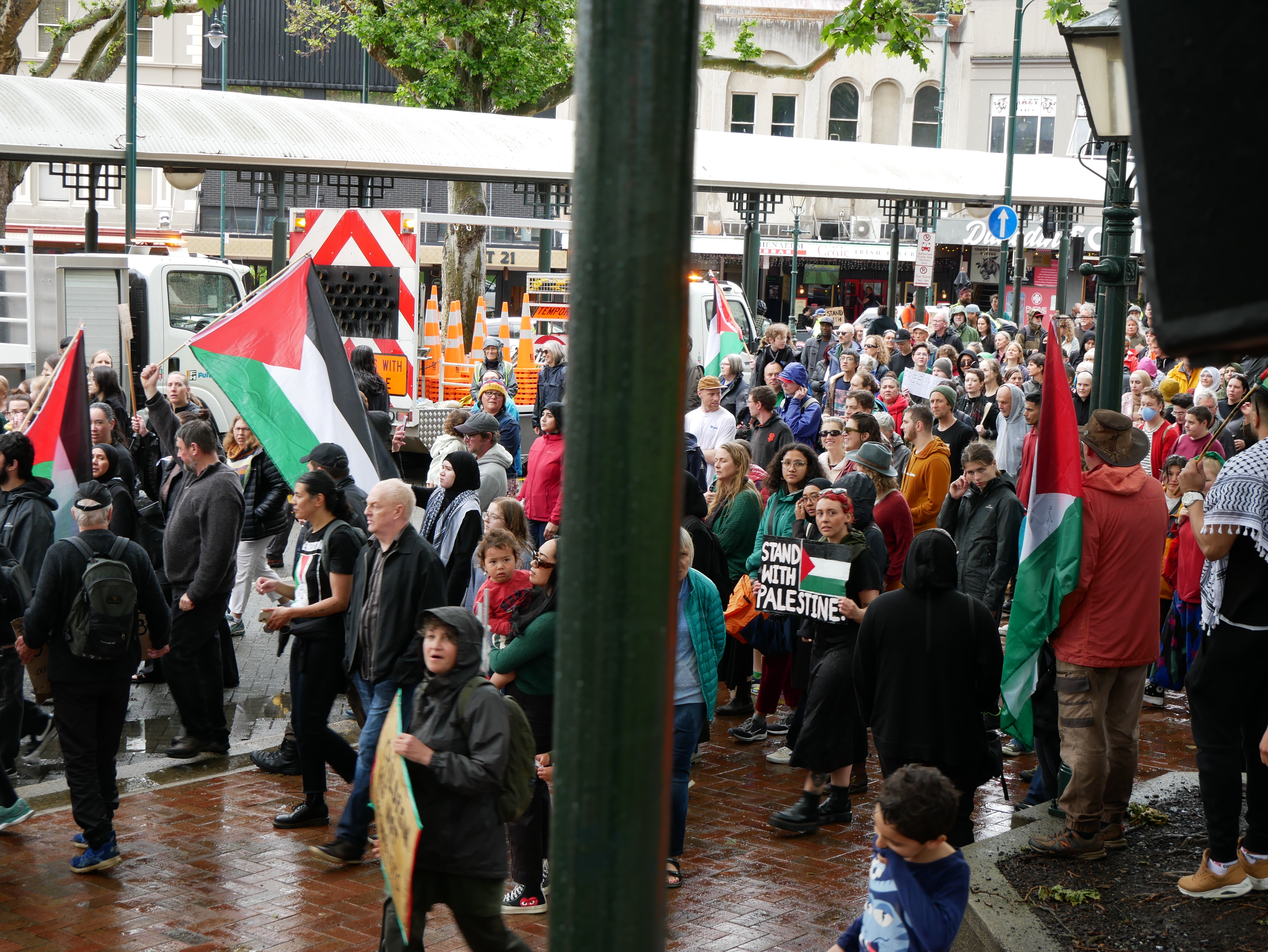
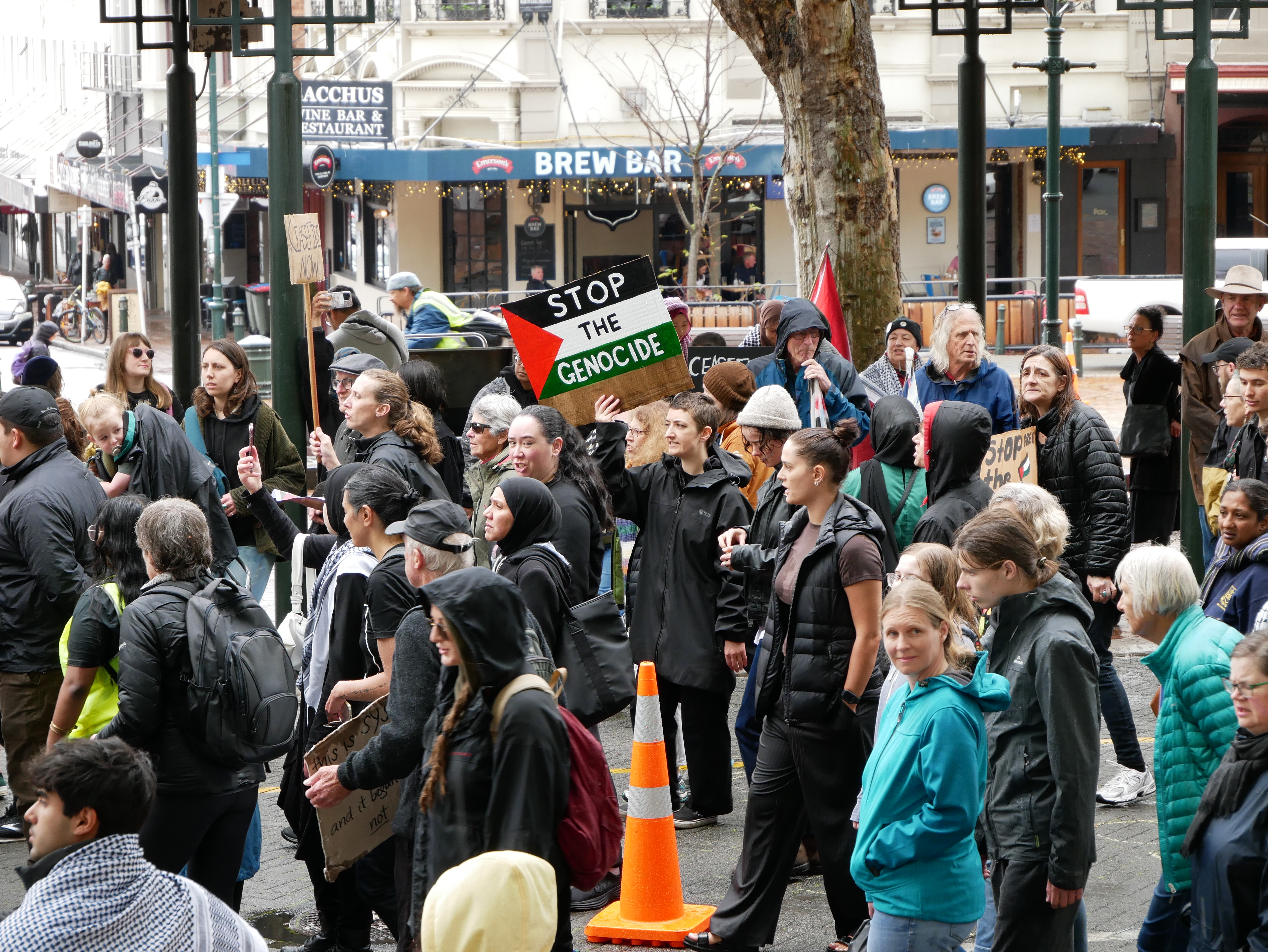
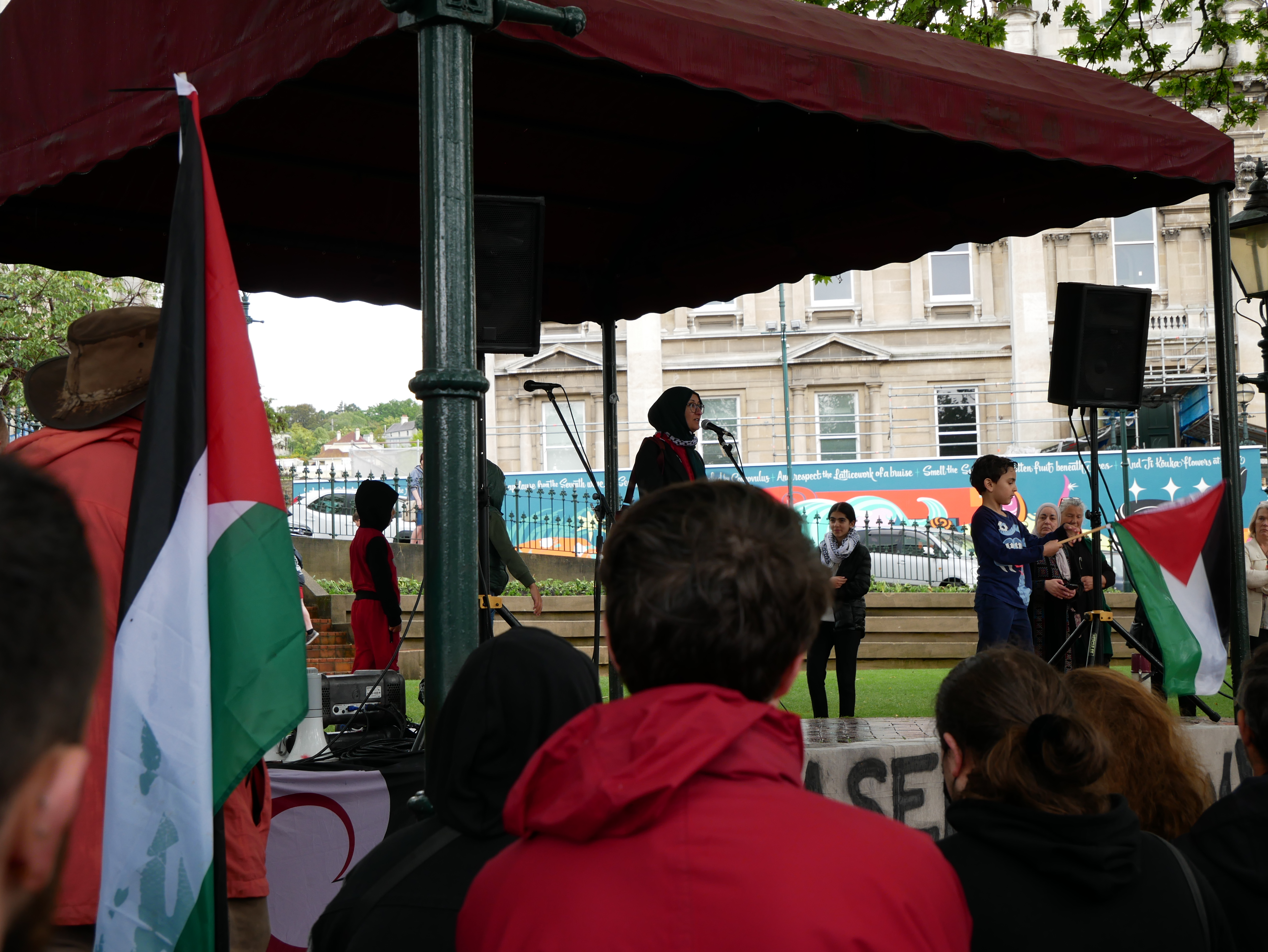
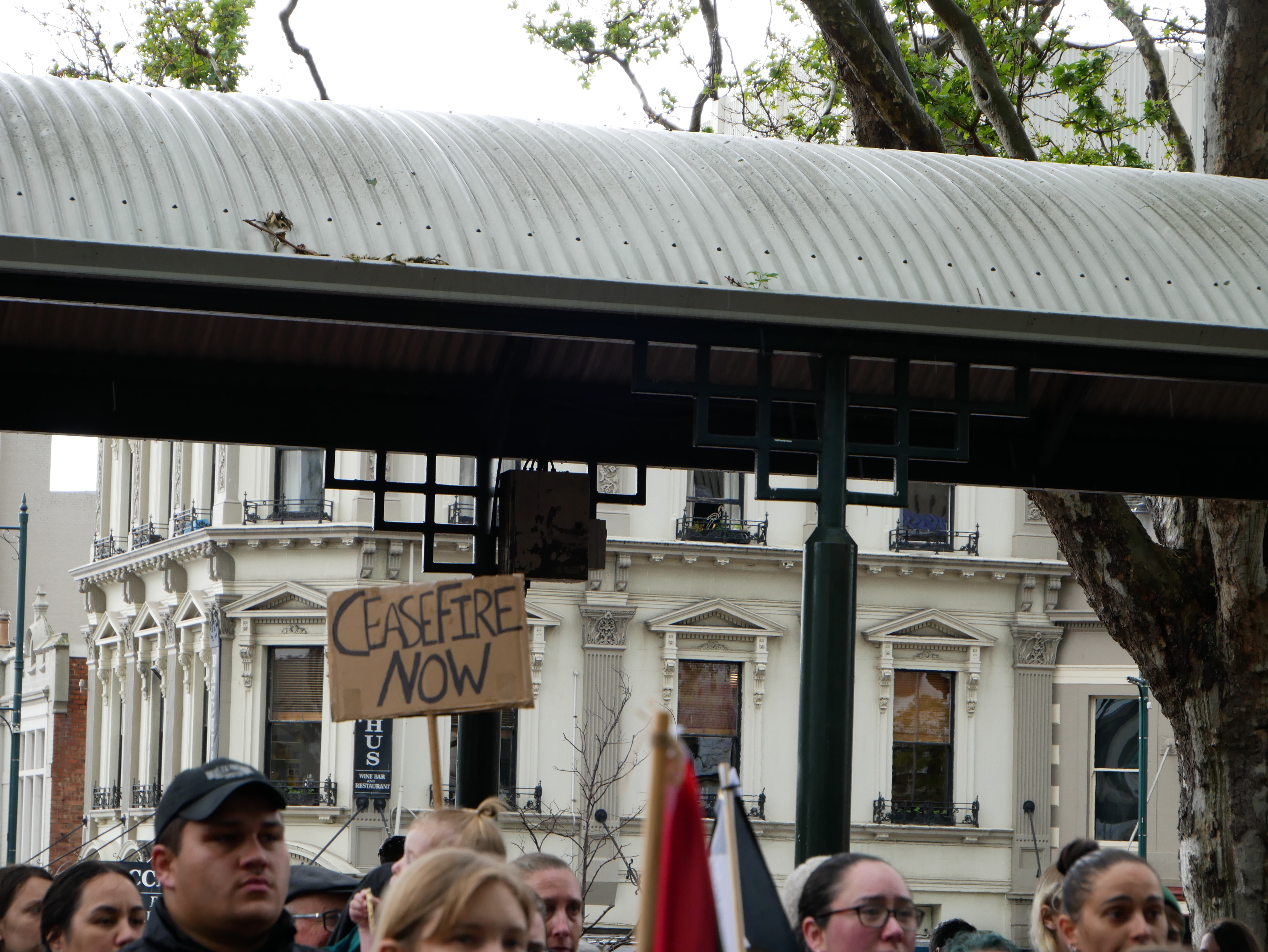
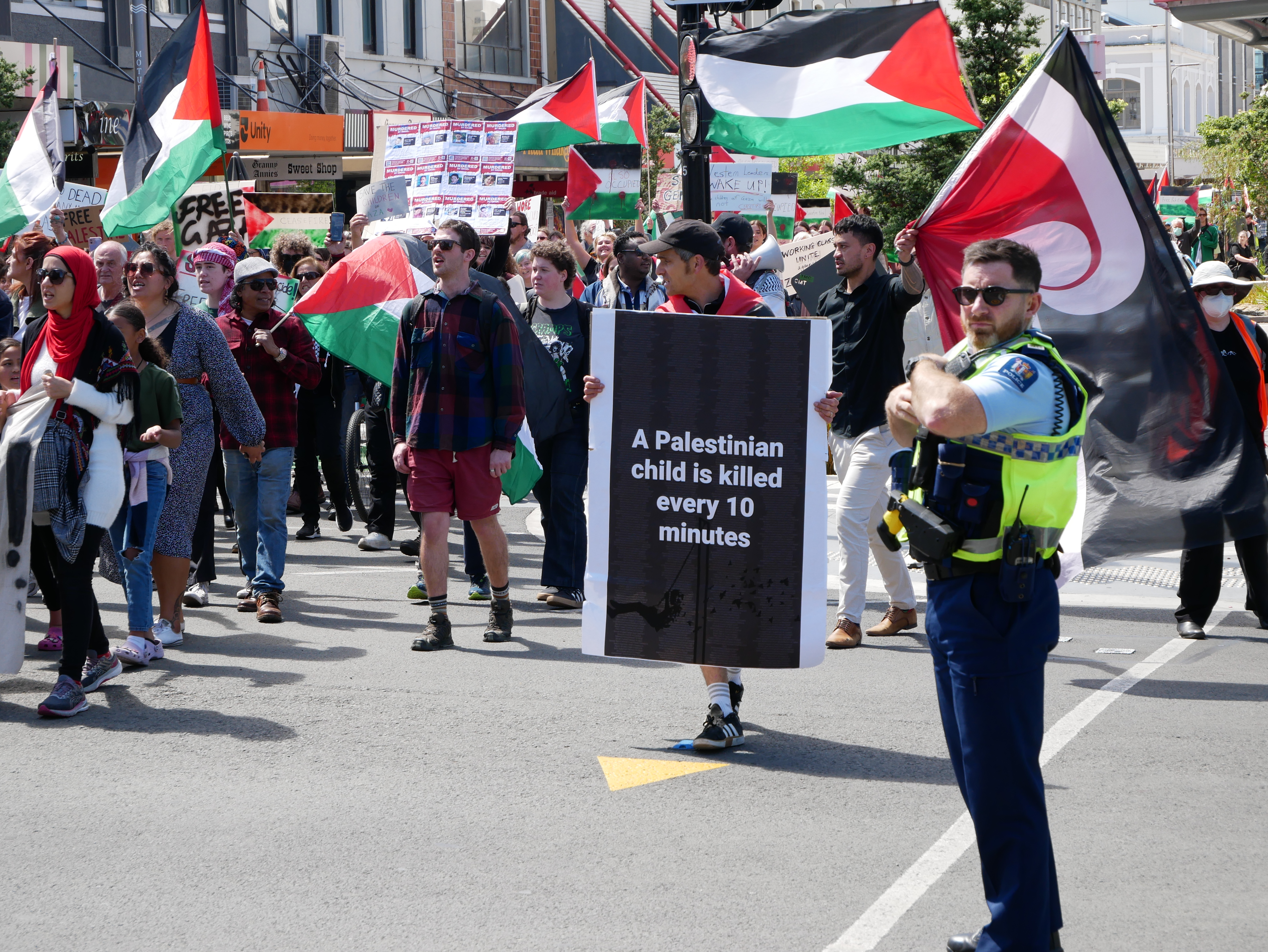
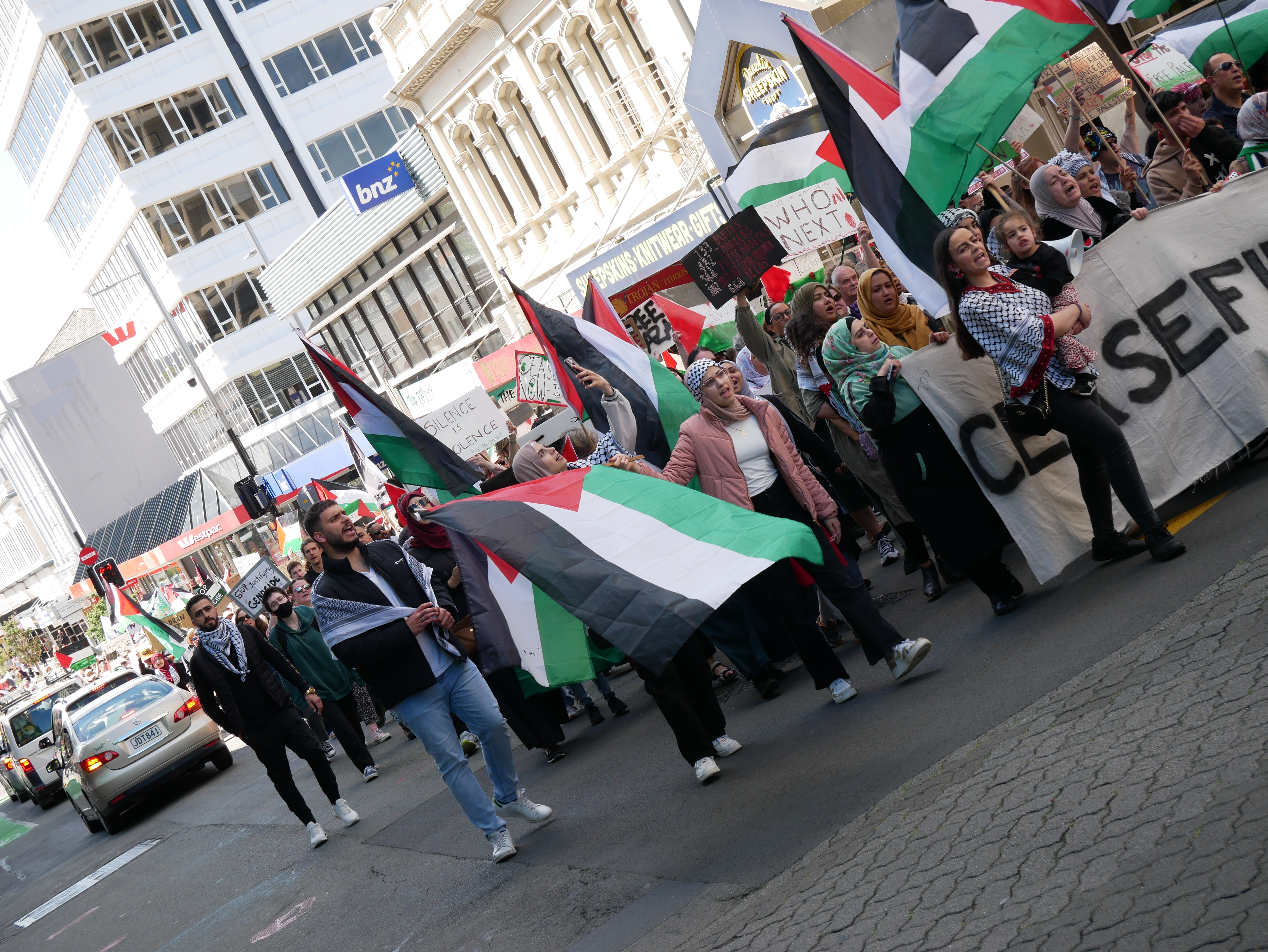
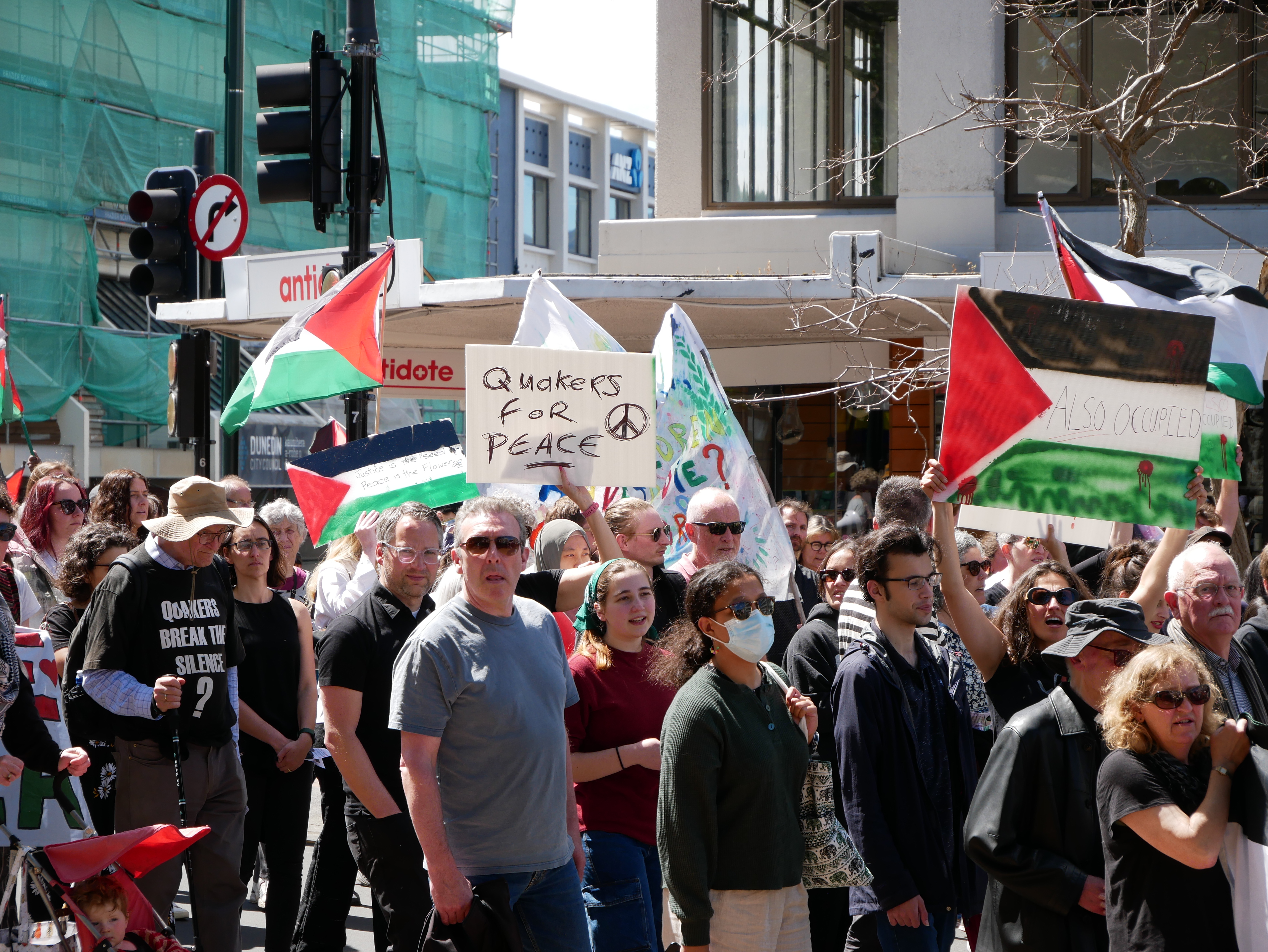
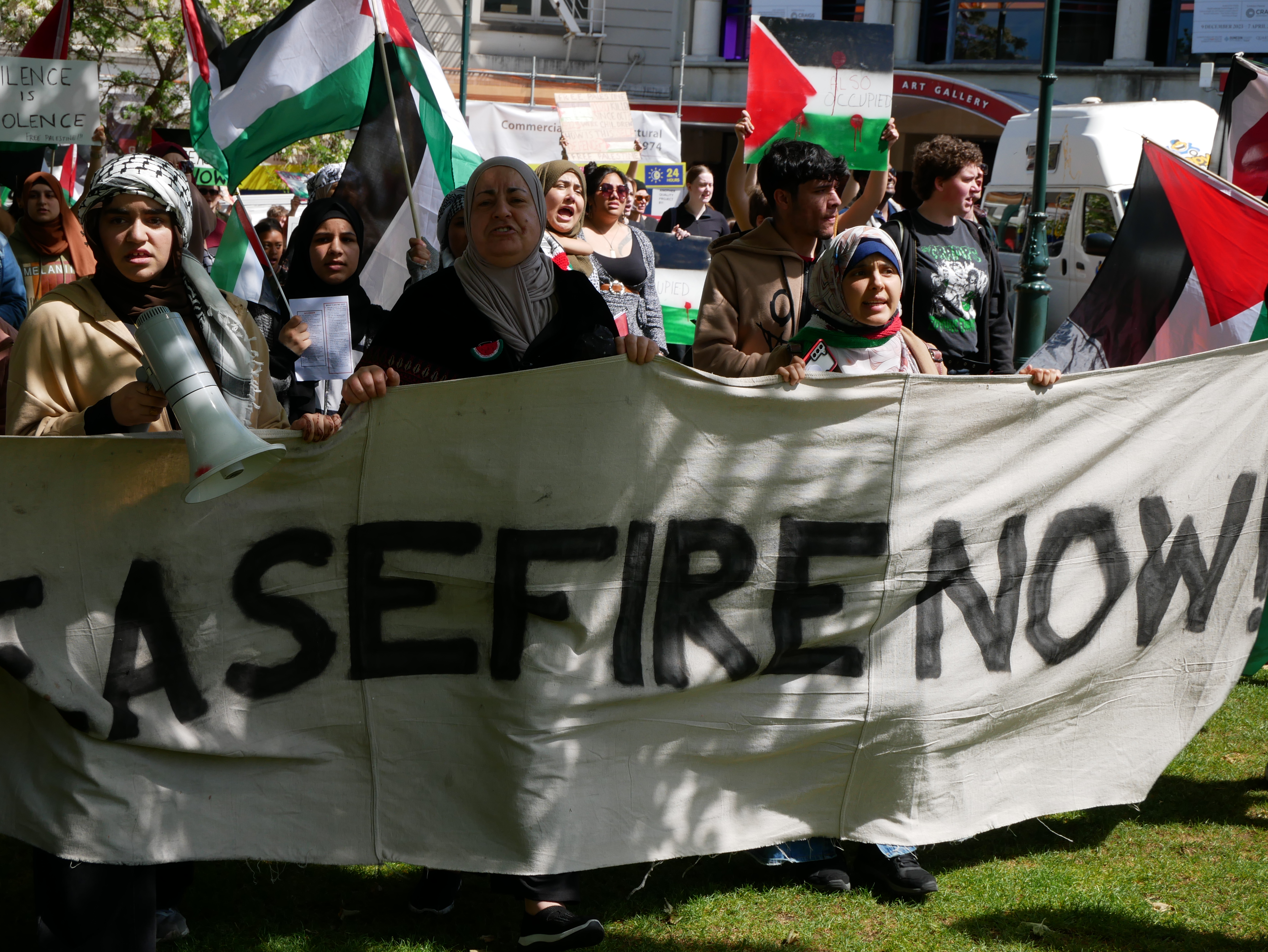
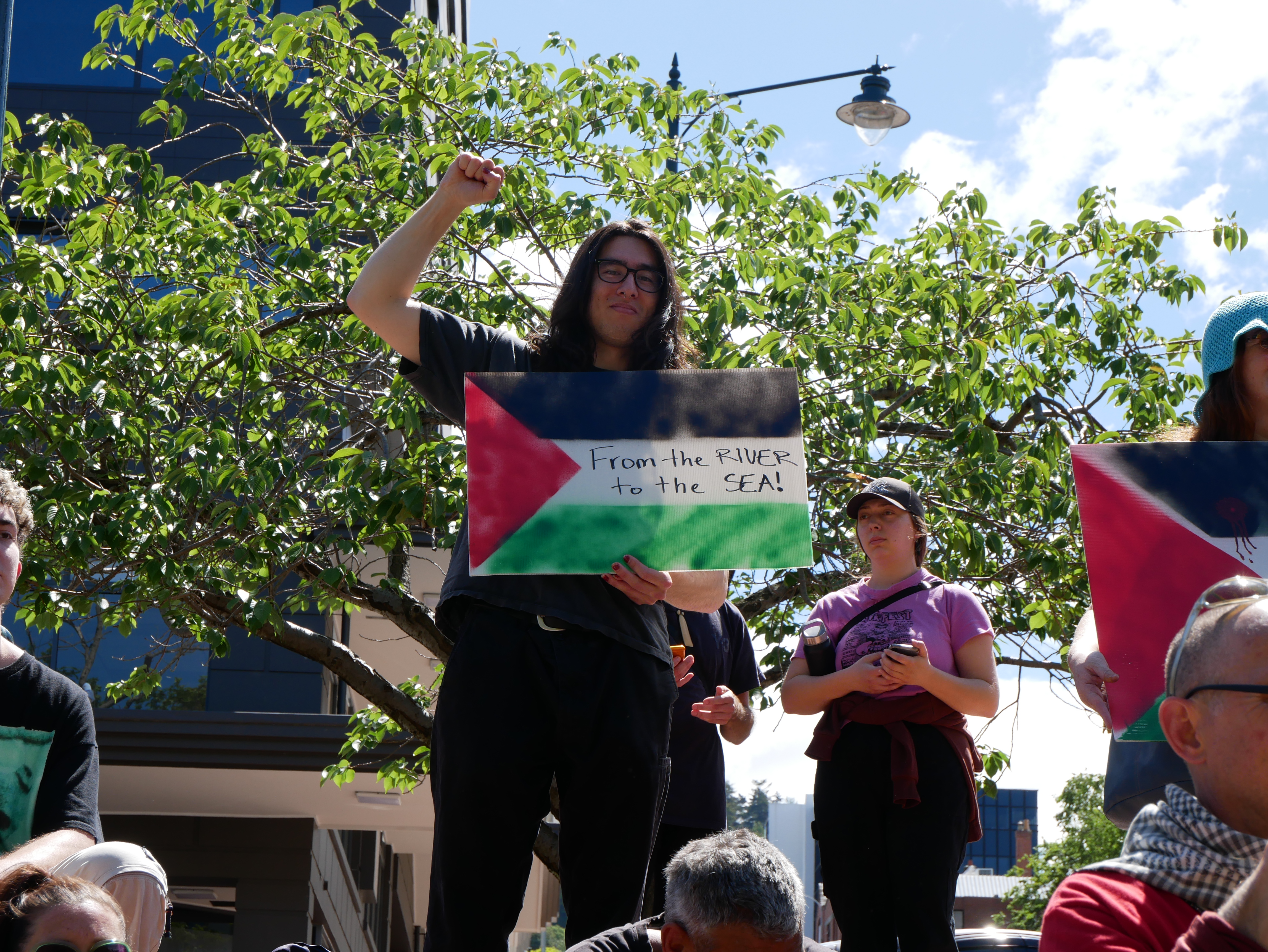
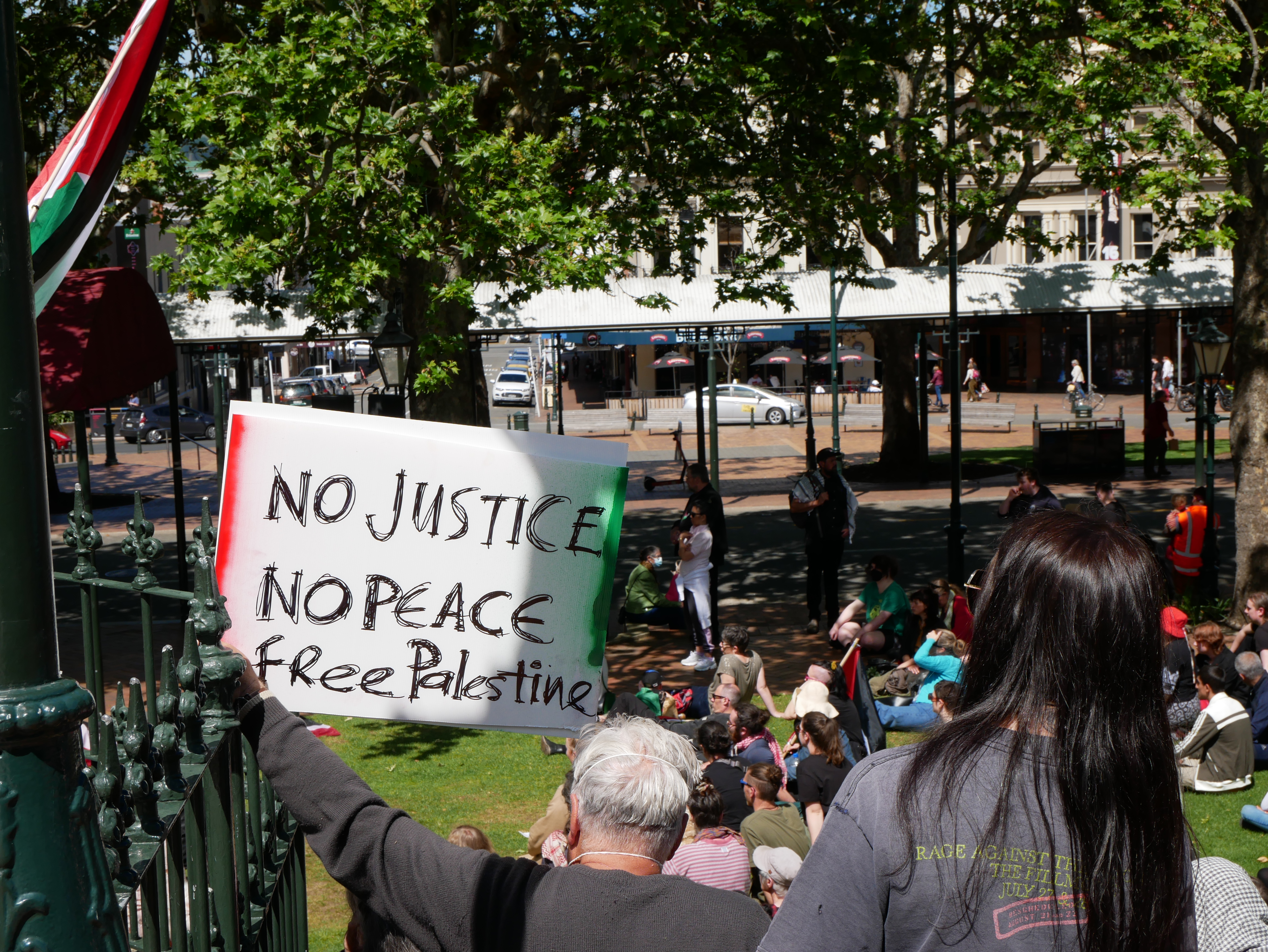
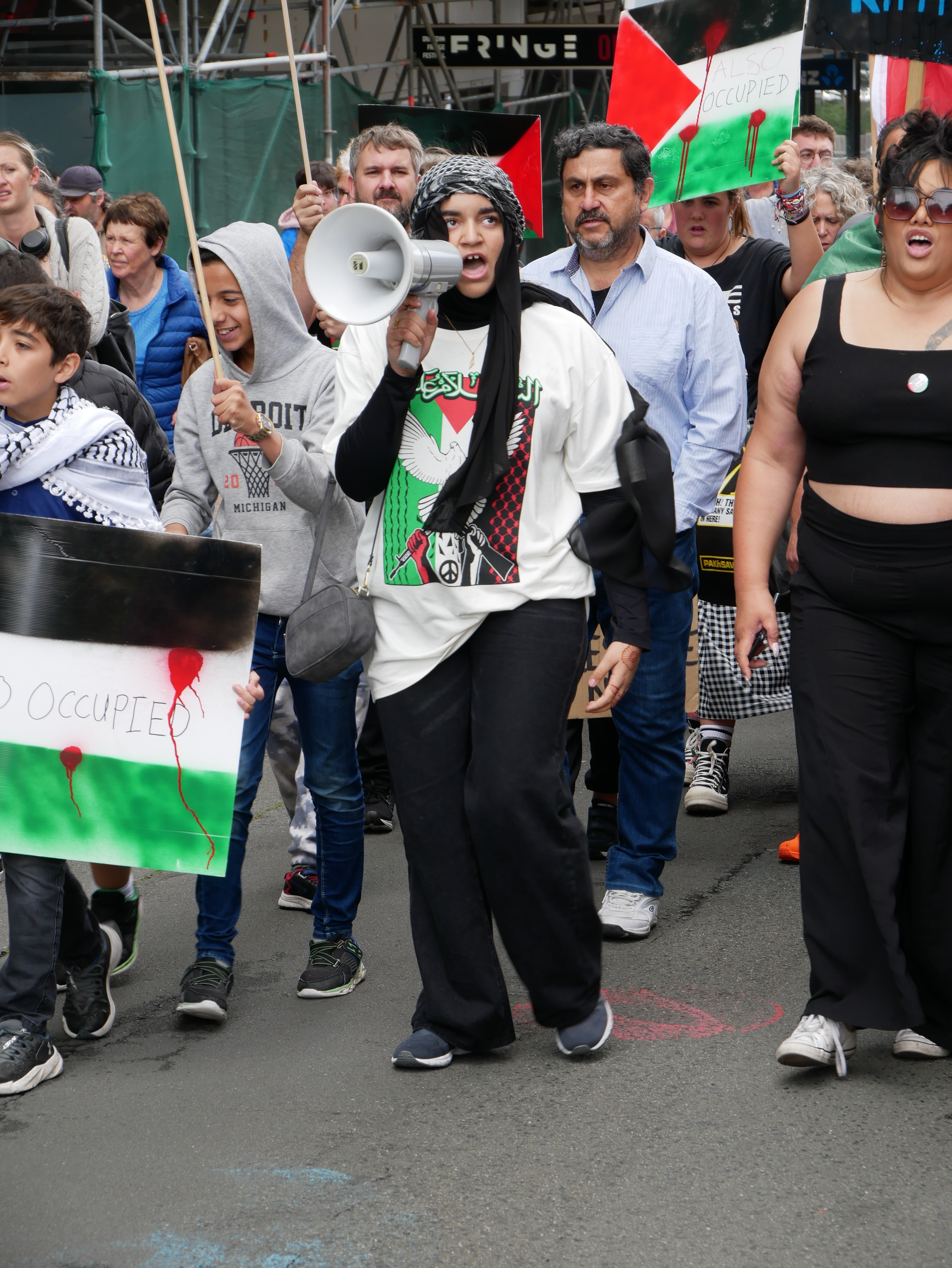
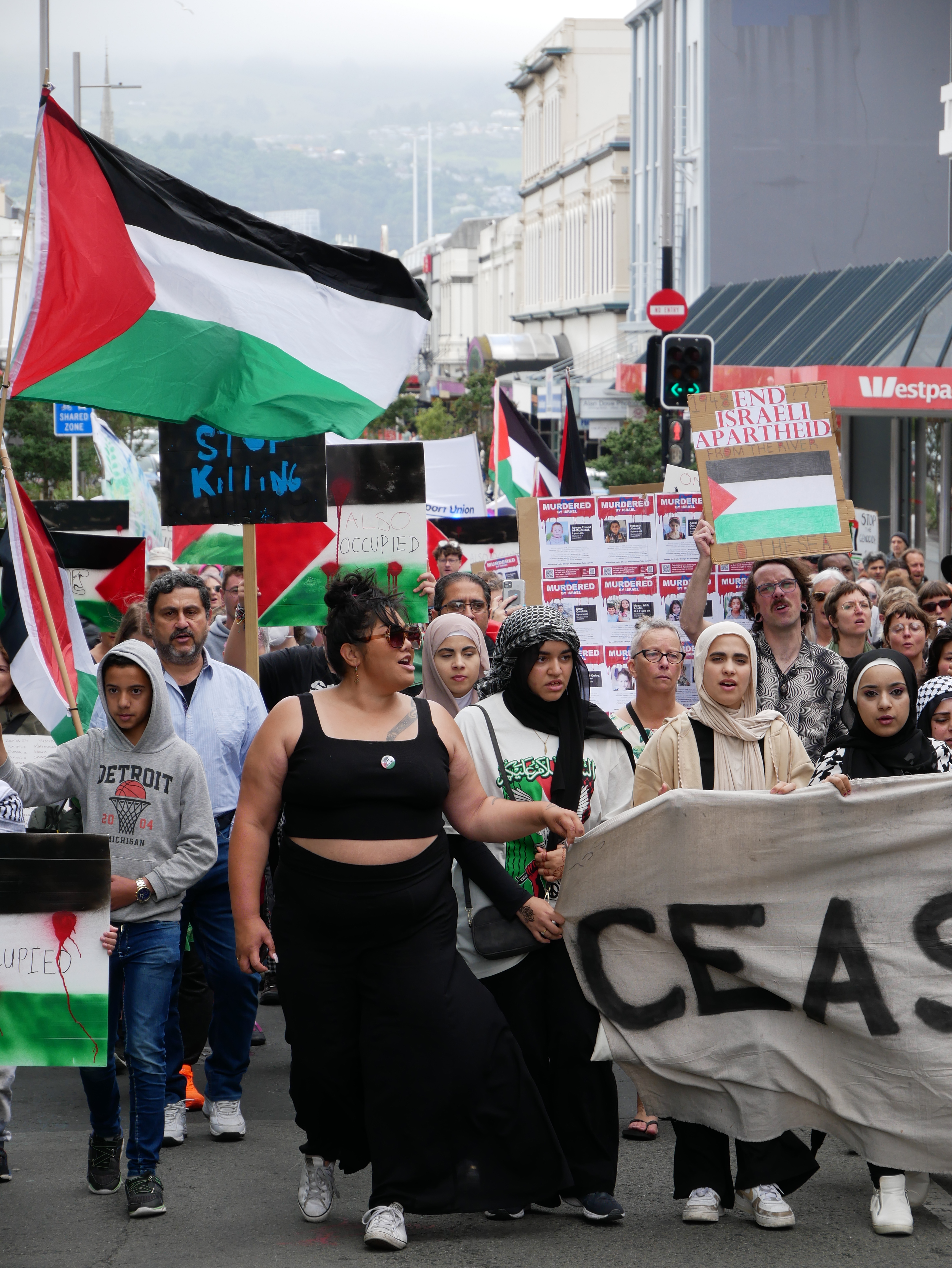
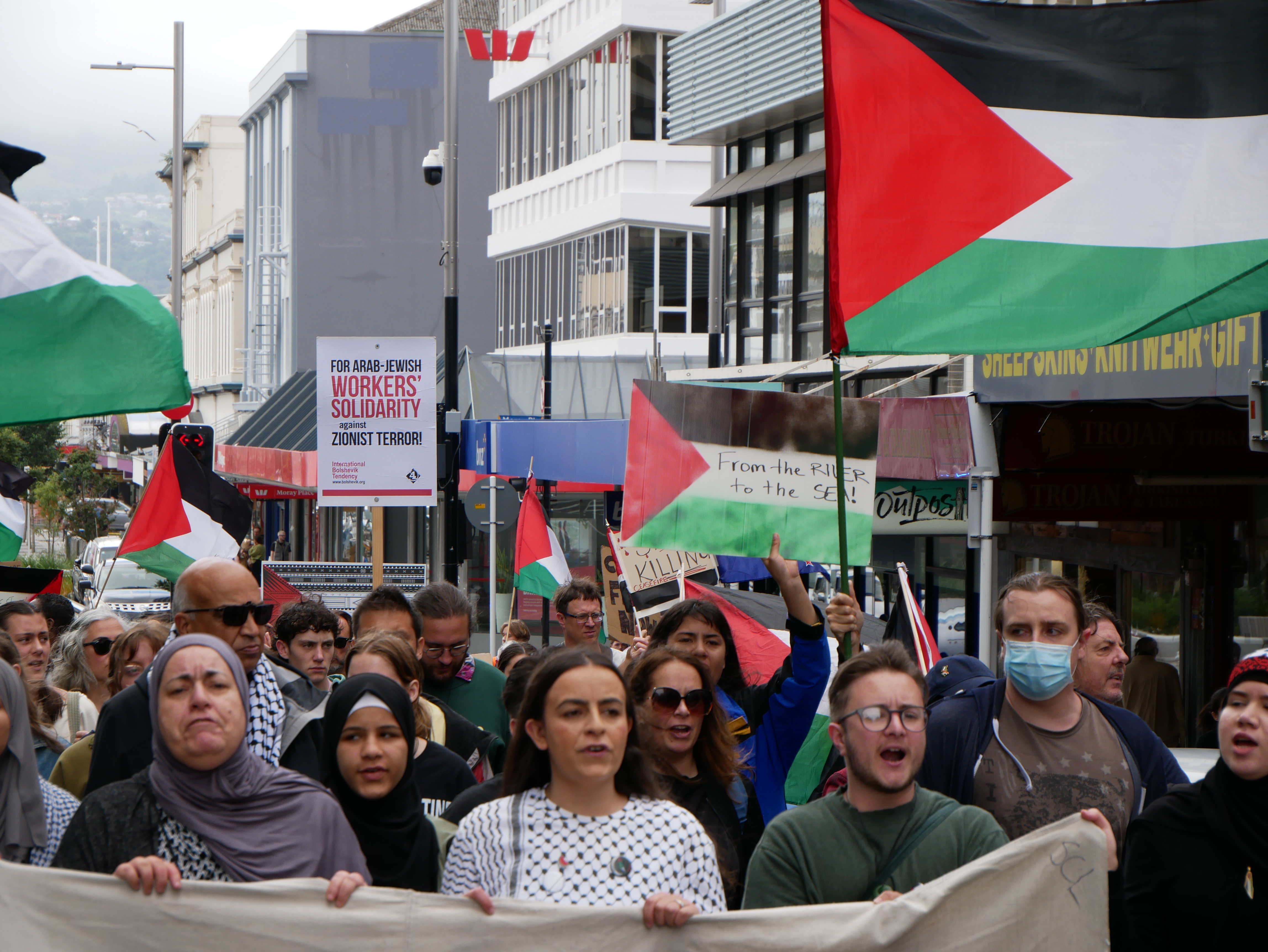
Generally speaking, the movement in Dunedin has achieved a degree of sustained organisation rarely seen since probably the high watermark of the 2000s anti-war movement circa mid-2002 to mid-2003. The weekly demonstration has taken the form of a typical protest in Dunedin, a march which begins at the Museum Reserve near the university campus to the Octagon in the center of the city (irrespective of route in between). Numbers-wise, these demonstrations have fluctuated on a fairly narrow band of participation from around 200 to around 400 people, the largest perhaps getting closer to 500 on a very good day while the smallest on a bad day ranges to about 150. Within the confines of 2023, this tended to skew towards the higher end of this range even on days with abysmal weather. I would say fairly comfortably that the average demonstration in 2023 numbered somewhere a little north of 300 people.
These demonstrations have had a high degree of participant retention, from what I can tell, but seem to draw on a larger social base than the same 500ish people attending every time. I would say a small number of participants are entirely new or have only attended a few demonstrations on any given week, even if one sees a fairly high number of familiar faces on a regular basis. This is one of a number of considerations any social movement which aims for fairly regular mobilisation must grapple with; the balance of retaining enough people to keep a continuous and reliable body of participants and refreshment of the core node of organisation with the need to avoid stagnation in the form of a near exact replication of people per demonstration, which will inevitably shrink over time. This is to say, how to keep everyone “fresh” without losing the valuable experience of a “core” network of organisers in whom a form of political “institutional memory” resides.
To put this factor in perspective, generally speaking (with the odd exception) large protest movements in this city over the last 25 or so years have had a period of months between demonstrations to accrue the resources and build the momentum required to mobilize upwards of 1000 people (around 1% of the working age population when the tertiary students are in town). Anything upwards of a thousand people is typically considered “a big day” in terms of local protest organising, and if an issue is niche or the resources to mobilize are limited then a few hundred is considered satisfactory. Obviously a great confluence of factors alters this, but as a rule of thumb for the purposes of this article I’d say it’s sufficient to get an idea of organising in Dunedin. So, one could say that given local conditions, population, longevity of the war, and regularity of mobilisation, that this movement achieved in the first three months a frankly impressive degree of organisation and scale.
A closely related matter is that of the social and political base underpinning the local wing of this movement. In terms of the structure organising the mobilisations themselves, the key group here is the local branch of the Palestine Solidarity Network Aotearoa (PSNA), which began to cohere in 2013 and has existed in its present form as a national organisation since 2019. Social basis of support can cut in various ways, and it is incredibly hard to say anything definitively without any hard data to draw on. However, in both participating and observing the social movement, one does get a sense for some of the key groups from which support is being drawn. An obvious key support base is the local Palestinian community itself, as well as those of other local Middle Eastern communities in which sympathy for the cause is high (I am including in “local community” here those who are descended of, and continue to associate with their heritage as, the social group in question – if only to catch the widest definition of such a community). The presence of Palestinians within the movement is up front and obvious, even if one is to pay attention to the organisers and their speeches, let alone mingle in and interact with the crowd.
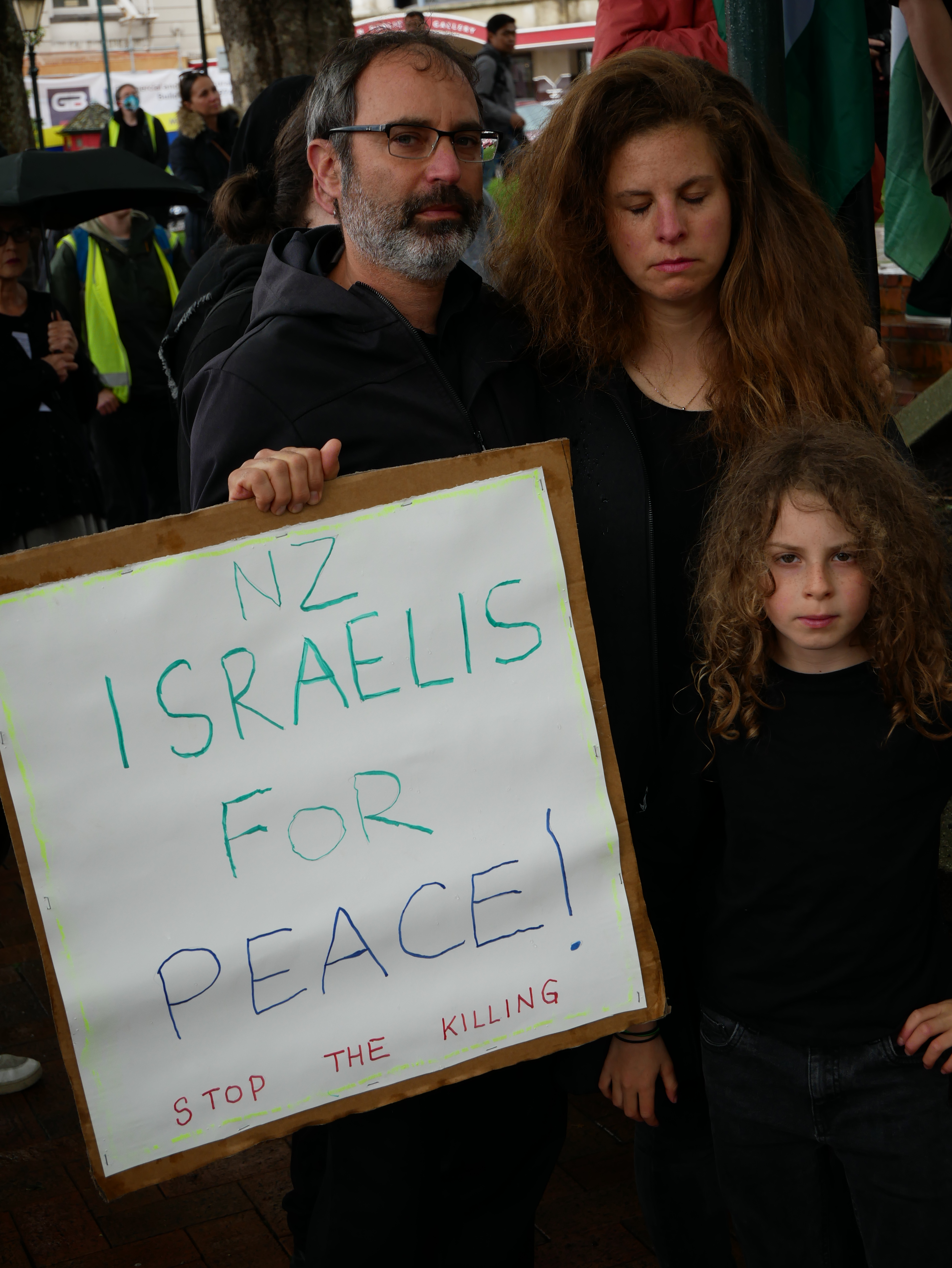
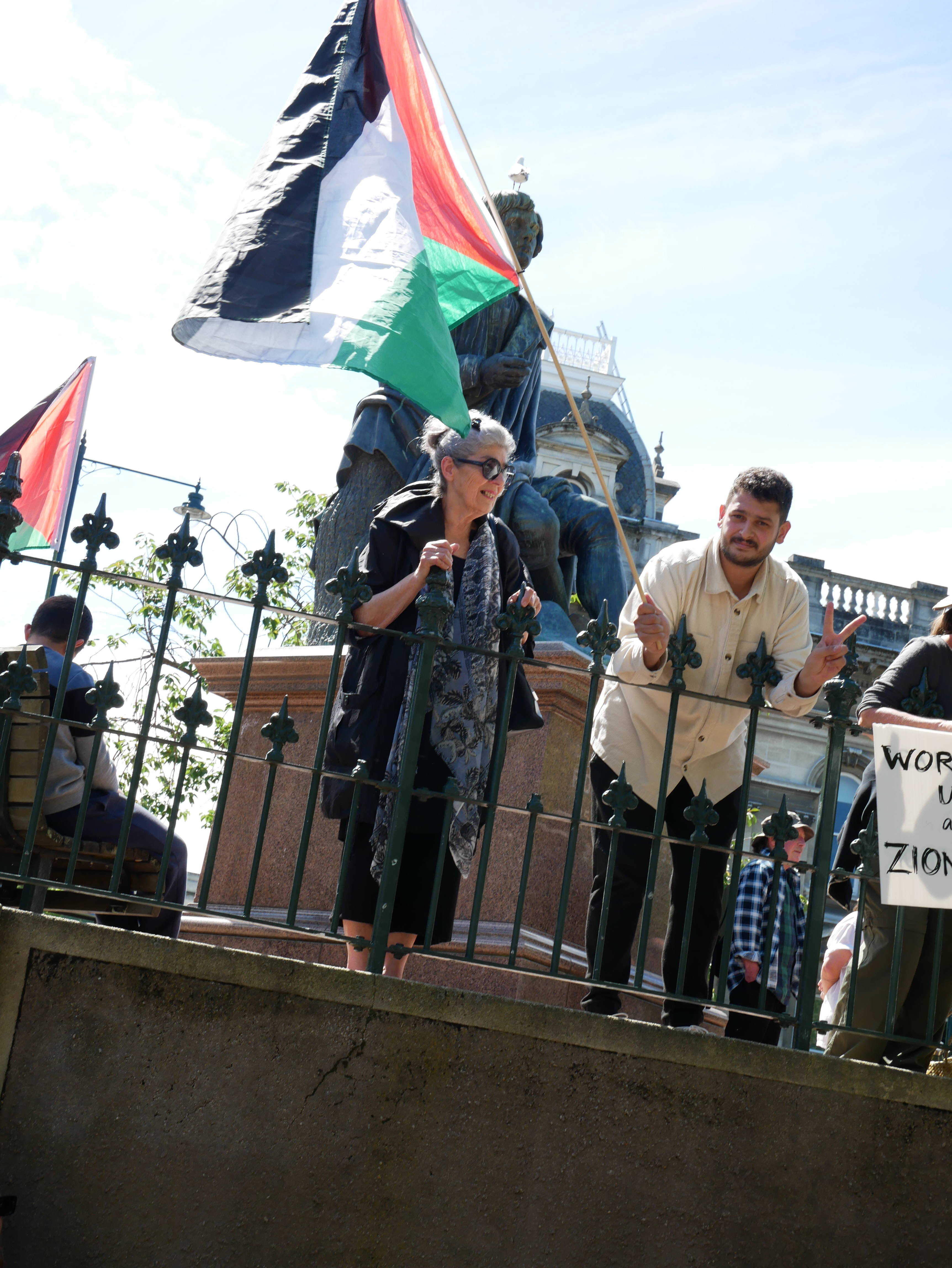
It is also worth noting that while many tauiwi are participants, a strong Māori participation is felt at the majority of demonstrations, in a manner mutually acknowledged by the Māori and Palestinian communities. An explicit connection of indigeneity is made between the two communities at many demonstrations, and the struggles of the two are considered in mutually reinforcing ways. Much as the Palestinian participation is politically self-identified as such, so too is the local Māori participation. The small local Jewish community, as well as some local Israelis (I try explicitly not to conflate the two, so if it comes across as such just know that this is the intention), are also present and self-identified as such within the local movement. Given the intense ethnic, religious, and national dimensions of the conflict, and the ways in which these are used to obfuscate and unfairly pin down the political beliefs and personal identities of the communities drawn into it internationally, it felt worth noting. No national community is a monolith defined by the whims of the most prominent and powerful among them, this is as true for any group inexorably forced into the conflict as it is for the other (and something I generally hold to be true).
To this I would add that in considering the role of religion in understanding the social base of this movement, there is a strong skew towards those who, irrespective of personal religious persuasion, are broadly associated with the interfaith community. More so than a particular religious presence or any denomination therein is a sense of interreligious solidarity. Those who have spoken from a religious perspective have stressed harmonious relations between those of or not of faith, and themselves come from Muslim, Jewish, or Christian backgrounds. Their particular faith, regardless of what it might be, has been secondary to a more general stress on the need to avoid intercommunal tensions or violence spurred on by the conflict and more particularly a dedication to the end of the conflict stemming from religious conviction (and, I am sure, personal horror). As such, in a manner of speaking, the interfaith community has been a key support base more so than those of faith in specific.
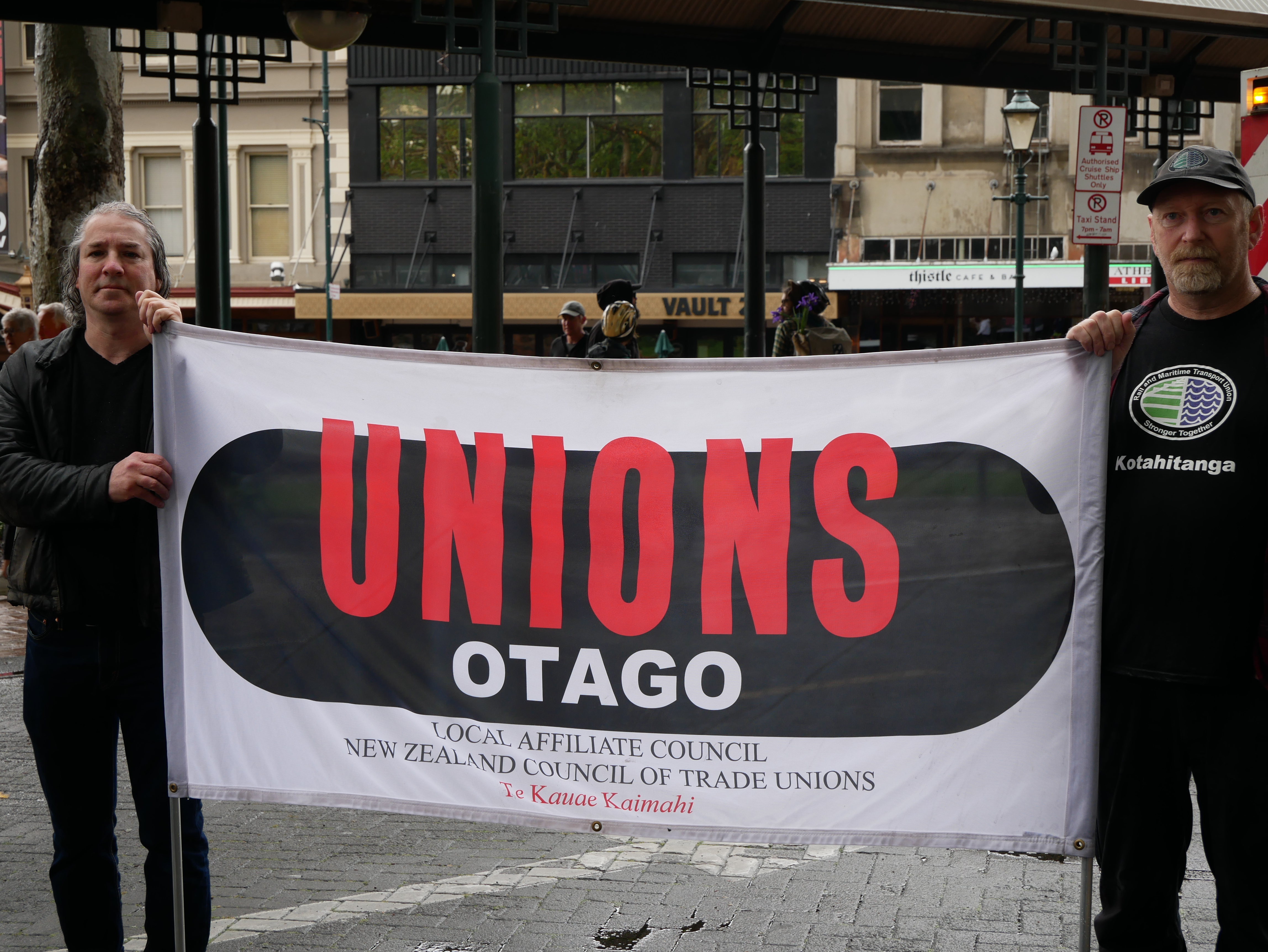
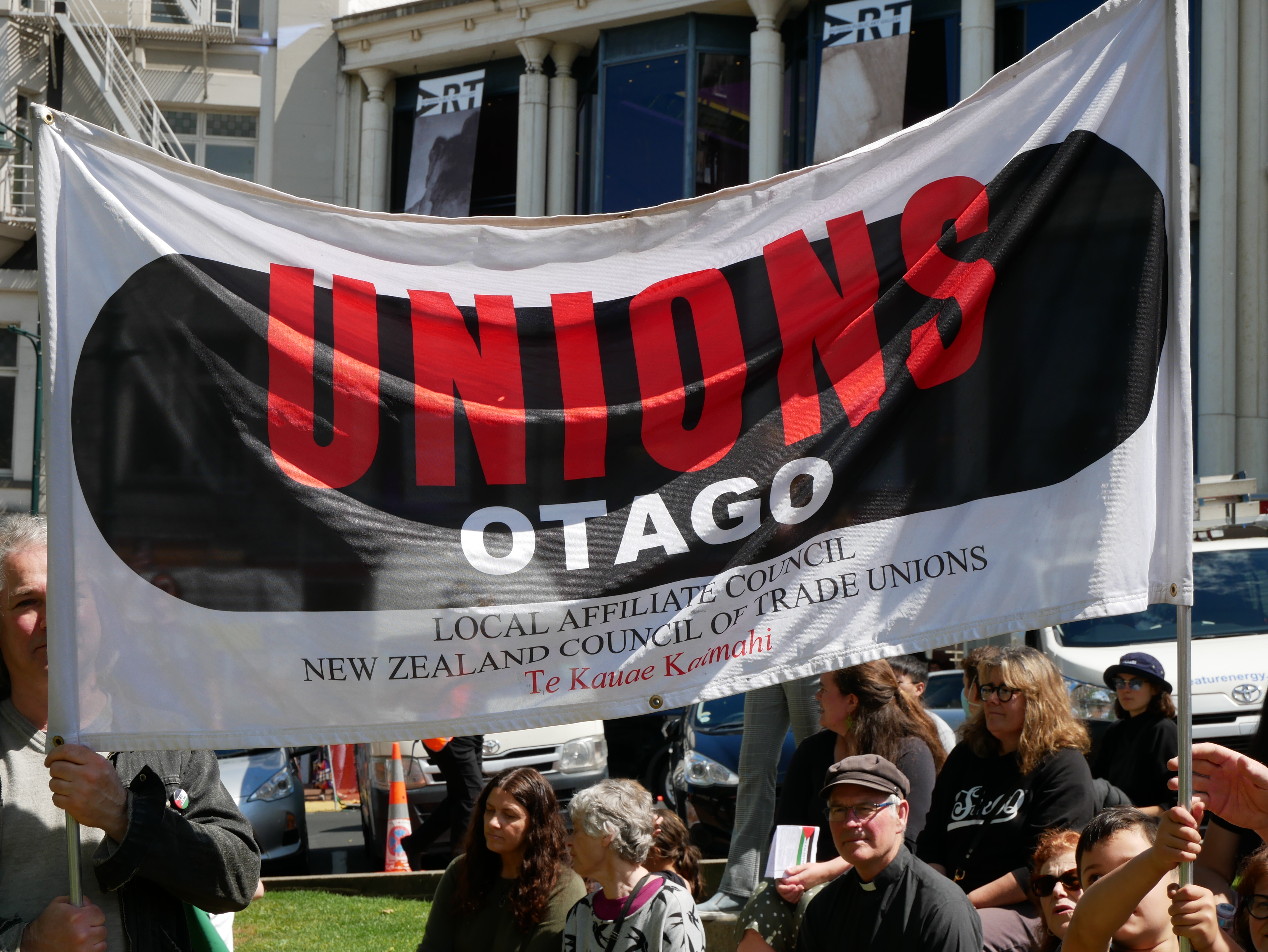
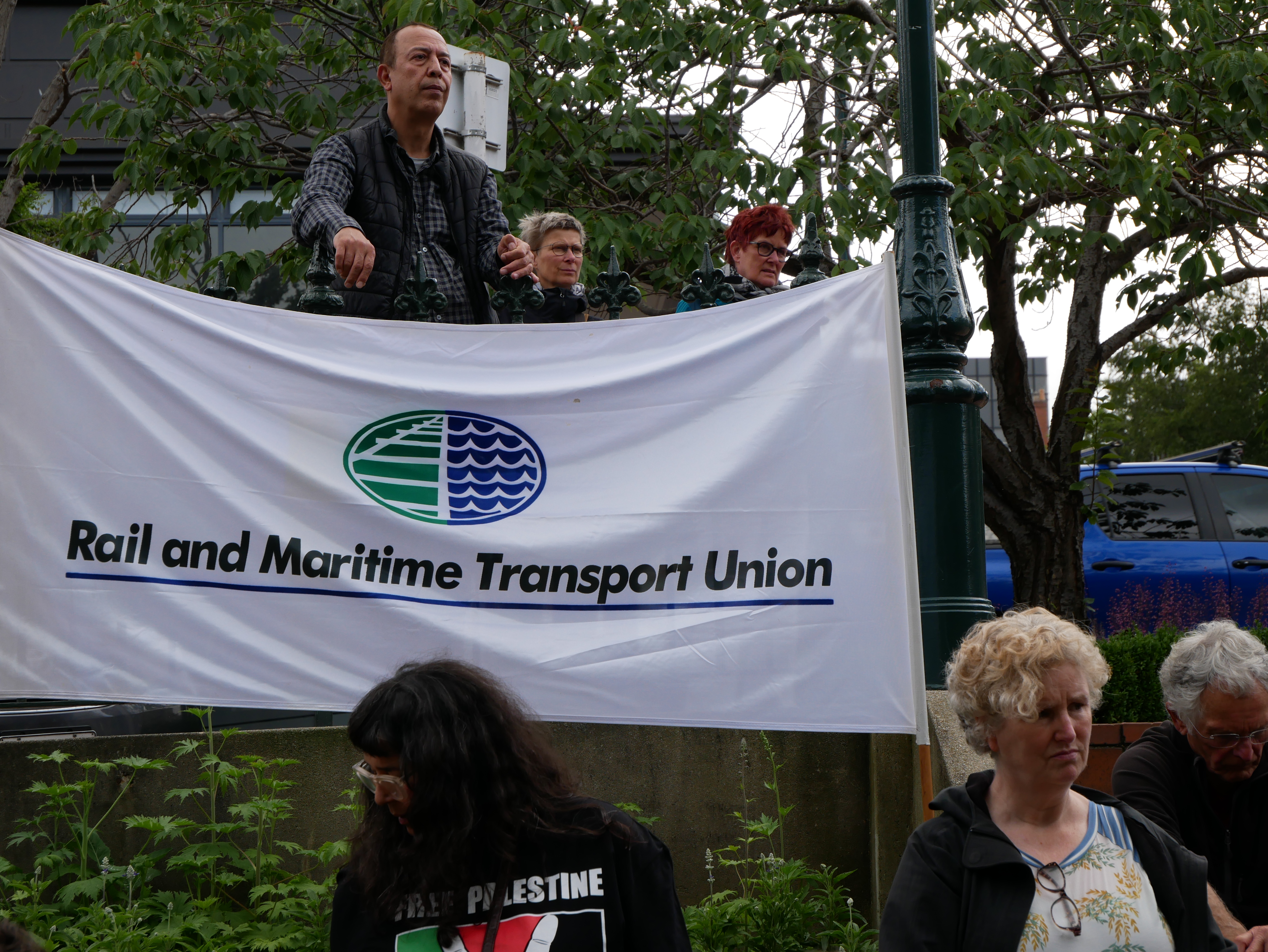
One final note on the social base is that of a political, social, and class nature. The most obvious is the presence and support of organised labour, which has proven a consistent of support at demonstrations. The banner of the local Council of Trade Unions affiliate Unions Otago has carried the rear of every single demonstration I’ve attended or observed, and from memory alone I can recall the heraldry of the Tertiary Education Union, New Zealand Education Institute, Post-Primary Teachers Association, New Zealand Nurses Organisation, Rail and Maritime Transport Union, Unite, and Public Services Association being present. I know personally that many more participants, absent the flags and placards, have been from other unions still. The consistency demonstrates at least some level of internationalist awareness among the local organised labour movement, even if organised labour overall remains in the post-1991 doldrums it has occupied for over 30 years.
Closely aligned to this is the local socialist organisations and their fellow travelers, who are small in number but can be found peppered throughout most demonstrations (irrespective of whether they’re particularly identified as such). Included in this are a variety of stripes as well as the local anarchist scene. While they may be a tiny minority in the overall political life of the city, they do form a small social base (often intermingled with others) from which a passionate well of support can be found. The organisations which operate within the wider movement (or, perhaps, scene given the size) have made vocal and open their support for the movement and contributed events and labour of their own – hence warranting a mention. This scene is contained within the wider progressive milieu of the city, who may not as often wear their politics on their sleeve, but are an obvious factor in the movement.
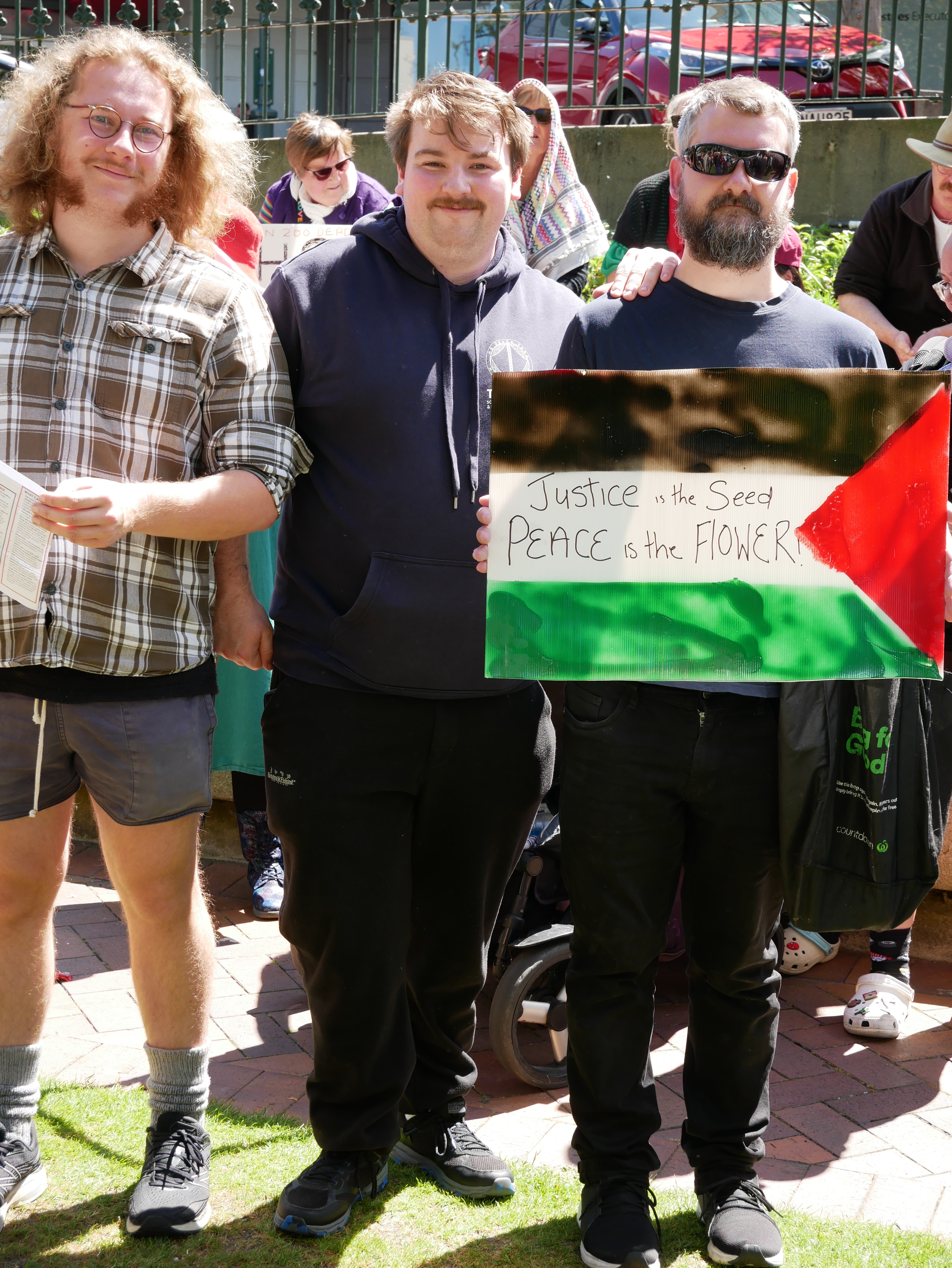
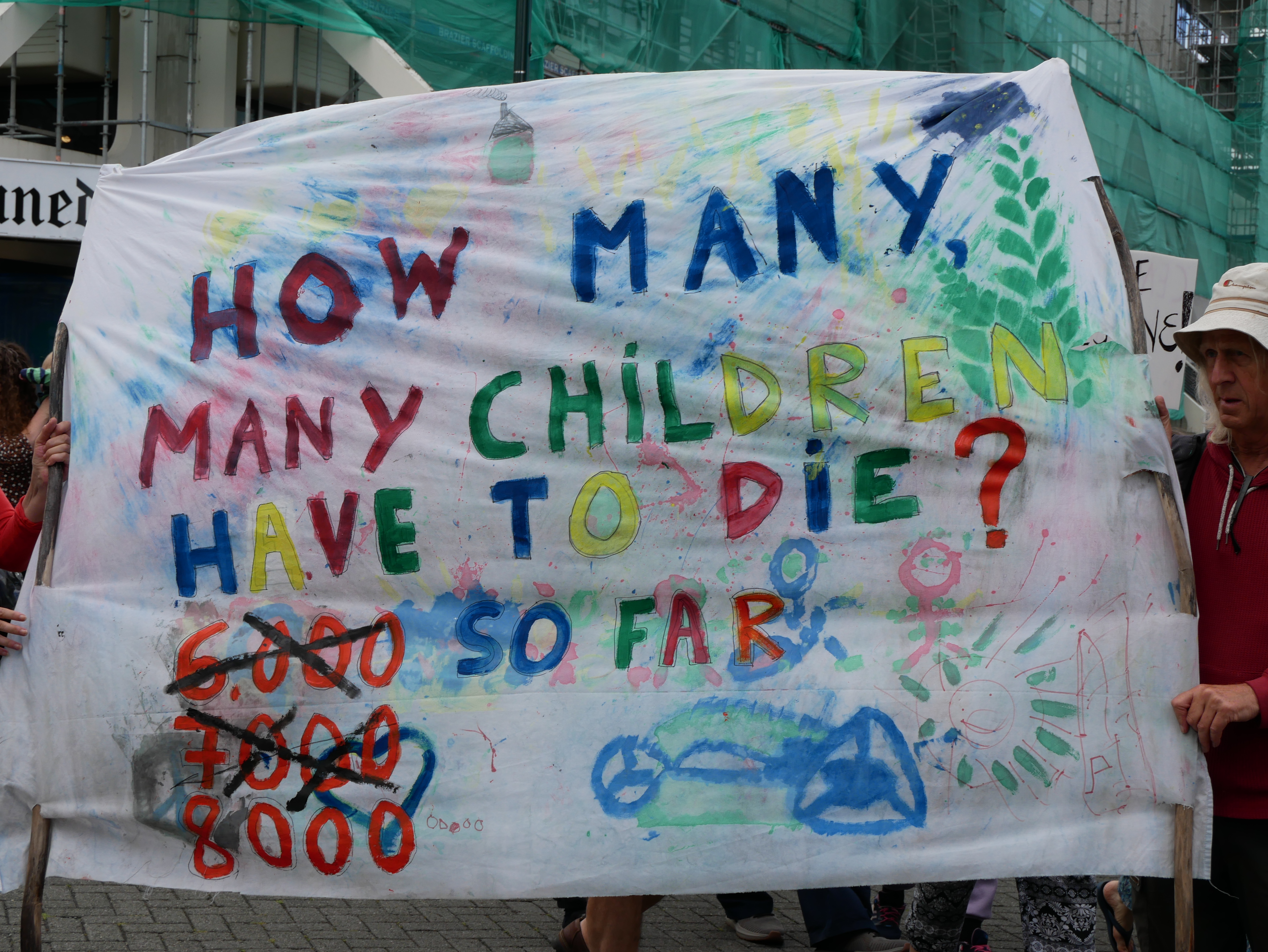
One last much more amorphous base has been the local arts and alternative community, who have added some degree of flair to the regular demonstrations. I note this only because the presence of local musicians, artists, and others is hard to miss given the efforts of these figures to devote their talents to the cause. Striking poster and clothing design has become a feature of city life thanks to the efforts of the alternative crowd, and they tend to turnout fairly regularly to demonstrations. While less formally organised and more amorphous than other social bases to which this movement draws from, they have a definable impact on the local movement as a whole for their presence.
These matters may seem trivial to some, or more to the point to be hopelessly in the weeds of minor details. But they are critical factors in understanding how social movements tick, and these are only some among all the factors that go into the life of a social movement. Often the movement gets drowned out by the cause around which it has cohered, but the study of the movement itself and on its own terms is what allows us to understand why we are motivated to move at all. With this understanding, we can hope to apply what we learn into the movements to which we find ourselves drawn. And in that application, perhaps find a greater success in what we set out to do. We also unearth things about the social circumstances in which we live that may otherwise have remained buried, as well as document that these movements existed at all. If we find that the cause was worth struggling for in the first place, then it is surely worth documenting and understanding for history’s sake.
The last thing I’d like to note before the photos you are likely here for is the matter of periodisation alluded to earlier. The Palestinian solidarity movement can be very closely tied in its ups and downs, its organisational and social development, to the events of the broader conflict to which it has arisen to address. At least in terms of the modern movement, to my knowledge while the stirrings of a Palestinian solidarity in New Zealand have existed for probably decades, it began to properly cohere in the 1990s between the First and Second Intifada. At the time of the Second Intifada in the early 2000s, the alter-globalisation movement (in which the Palestinian cause found sympathy in a worldwide social movement) was largely reworked into the anti-war movement post-9/11. For our purposes it is worth noting that many of the demonstrations of the anti-war movement in Dunedin were led by a banner explicitly connecting support for the Palestinian cause to opposition to the impending invasions of Afghanistan and Iraq. This is to note that the modern Palestinian solidarity movement was, at an organisational level, forged largely in the networks of the alter-globalisation and anti-war movements.
If we begin our periodisation, for New Zealand purposes, to the Second Intifada (and hence the 21st century), then we can see a slowly building movement which marks its bursts of activity to the changing (and always worsening) conditions on the ground in Palestine and Israel. After the Second Intifada ends and the anti-war movement declines we see repeated bursts of activity, in 2006 with the Israel-Gaza War of that year and the Israeli invasion of Lebanon, in 2008 with the next major Israel-Gaza War, in 2010 with the Gaza Freedom Flotilla, in 2012 with clashes and the IDF Operations Returning Echo and Pillar of Defense, 2014 with the Israel-Gaza War of that year witnesses (to my knowledge) the largest wave of explicitly Palestinian solidarity demonstrations yet, and again (though on a smaller scale) with the clashes in 2018 and 2021.
Though the scale of mobilisation does not simply consistently grow with each new burst of organisation, the underlying background networks gain experience, activists, and a history of their own. In short, the social movement continues to grow as a social movement of its own. By tracking the development of the movement alongside the developments of the ongoing conflict, we begin to see a clearer picture not of a social movement which simply gets bigger with each new clash, war, atrocity, or other development – but of a social movement that establishes itself as such in step with the developments in Palestine-Israel itself.
This discussion of understanding the Palestine solidarity movement as a social movement in itself is the bulk of what I wanted to say with this little article. So I’ll end the article side of this with a more disconnected reflection on the movement before the galleries below. Perhaps of most interest to the reader is the general health of the movement itself in consideration of the development of events in Israel-Palestine. Those who had hoped for a mass and sustained surge of support, with thousands attending on the regular, are unlikely to see that happen for as long as this human disaster drags on. Perhaps a future outbreak will see that grand mobilisation, or an even greater wave of atrocity within the confines of the present conflict. But as much as social movements can be fickle and determined by wider public passions, they are as often more determined by the quality, caliber, scale, durability, etc of the underlying organisations which actually keep things chugging along. Something I like to call “organisational capacity”. The capacity exists at present to keep a notable movement on the go, but likely doesn’t exist (at least in terms of resources and labour power) to scale up to a truly constant mass movement. Even if it could, it would only be able to do so for so long without totally exhausting said resources and labour power, requiring a lower level of intensity to regroup or a major input of both.
To put things in perspective, the Springbok Tour of 1981 lasted 56 days from the date the Springboks landed (19th July 1981) to the date they left (13th September 1981). At the time of writing, fully 137 days have passed since the surprise offensive on 7th October 2023. Between the announcement of the Tour in September 1980 by the NZRFU and the arrival of the Springboks, the anti-apartheid movement had about 10 months to prepare. The initial shock of the 7th October offensive and bungled response by the IDF gave those knowing a terrible response was coming 4 hours between the first Hamas rocket fire at about 6:30am and the first retaliatory IAF strikes at around 10:30am, and about 21 days between the 7th October offensive and the IDF ground invasion on 28th October.
Further, we might consider that while HART in 1981 and PSNA in 2023 had existed for a roughly similar time, and the same could be said for some degree of public organisation against the respective policies of South Africa (thinking of the ‘No Māoris – No Tour’ campaign in 1960) and Israel (thinking of the stirrings of Palestinian solidarity during the Second Intifada), the relative levels of public support and organisation are essentially incomparable. Public opposition to apartheid and the organisational capacity to do something with it had already seen a major nationwide campaign (collecting 150,000 signatures in 1960) some two decades prior to 1981. Indeed, Springbok tours had twice been cancelled (in 1967 and 1973) years prior to 1981 and a movement on a scale more comparable in capacity (though not regularity) to the Palestine solidarity movement of today had existed since the 1960s by the time of the announcement in September 1980.
This is all to say that the lack of a “Springbok moment” today bemoaned by some is unrealistic in how it understands the dynamics of a social movement. To be blunt, what has been achieved in terms of public mobilisation by the movement (both in Dunedin and nationwide) is far and above what would have been considered possible even a year ago let alone ten when the last major wave of mobilisations occurred. That moment is still entirely possible, and it is the patient work happening now and for the last decade or two that might make it possible.
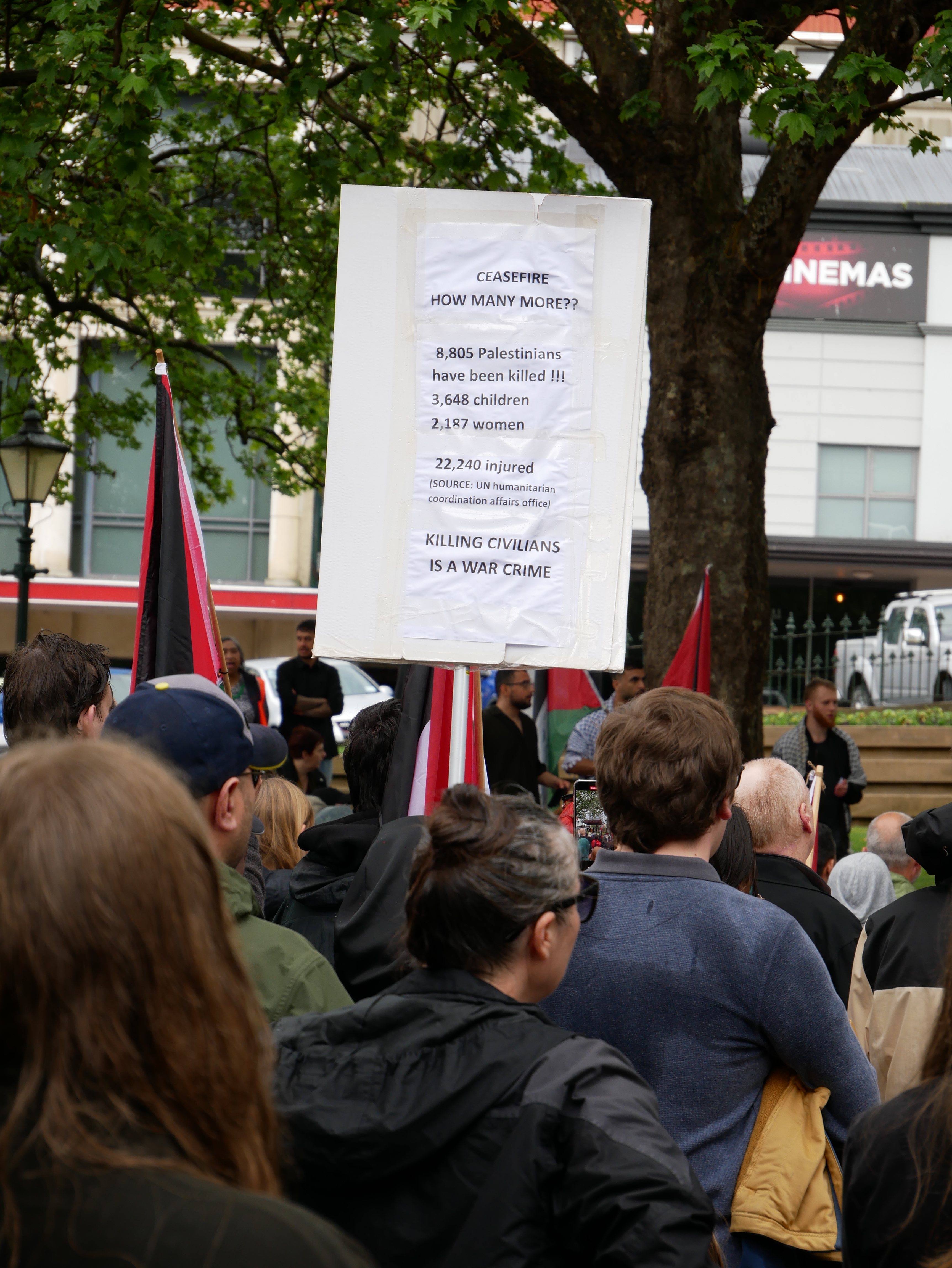
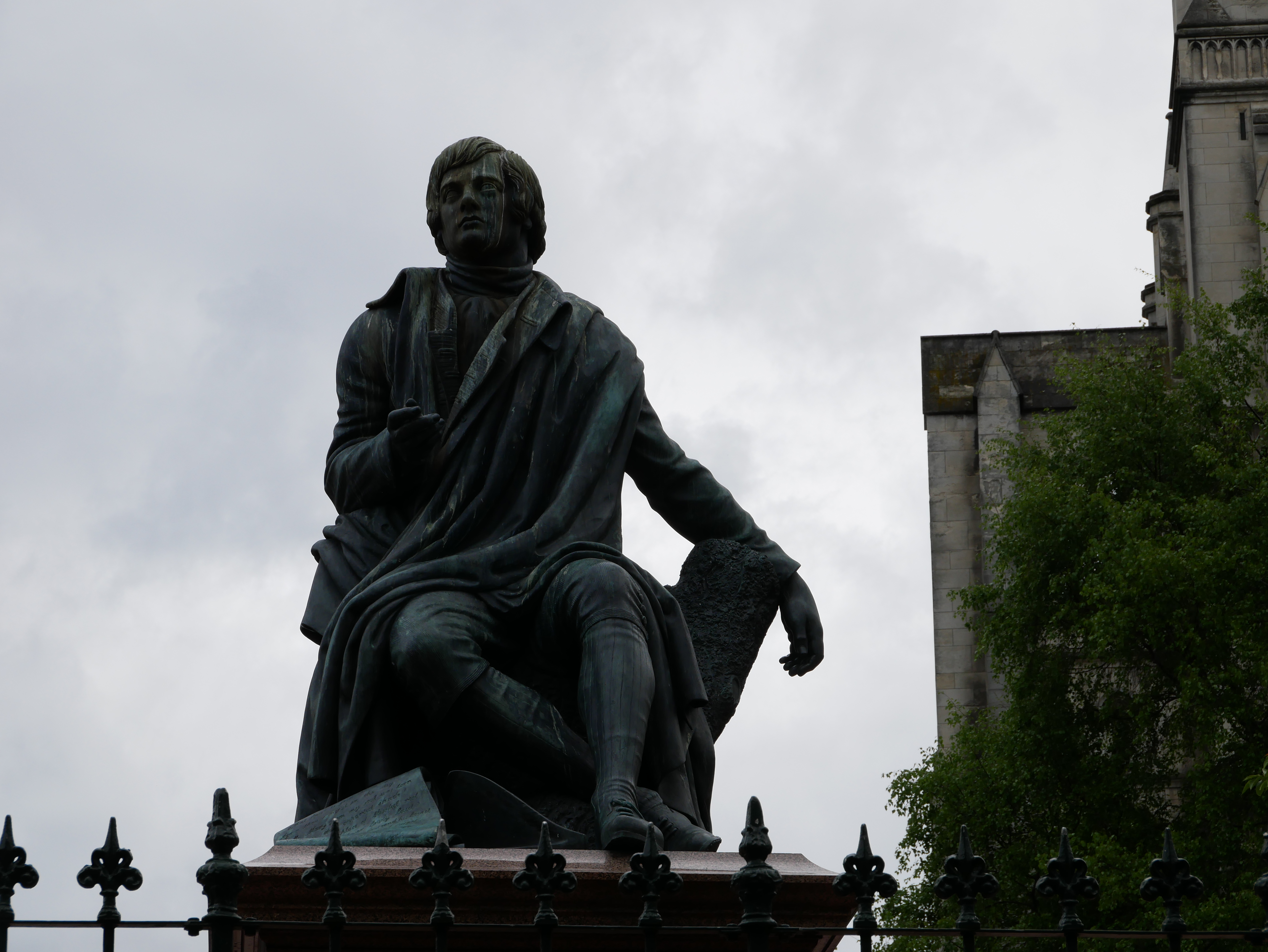
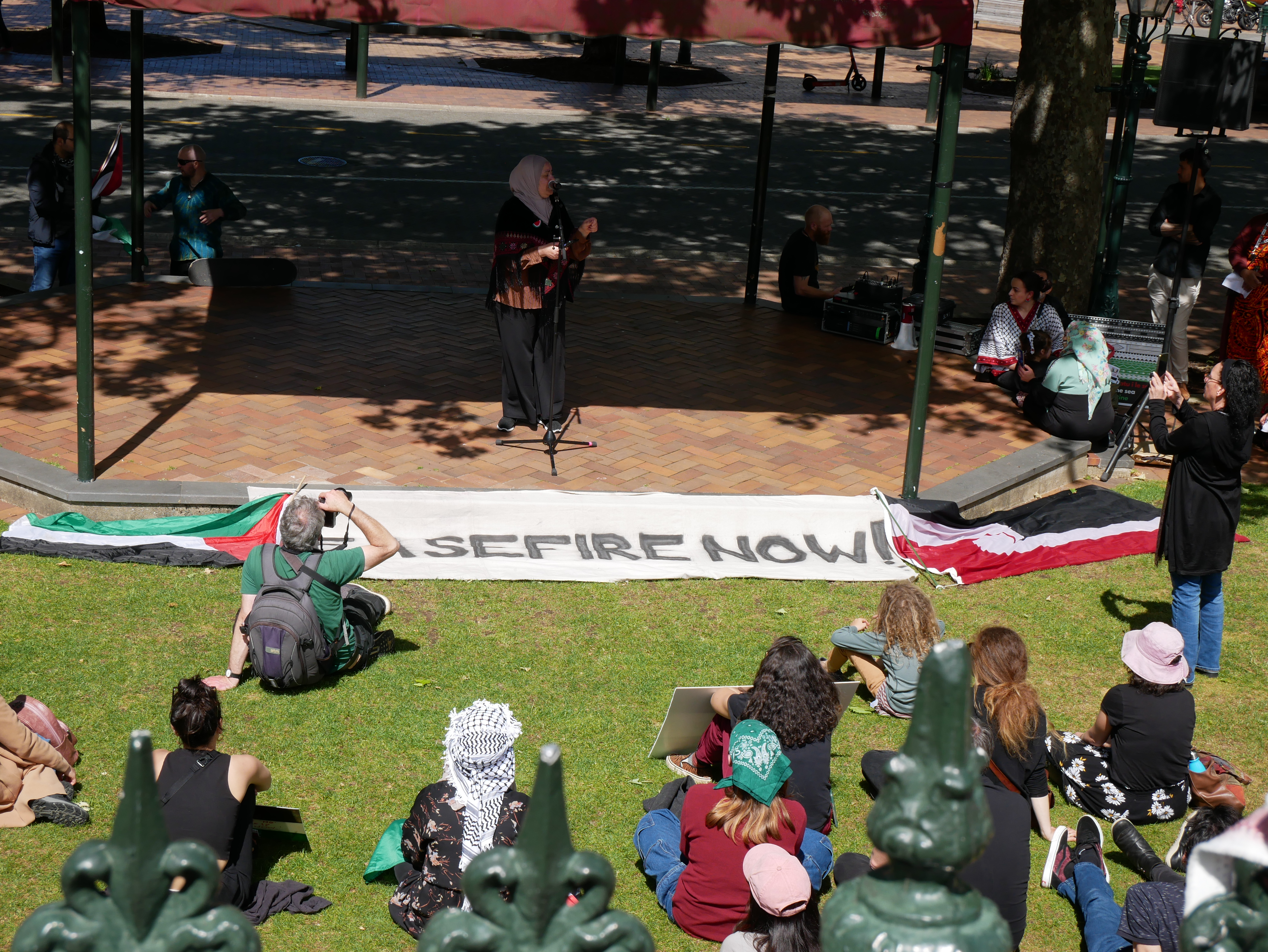
4th November 2023
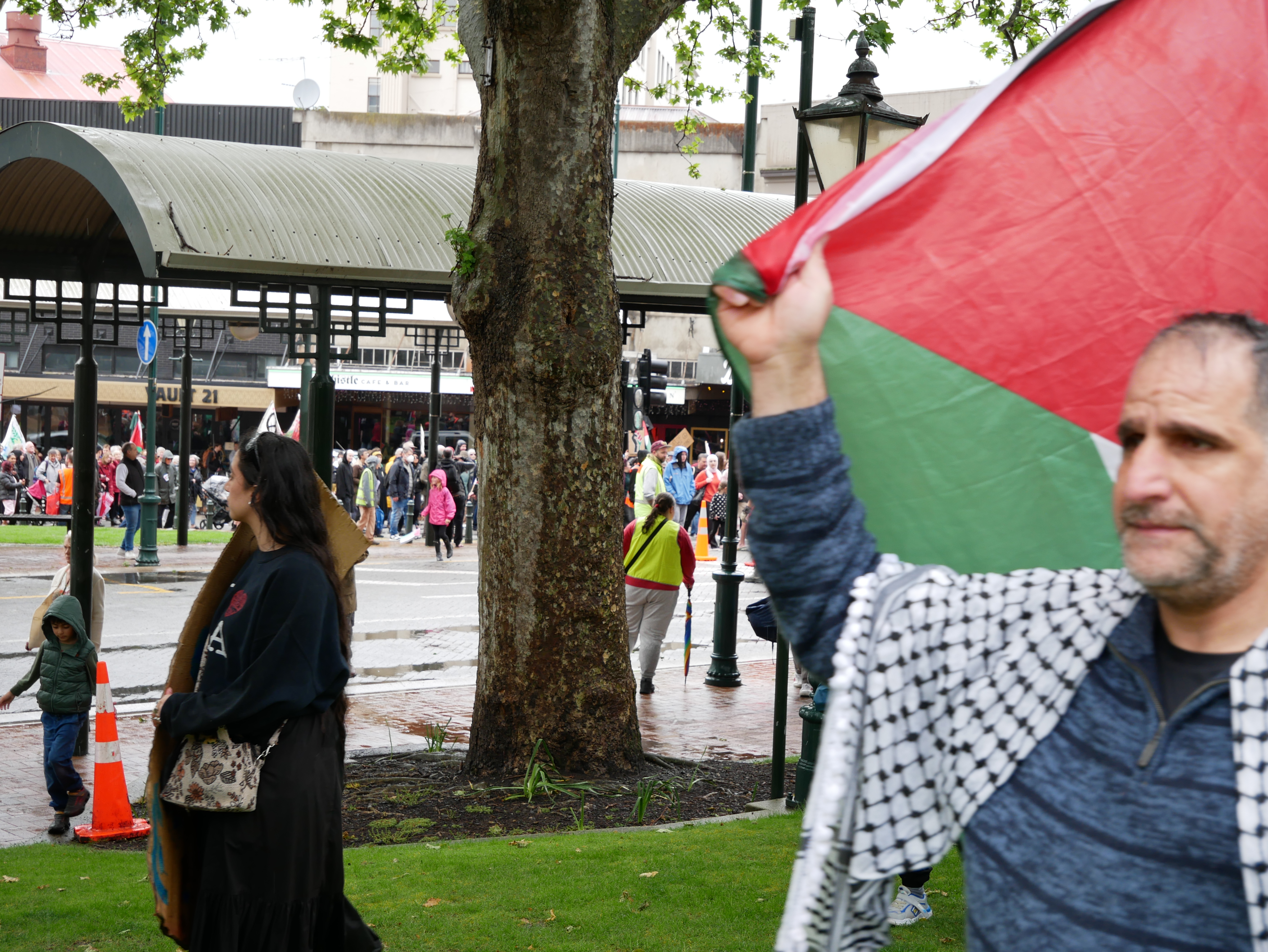
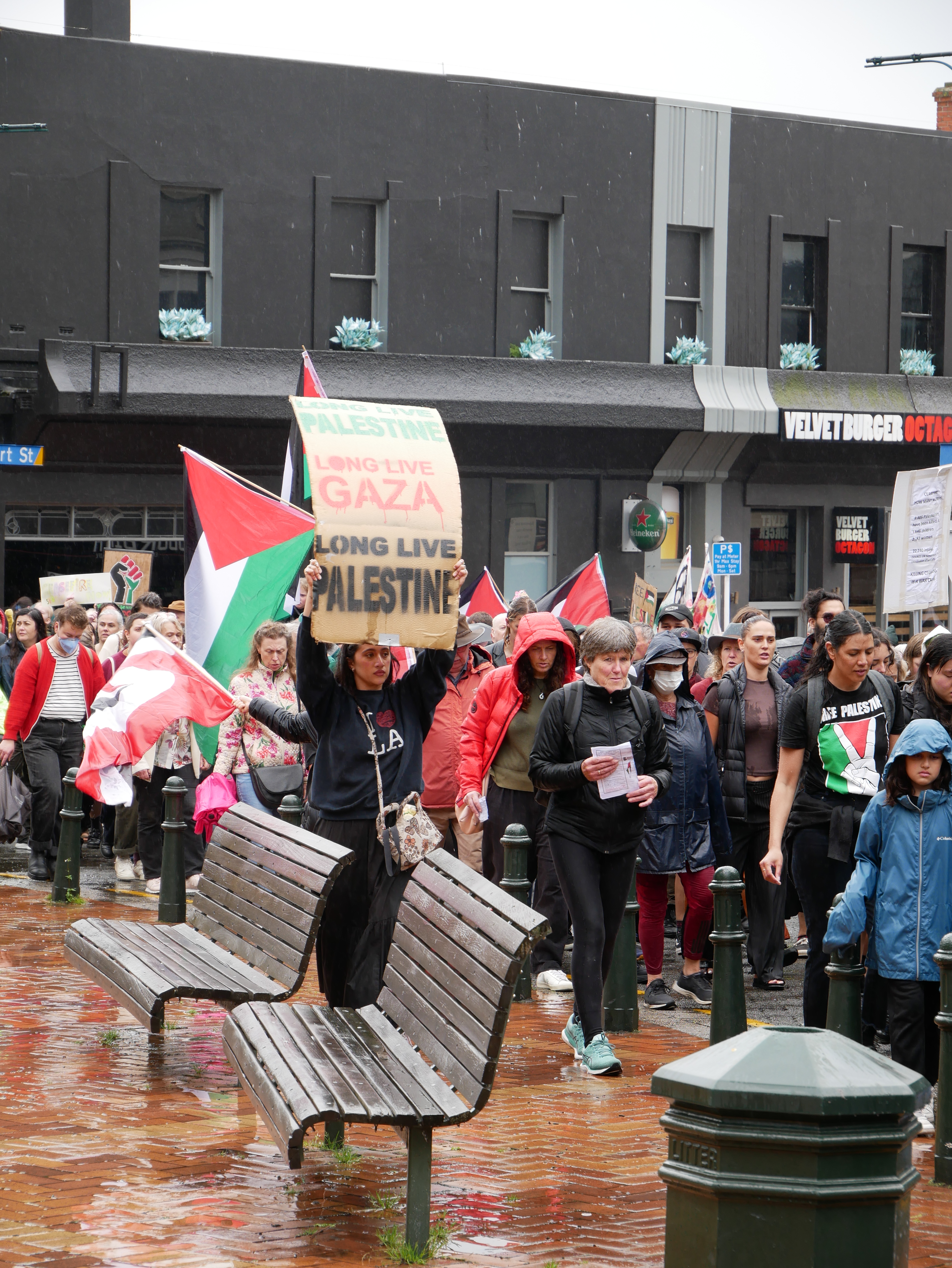
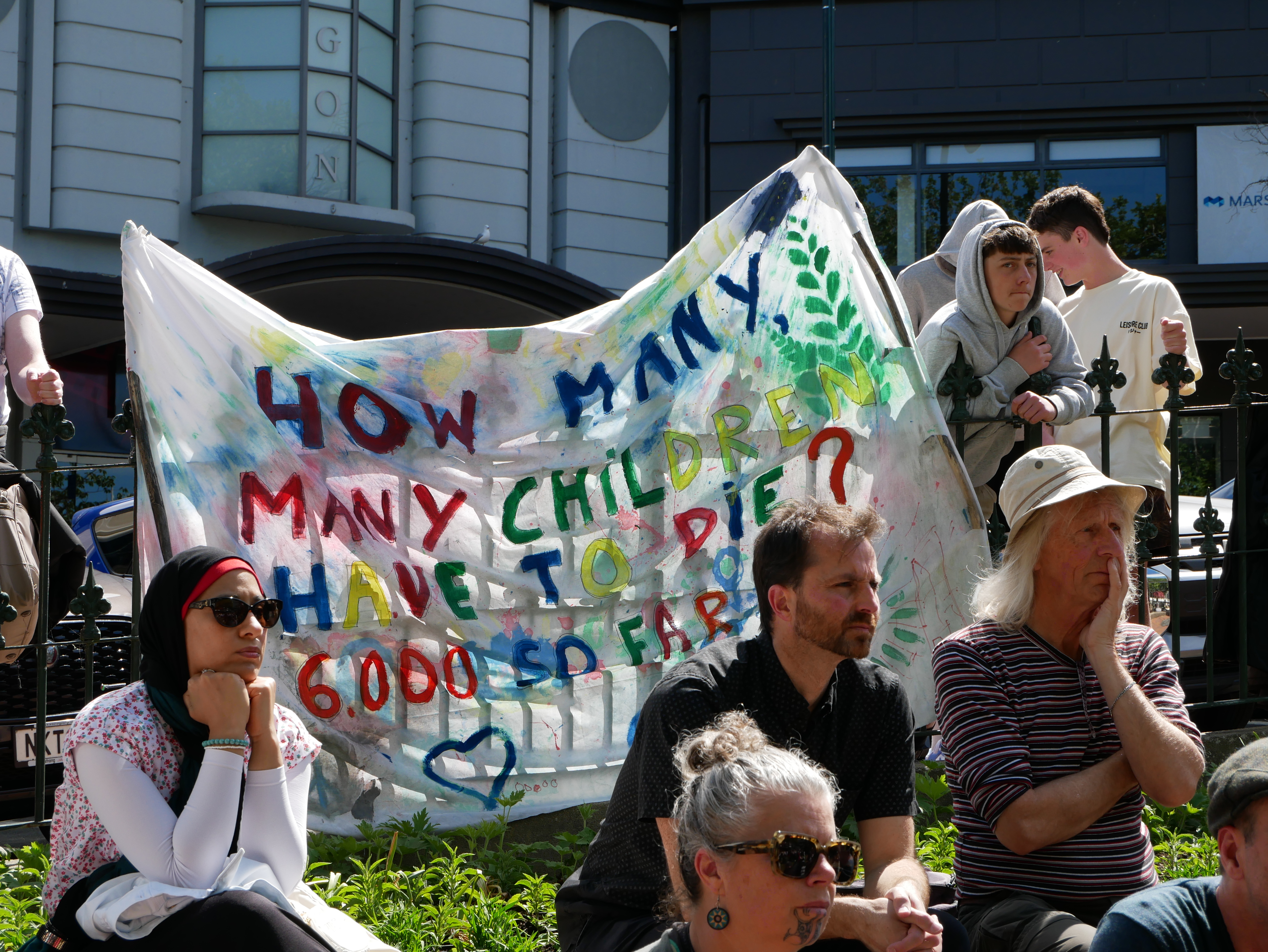
18th November 2023
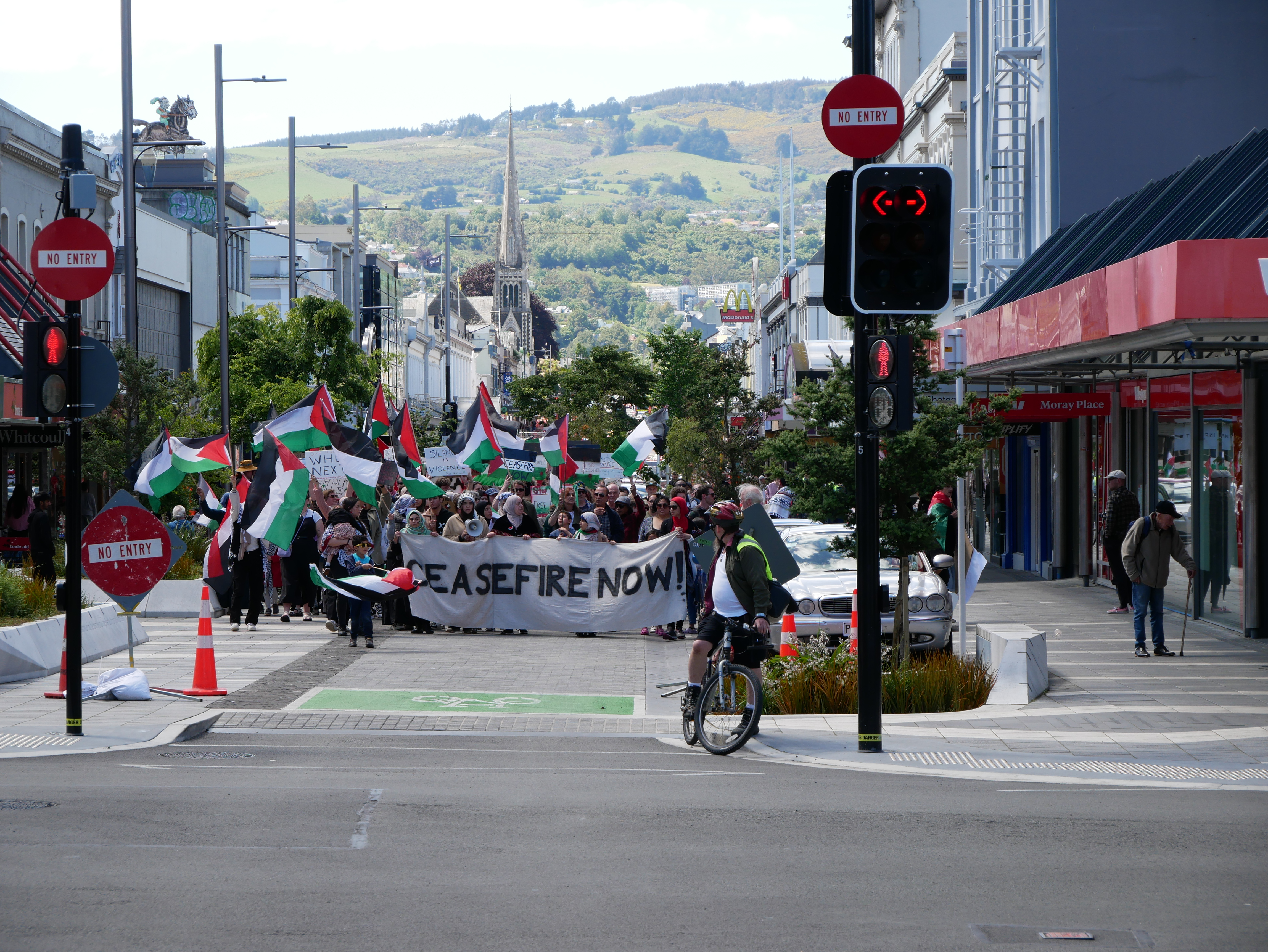
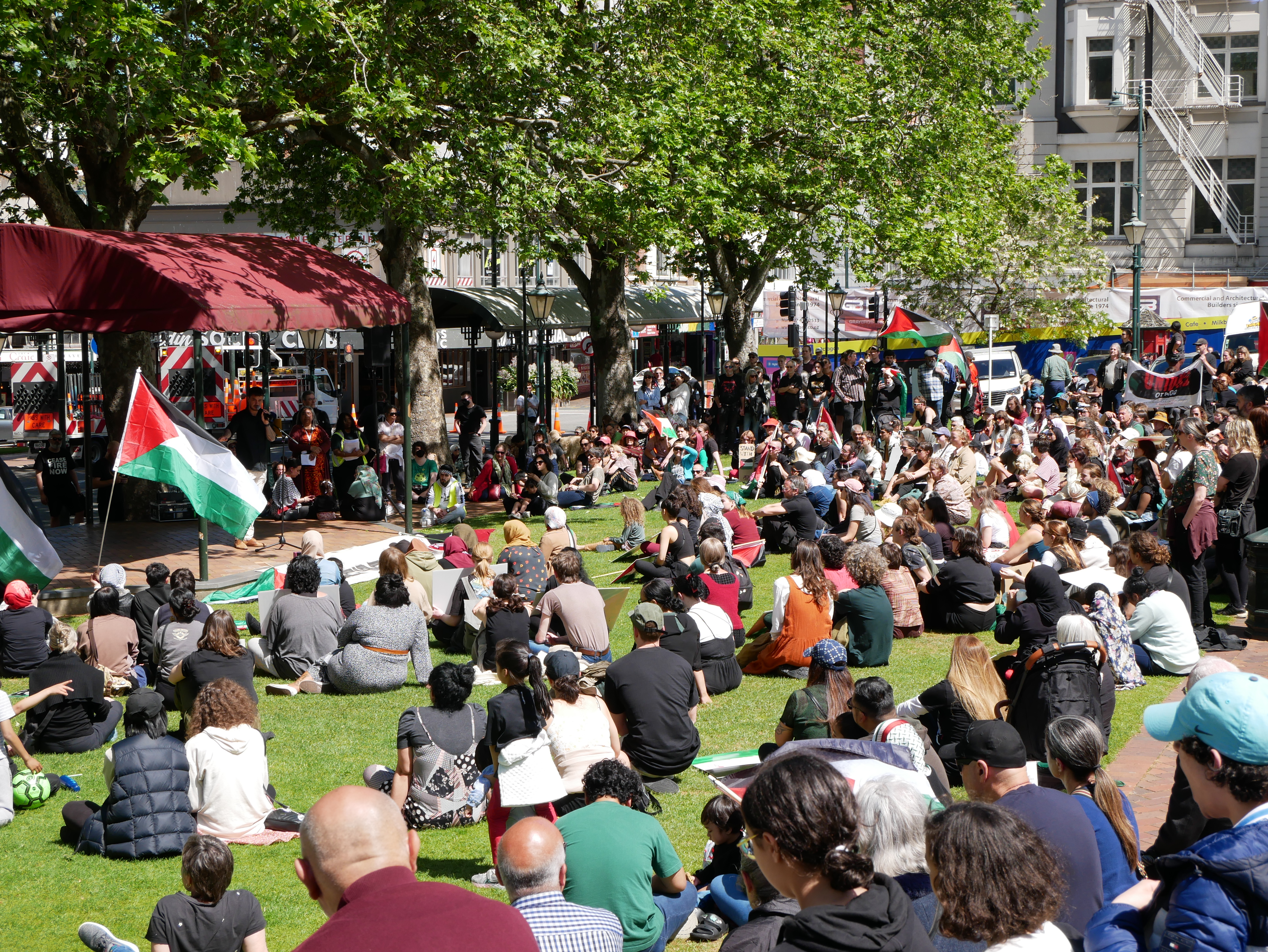
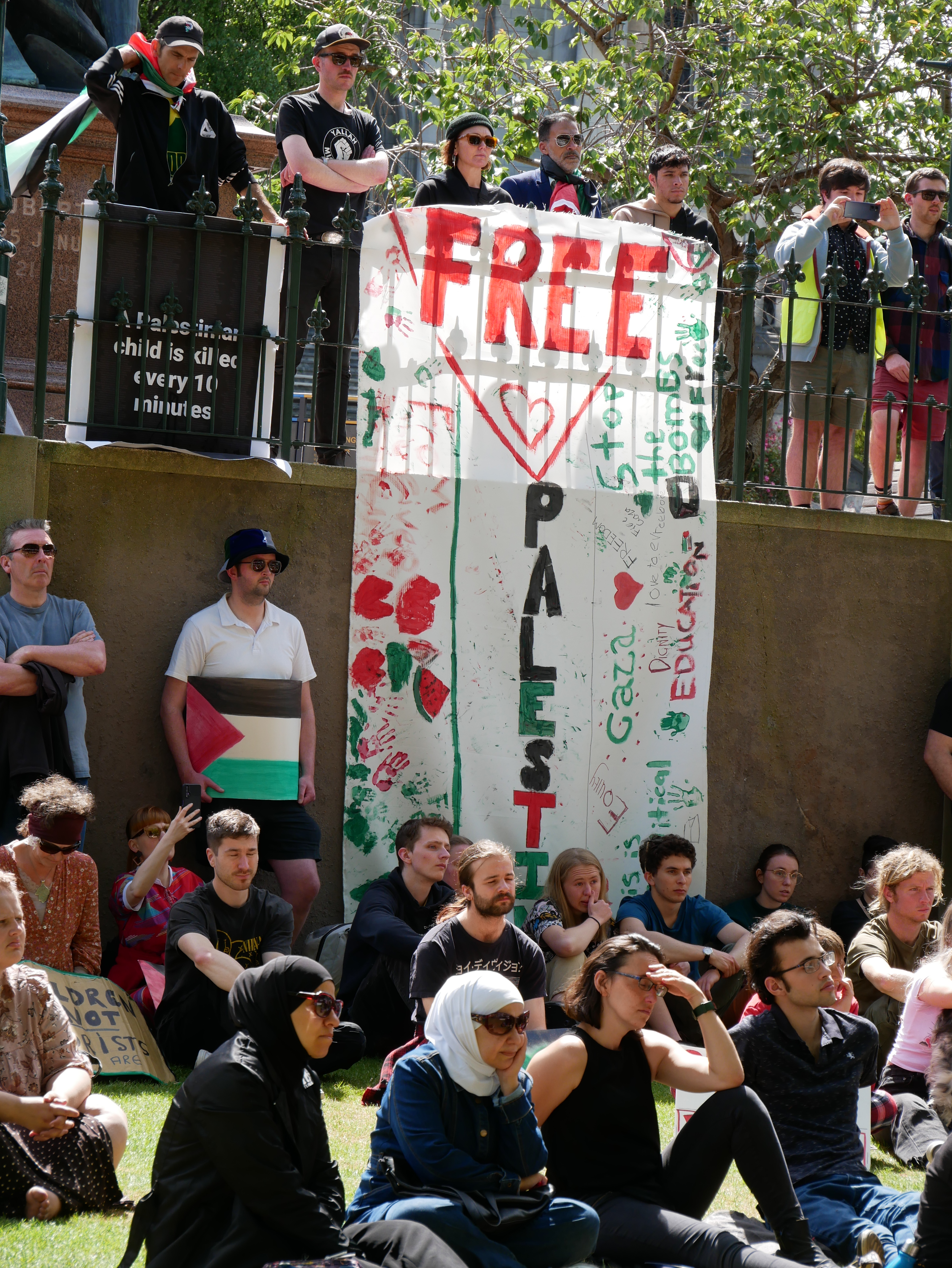
23rd December 2023
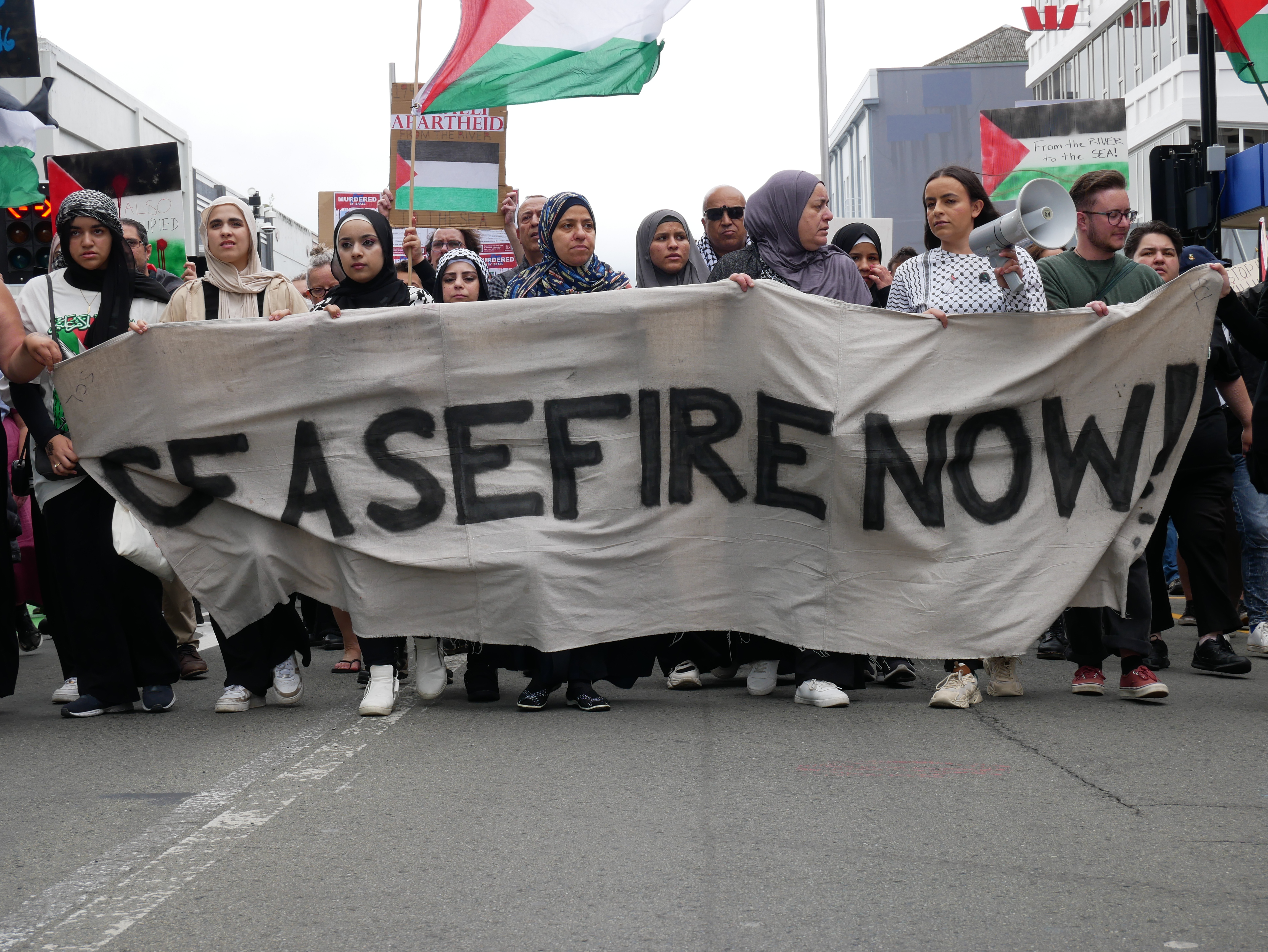

 Notes South from Nowhere
Leave a comment