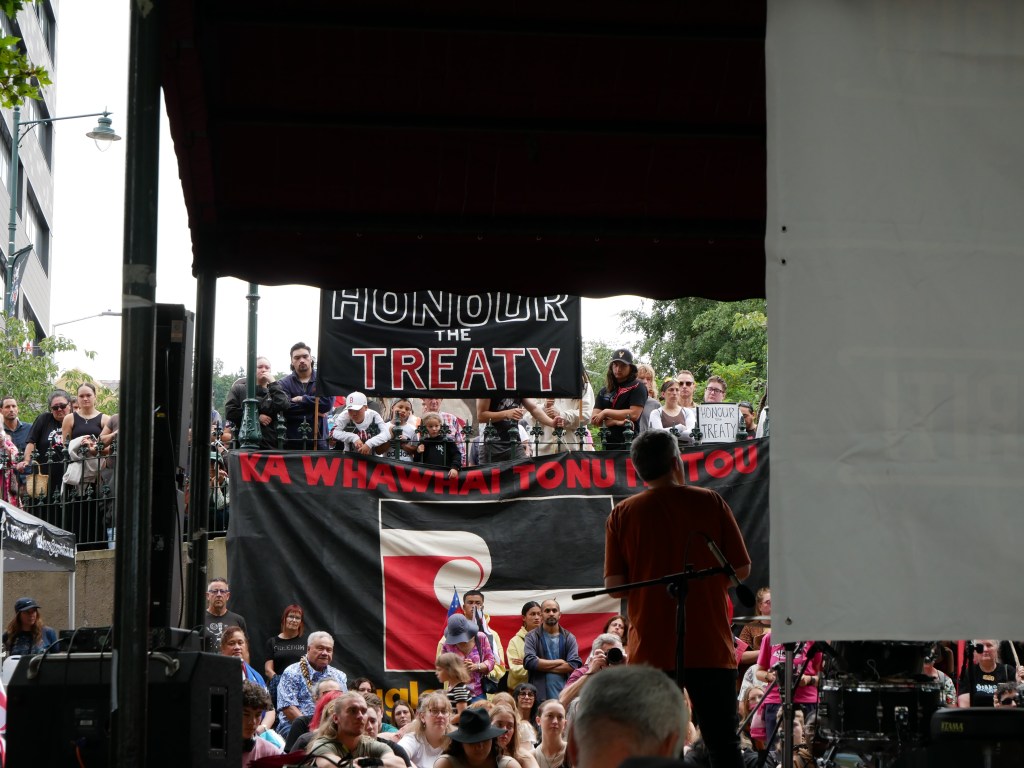
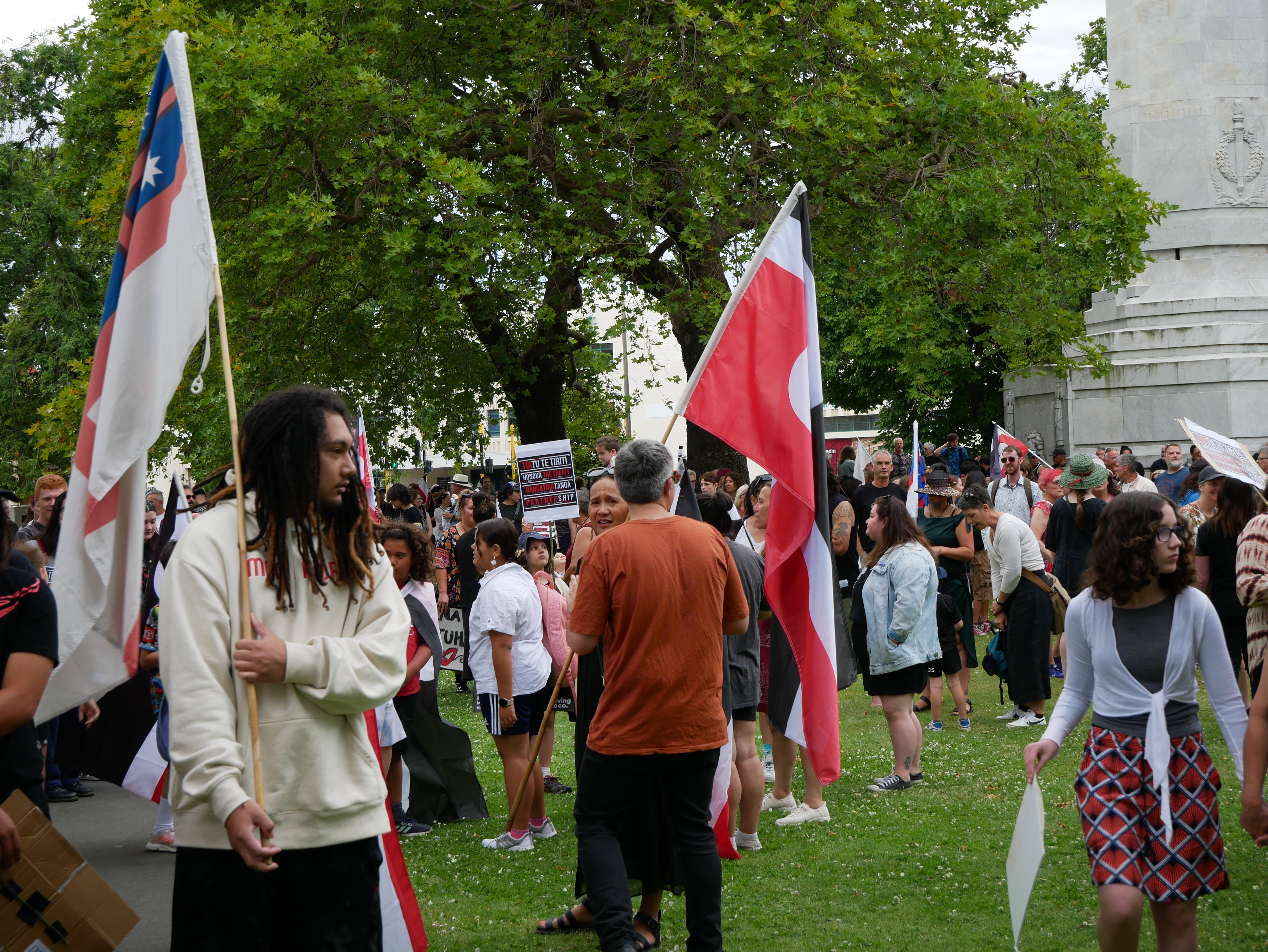
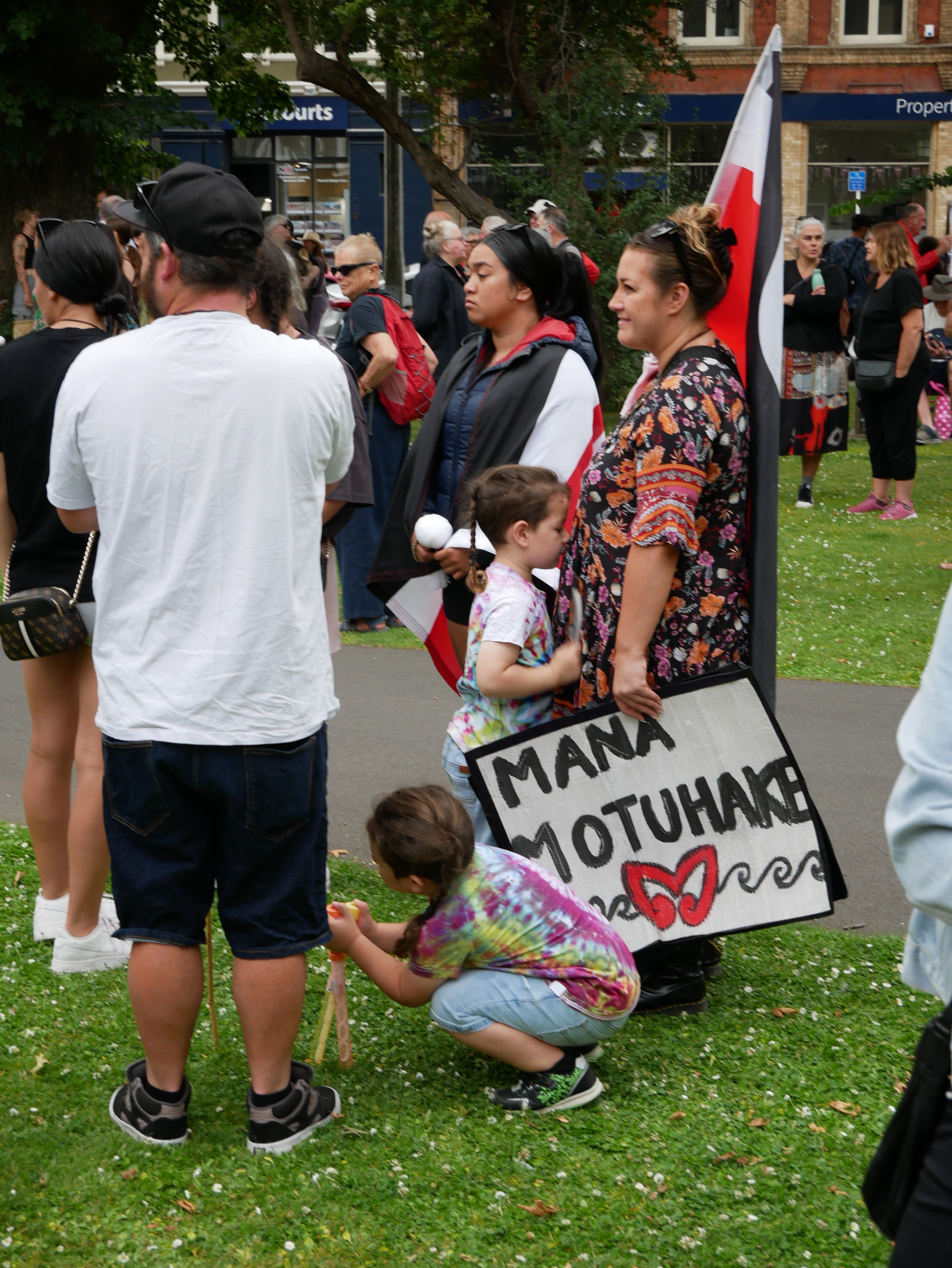
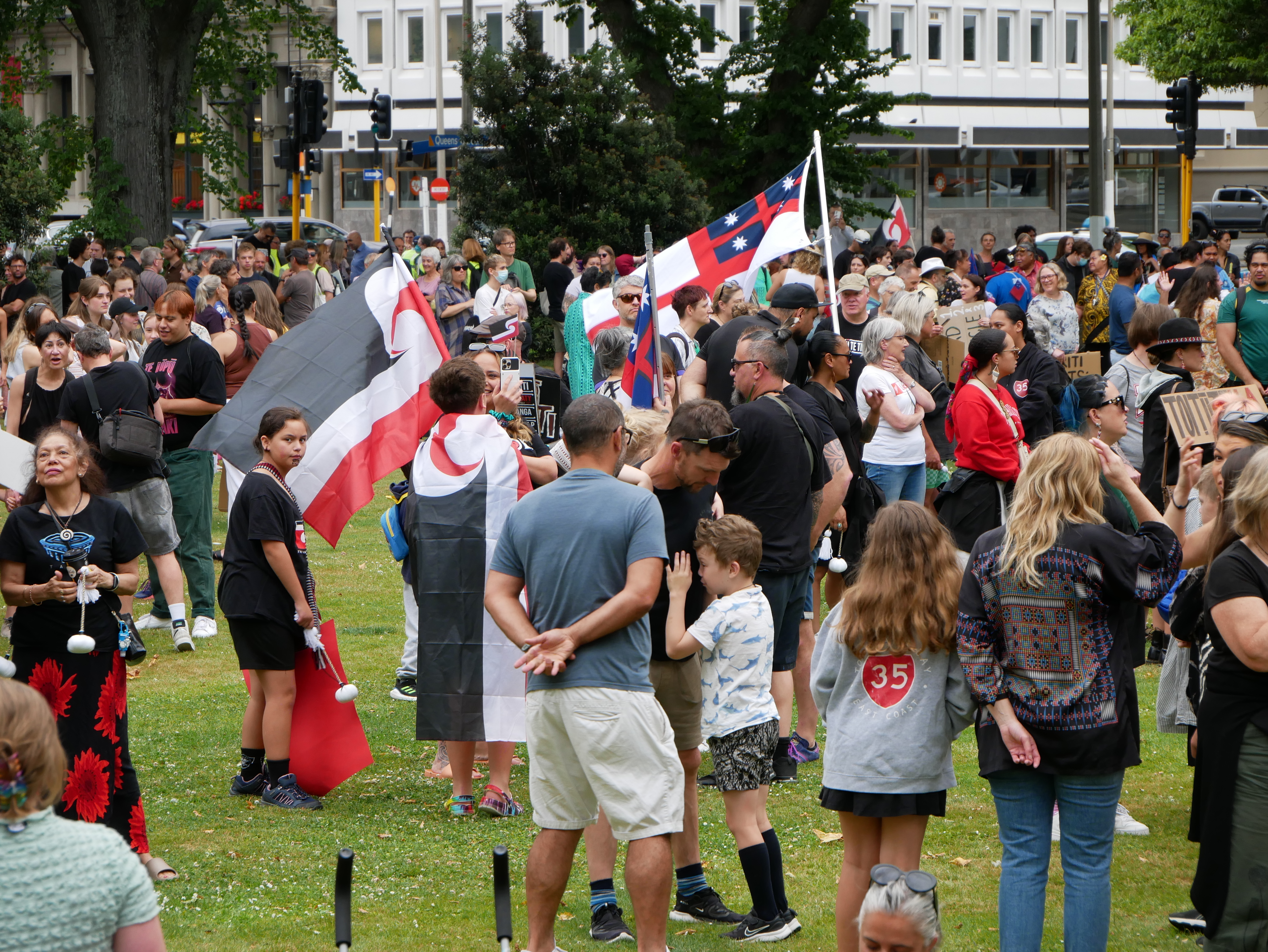
I decided to let this one sit with me for a bit before endeavoring to get it into publishable shape, so my field notes/protest photography article on this year’s massive Waitangi Day demonstration in Ōtepoti Dunedin are appearing a little while after the actual day and its immediate impact. True this may limit somewhat the potential interest in the piece, but I feel the added quality of letting my thoughts marinate would be worth the wait. And, let’s be real here, it’s hardly the case that last Waitangi Day’s events will be irrelevant or outdated any time this year (this was seemingly an evergreen statement when I wrote it in February, we all laugh…). I’ve outlined my basic philosophy with protest photography in previous entries, so it’s not pertinent to repeat them again so soon. As an immediate concern, simply know that if you’re only here for the photographs feel free to scroll down the bottom. As always, please do share or use the photos below as you wish – I just ask that this blog be credited as the origin point of the photograph(s) in question.
Notes on a Political Moment in Geography & Time
Where my previous “field dispatch” of sorts developed into a lengthy article, I intend for this piece to be much shorter. As such, besides a brief outline of the events of the day, I intend to limit my thoughts to what the mobilization might mean in the context of the city and the wider mo(ve)ment it existed within. First, some quick reflections on the day.
There had not been a major Waitangi Day protest of some size in Ōtepoti for a number of years when the call was made to stage such a demonstration here for 2024. Of course, with the political situation regarding Māori politics and the policies of the governing coalition as they are, a decent turnout was expected and likely all but guaranteed. I arrived at Queen’s Gardens with my partner fairly early, maybe half an hour before the march began, by which time perhaps a couple hundred people had gathered. The location was, I imagine, picked for its symbolic resonance to the day’s heavy themes of colonial exploitation and Māori political survival in such circumstances. Queen’s Gardens are not an unusual spot for fixed and static rallies or pickets. However, marches incorporating the Gardens (a triangular lawn with several monuments) are uncommon due to the close proximity to the likely end-point of any march in the city – The Octagon – and the additional logistical headache of needing to march directly up the urban stretch of a state highway to get there.
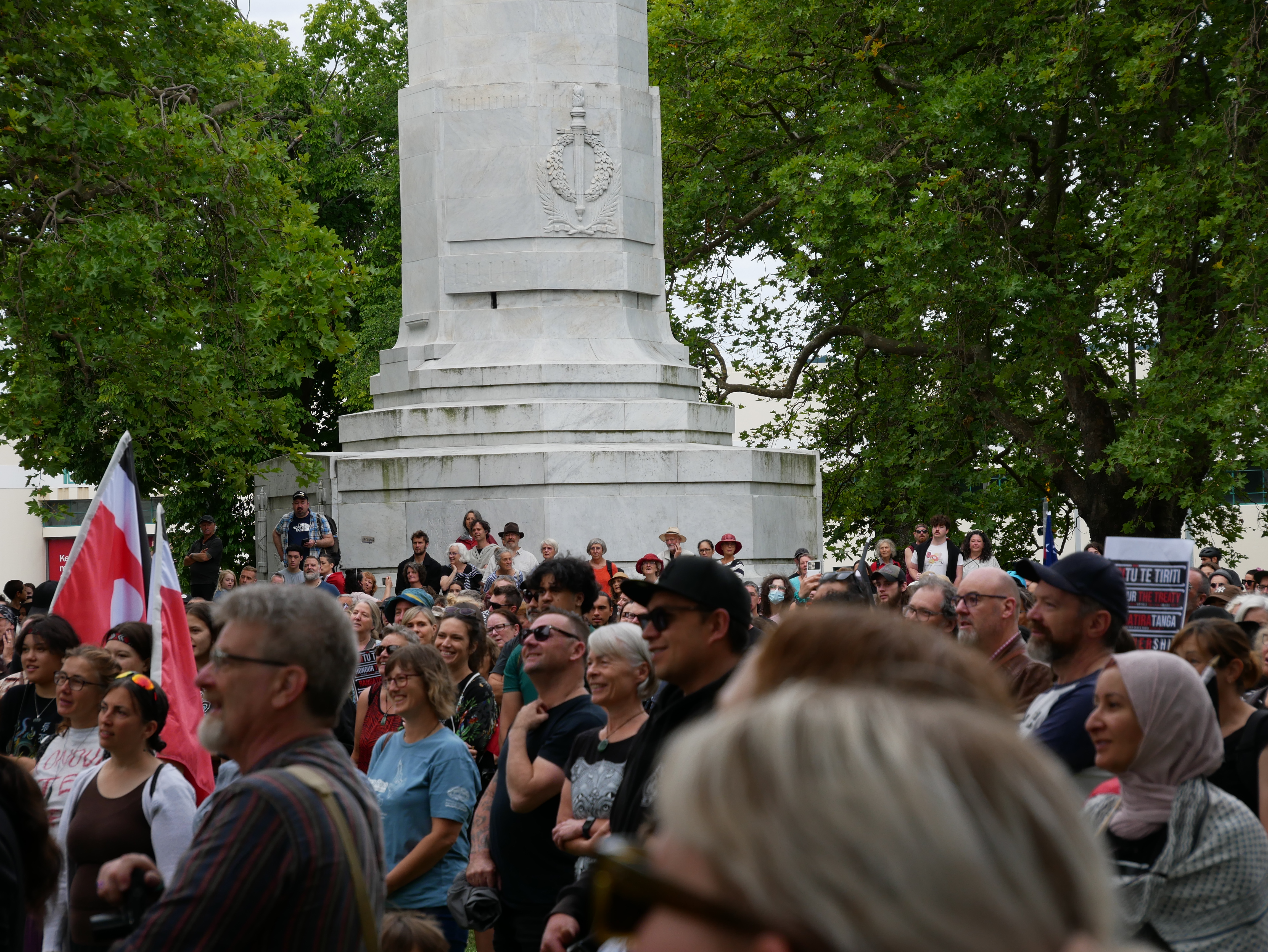
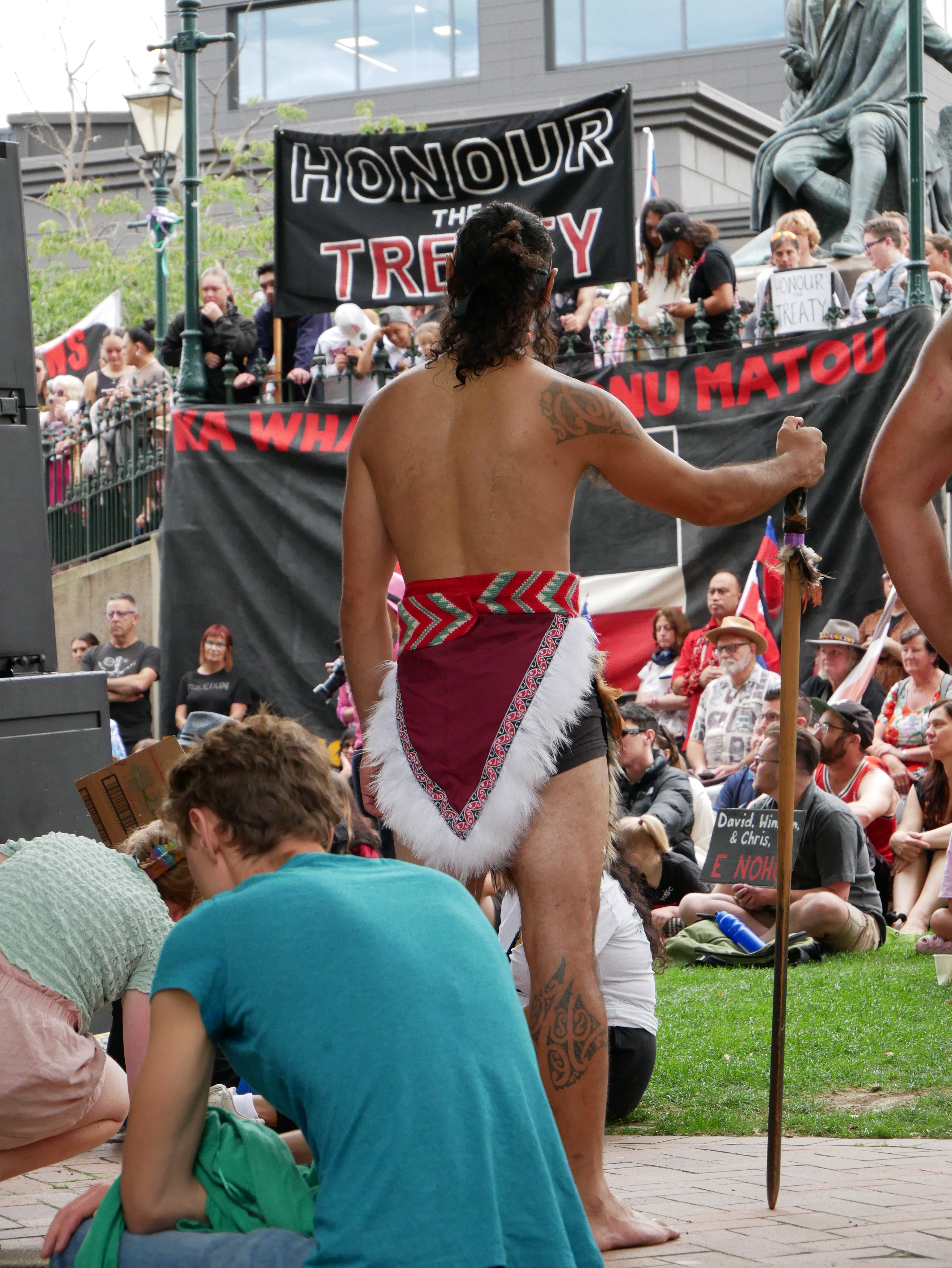
While a pleasant enough reprieve from the major streets which ring it, the Gardens serve a role as a central piece of architectural state-building in the city. At the thinnest point of the triangle sits the most recent monument, a Celtic cross marking the city’s settler and Christian heritage erected in 2000. Queen Victoria stands in marble (flanked, ironically, by Wisdom and Justice in bronze) on the inland-facing side of the triangle, having been built in the context not only of her death but also the recently concluded Second Boer War. Adjacent from her just outside the Gardens rests the colonial notable Donald M. Stuart in stern-faced bronze. Nearby one can find the Imperial Building, the Duke of Wellington pub, and Toitū Otago Settlers Museum (granted, the latter is a fine museum which opens with an area dedicated to local Māori history). And, in the middle, stands the imposing 28-meter column to the war dead of the First World War (and later the Second) known as The Cenotaph, cementing the Gardens’ place as a piece of solemn ideological colonial state-building for the city. All that is to say that the gathering point was, I would imagine, specifically chosen with the intention of invoking its colonial imagery. This was confirmed by the speakers who got the ball rolling before the march left.
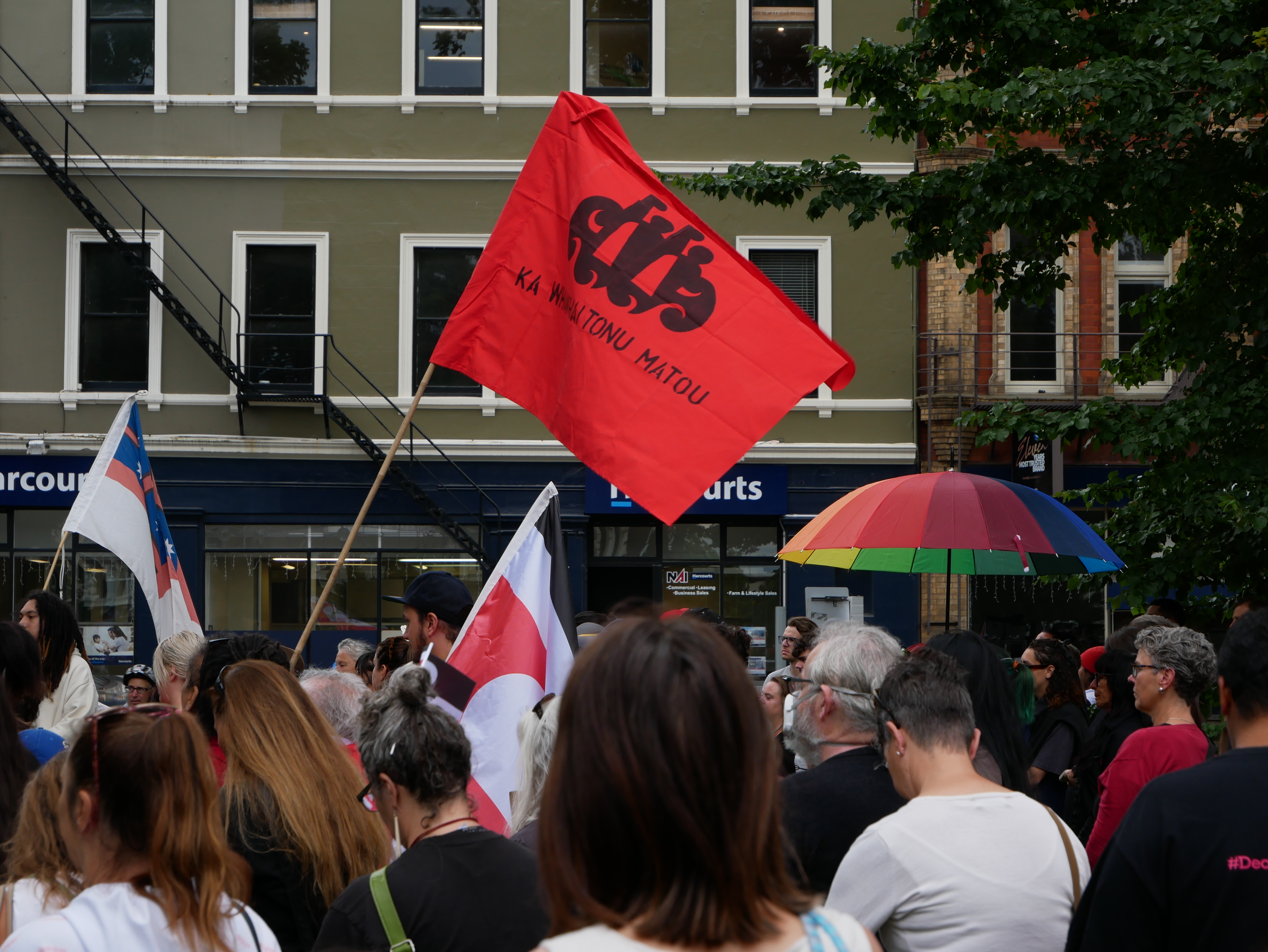
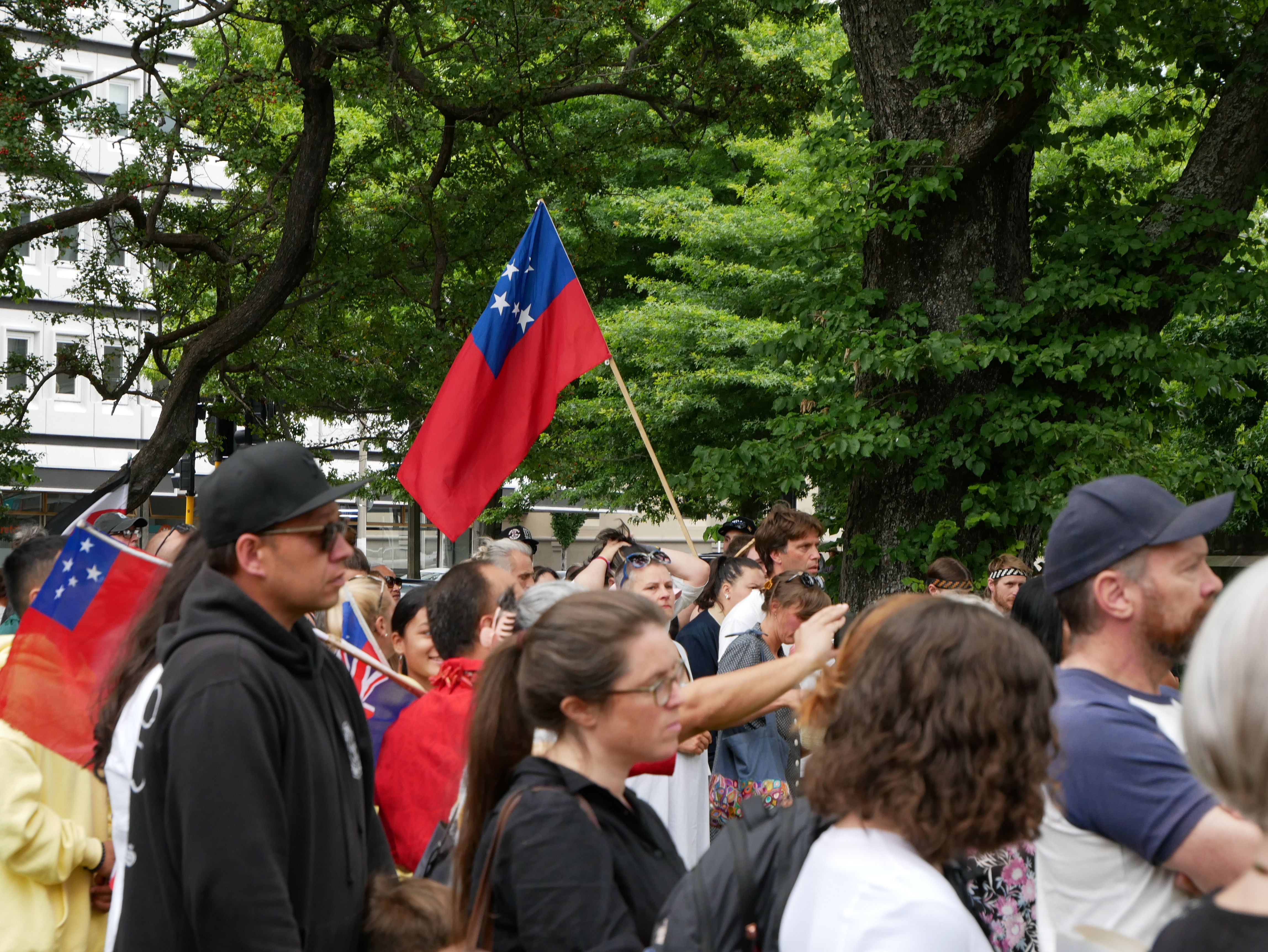
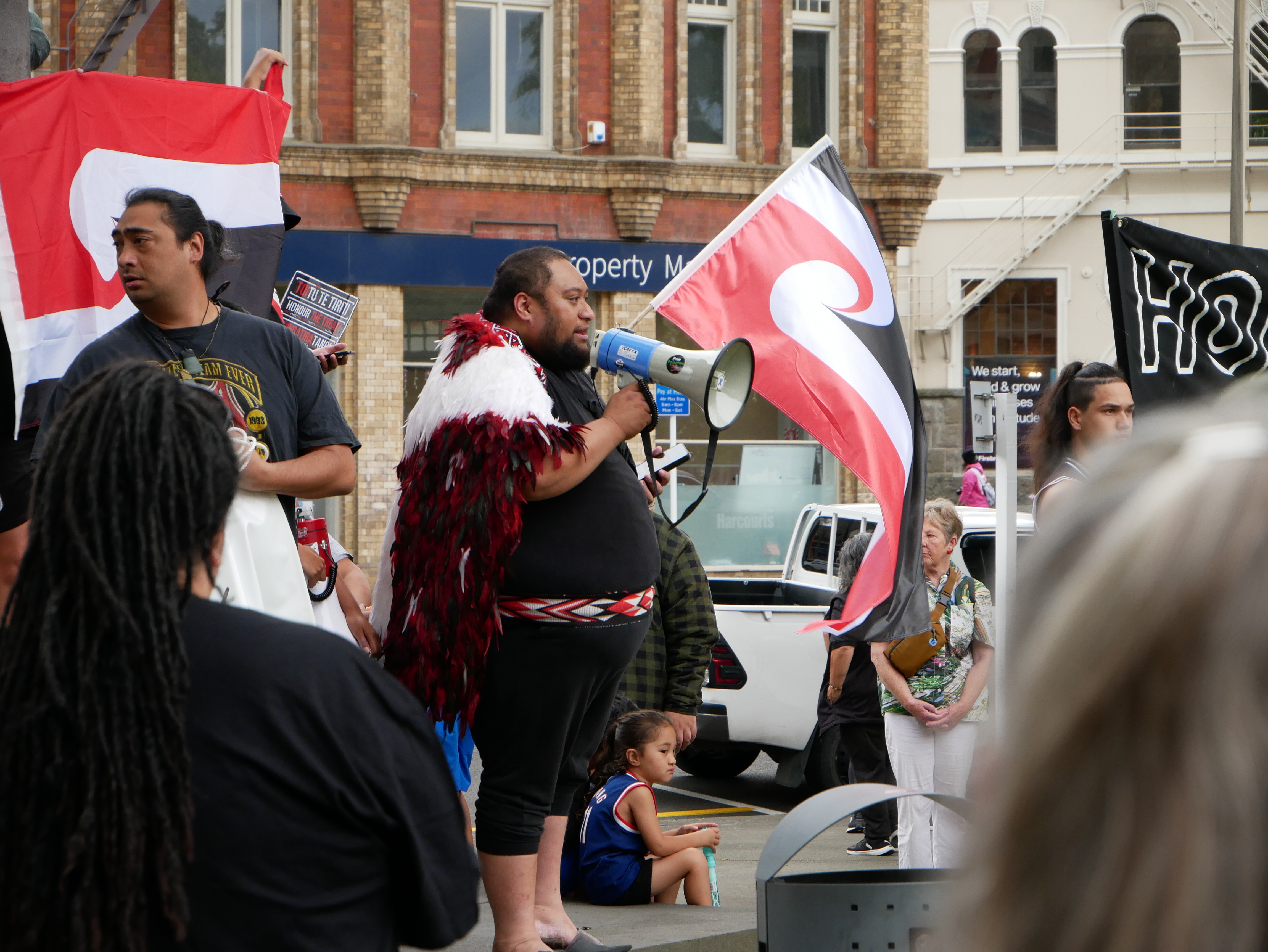
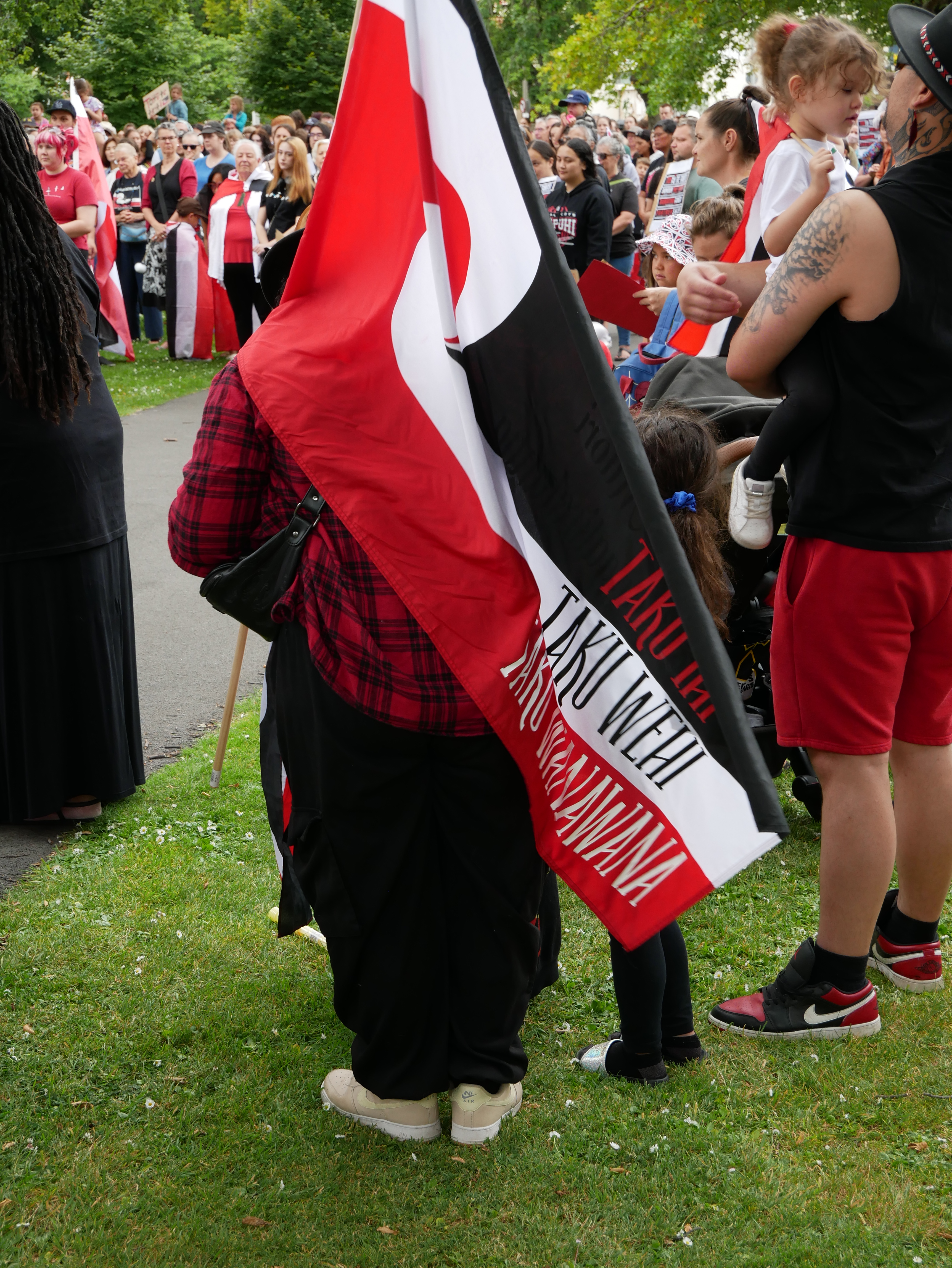
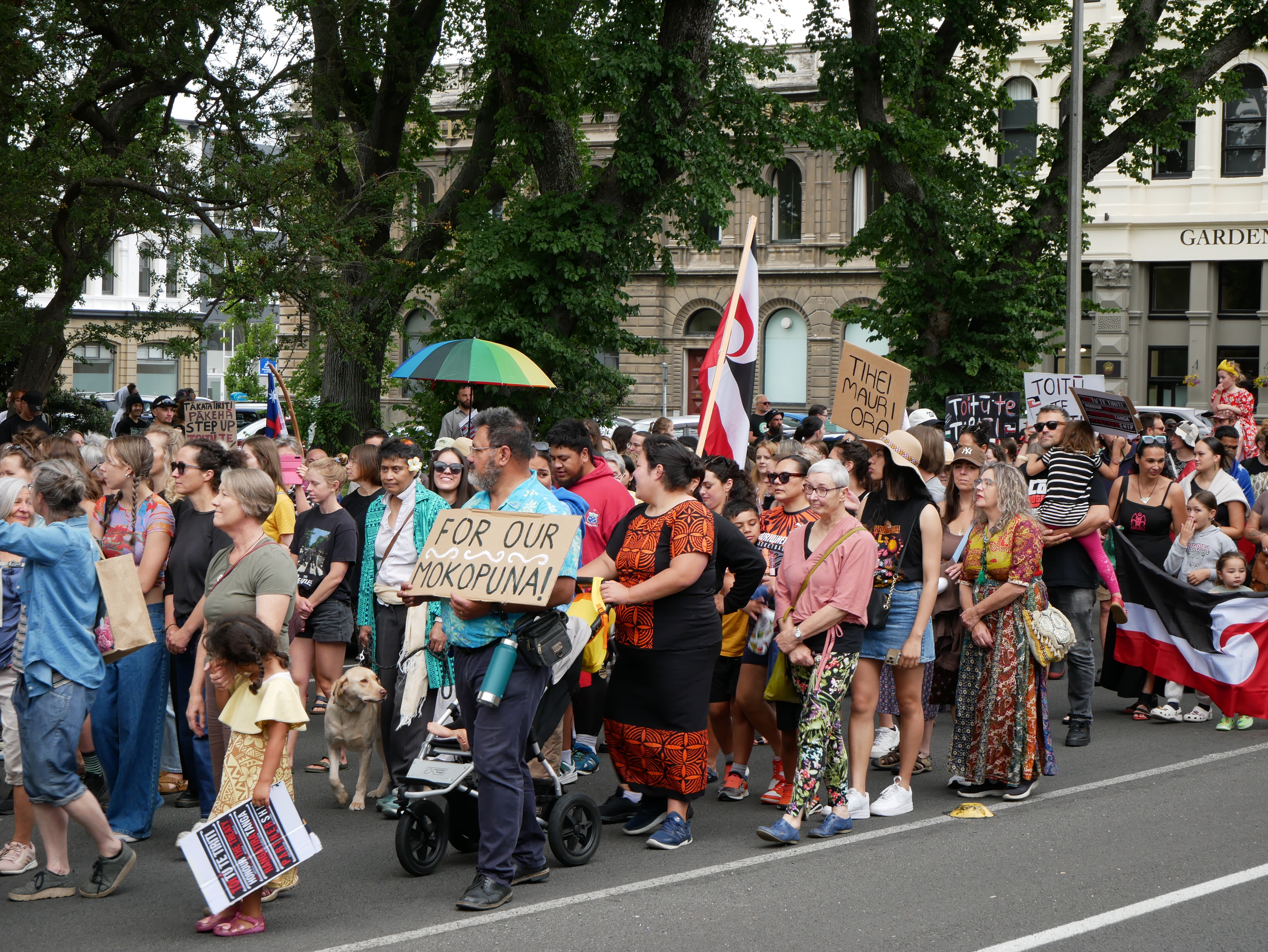
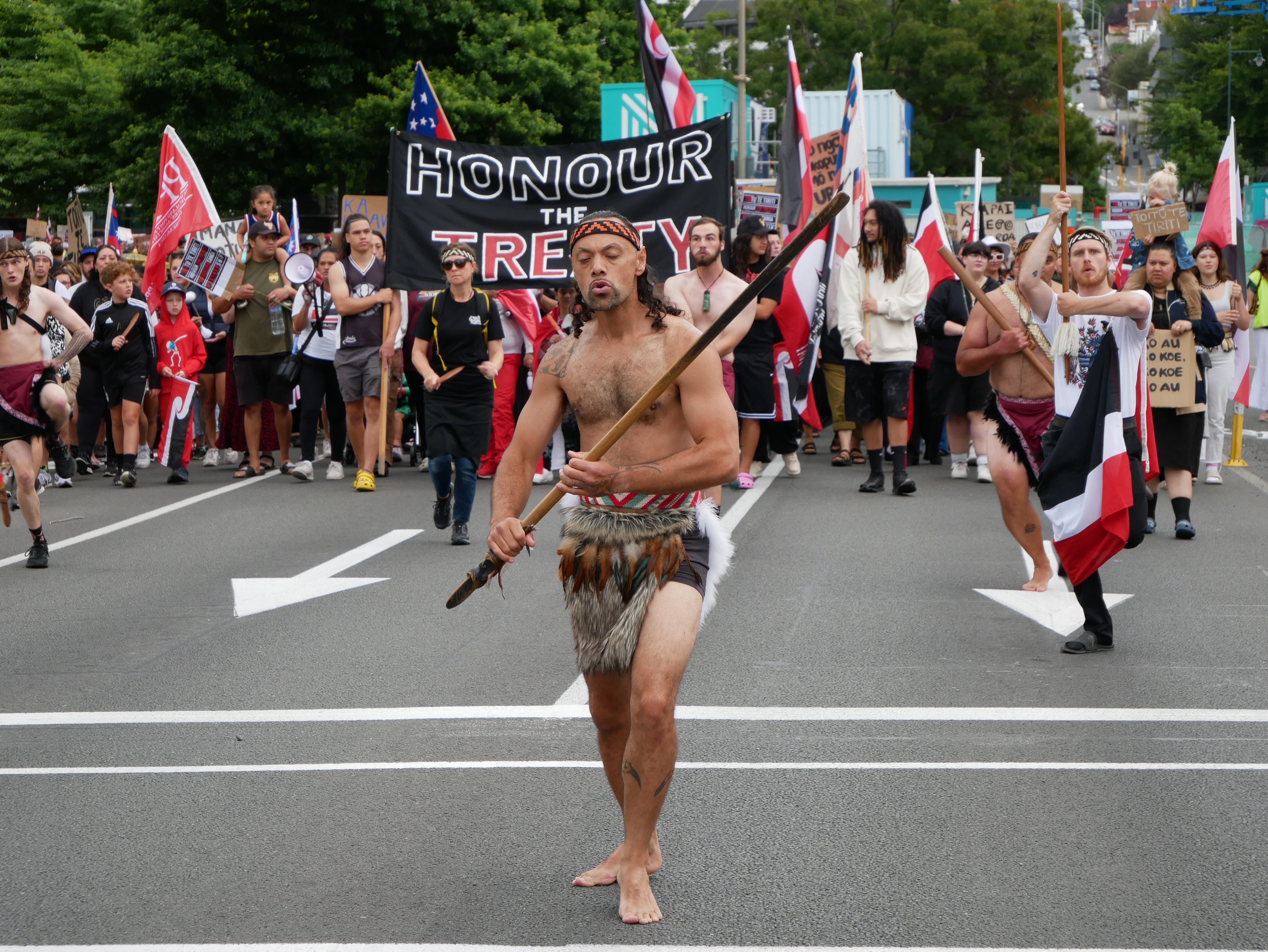
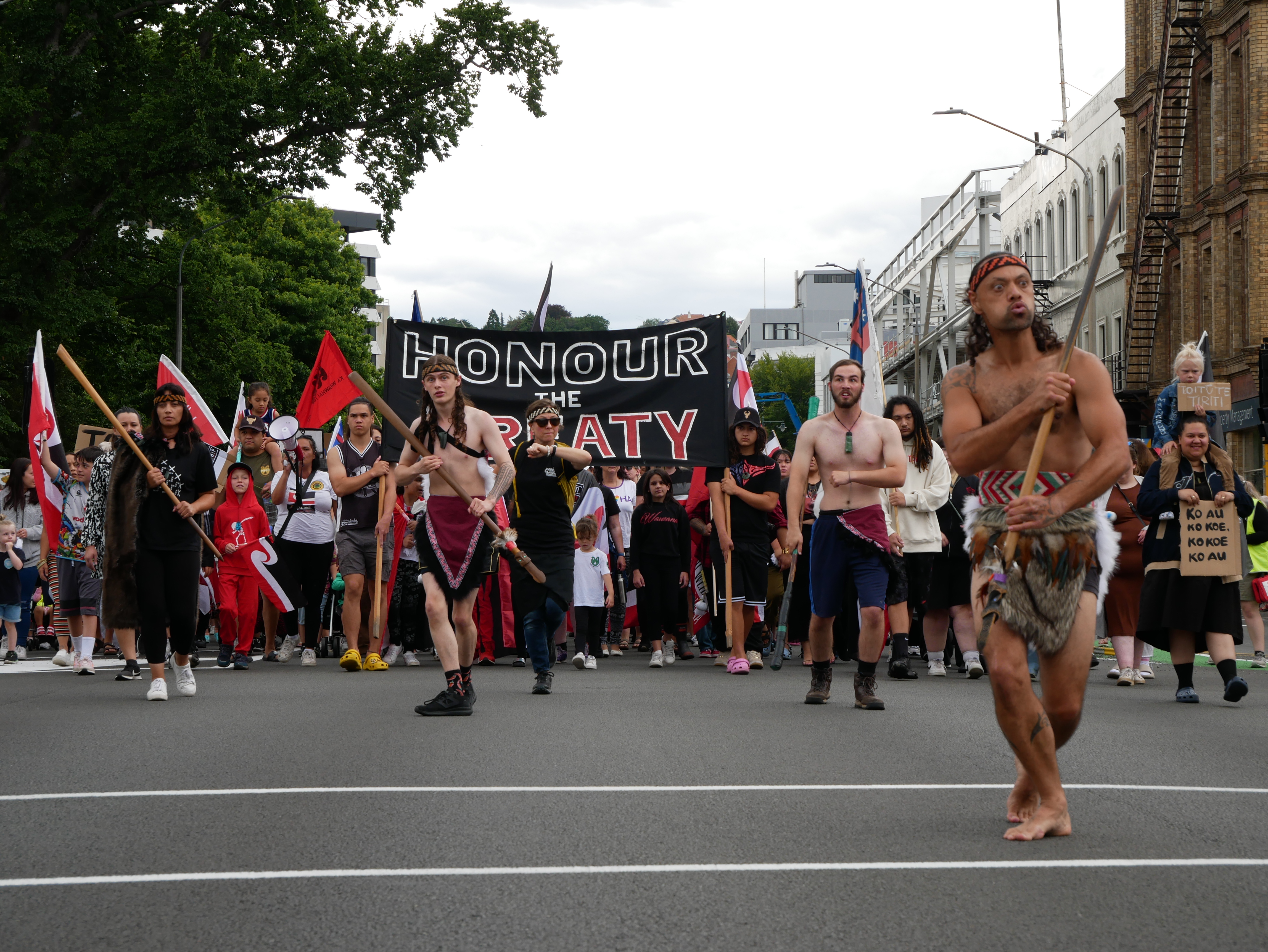
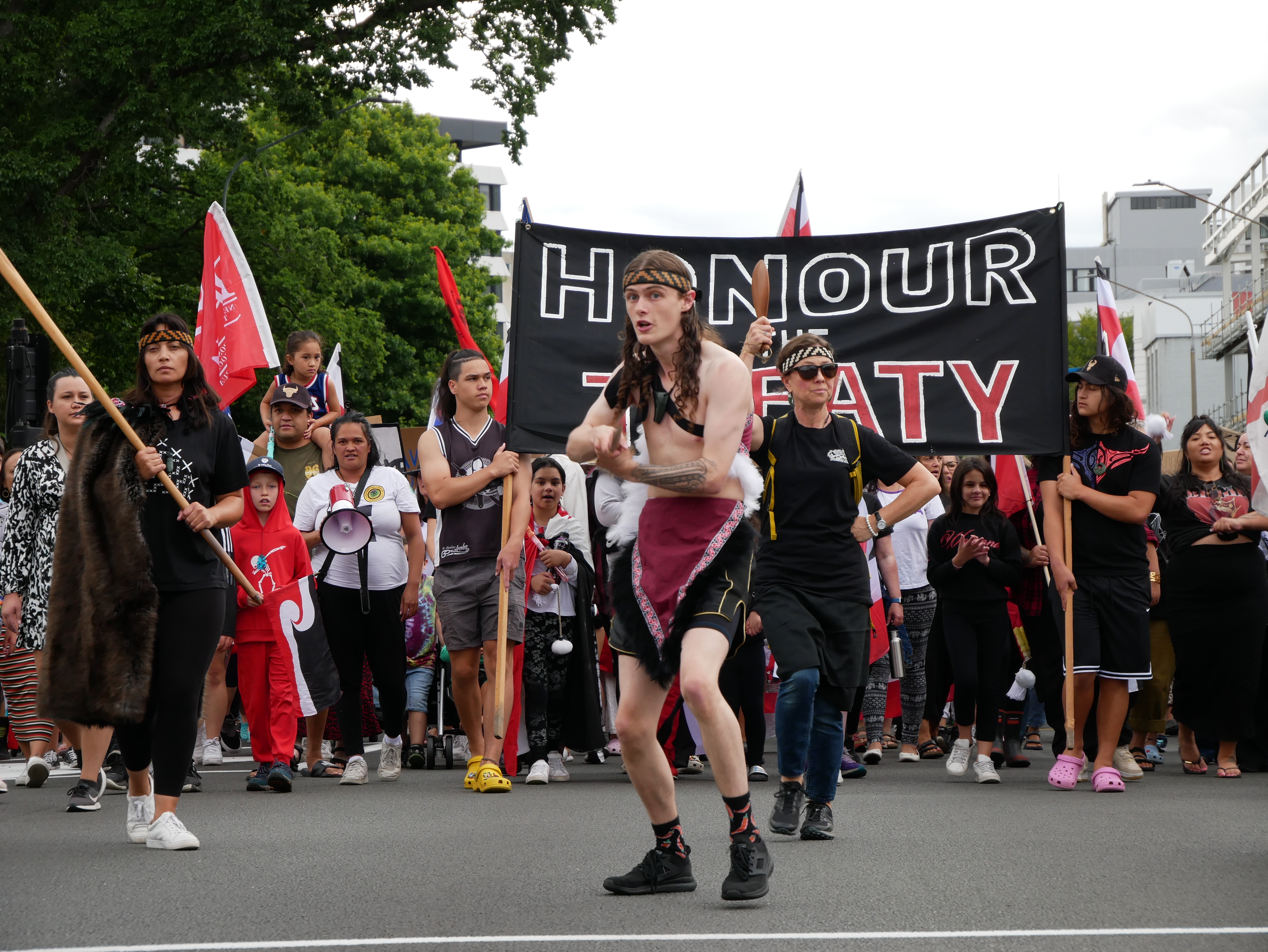
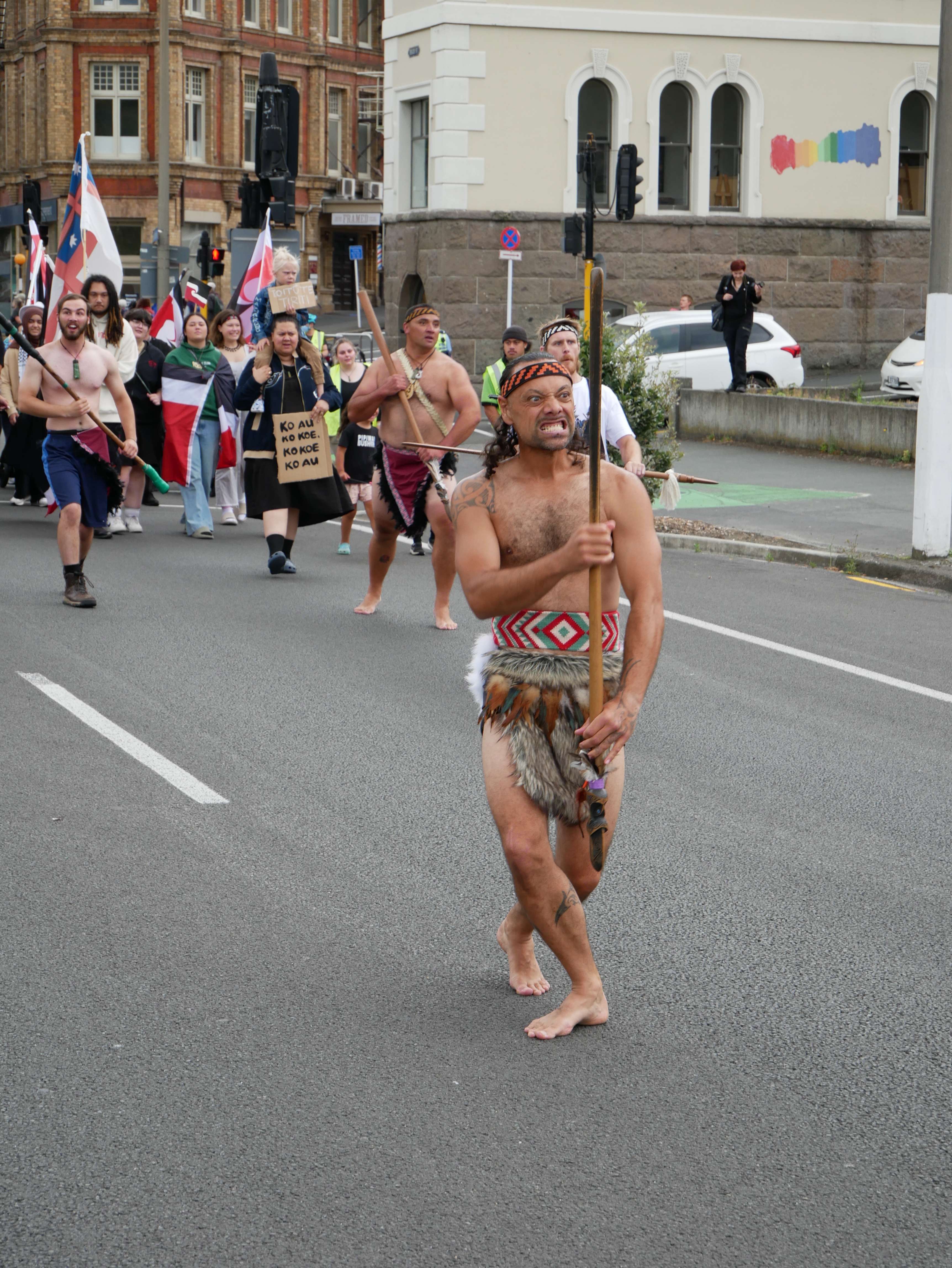
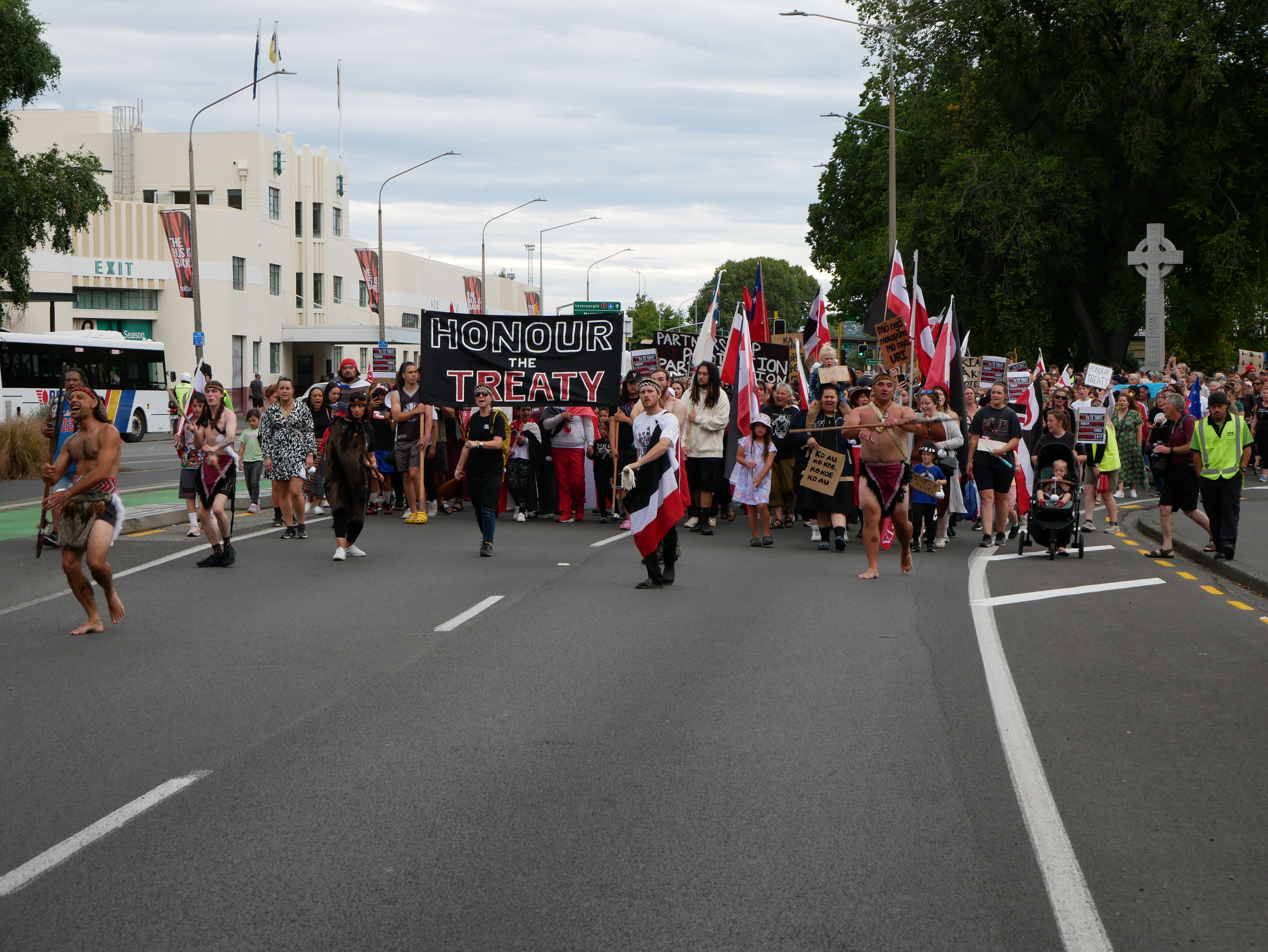
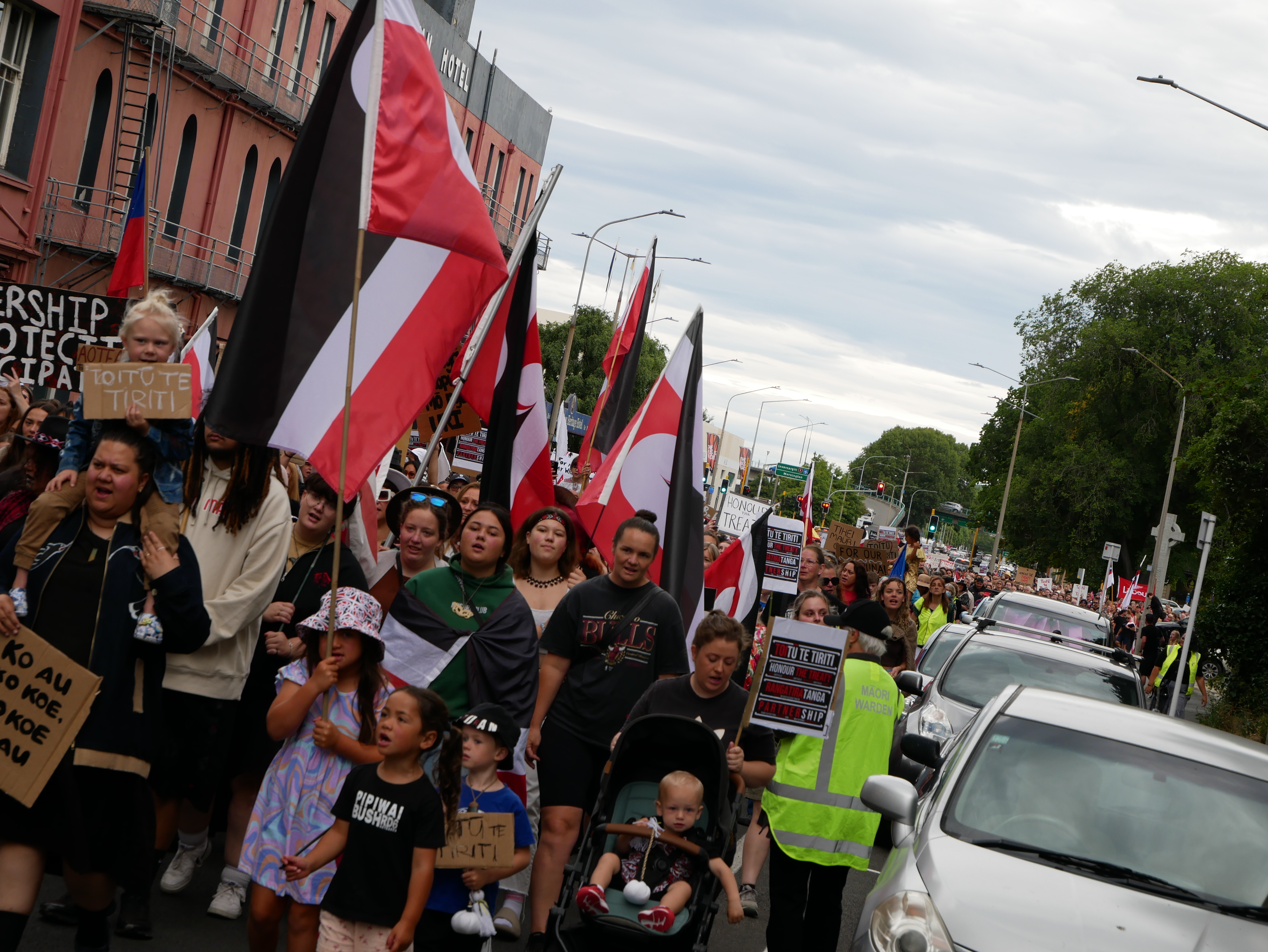
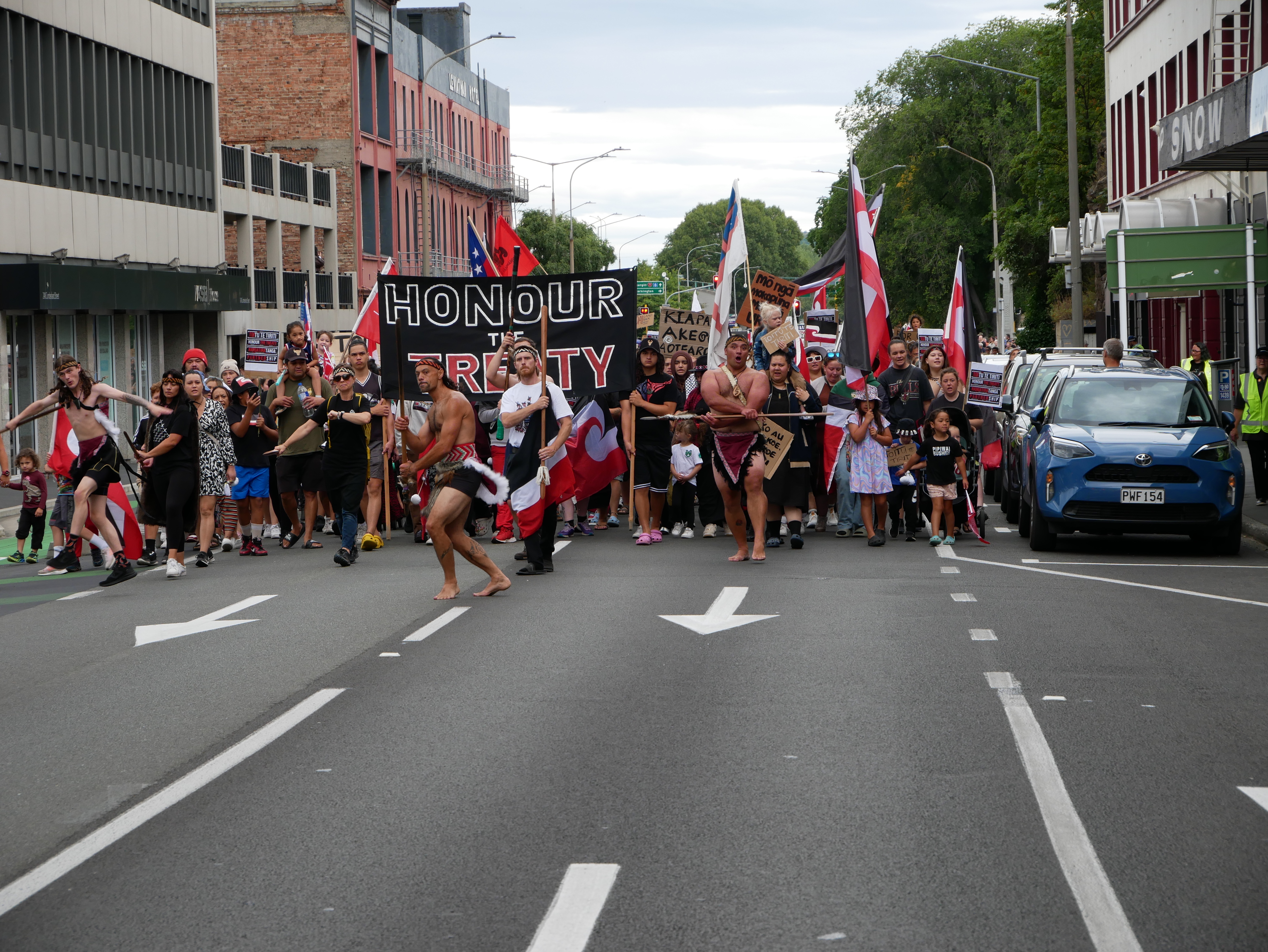
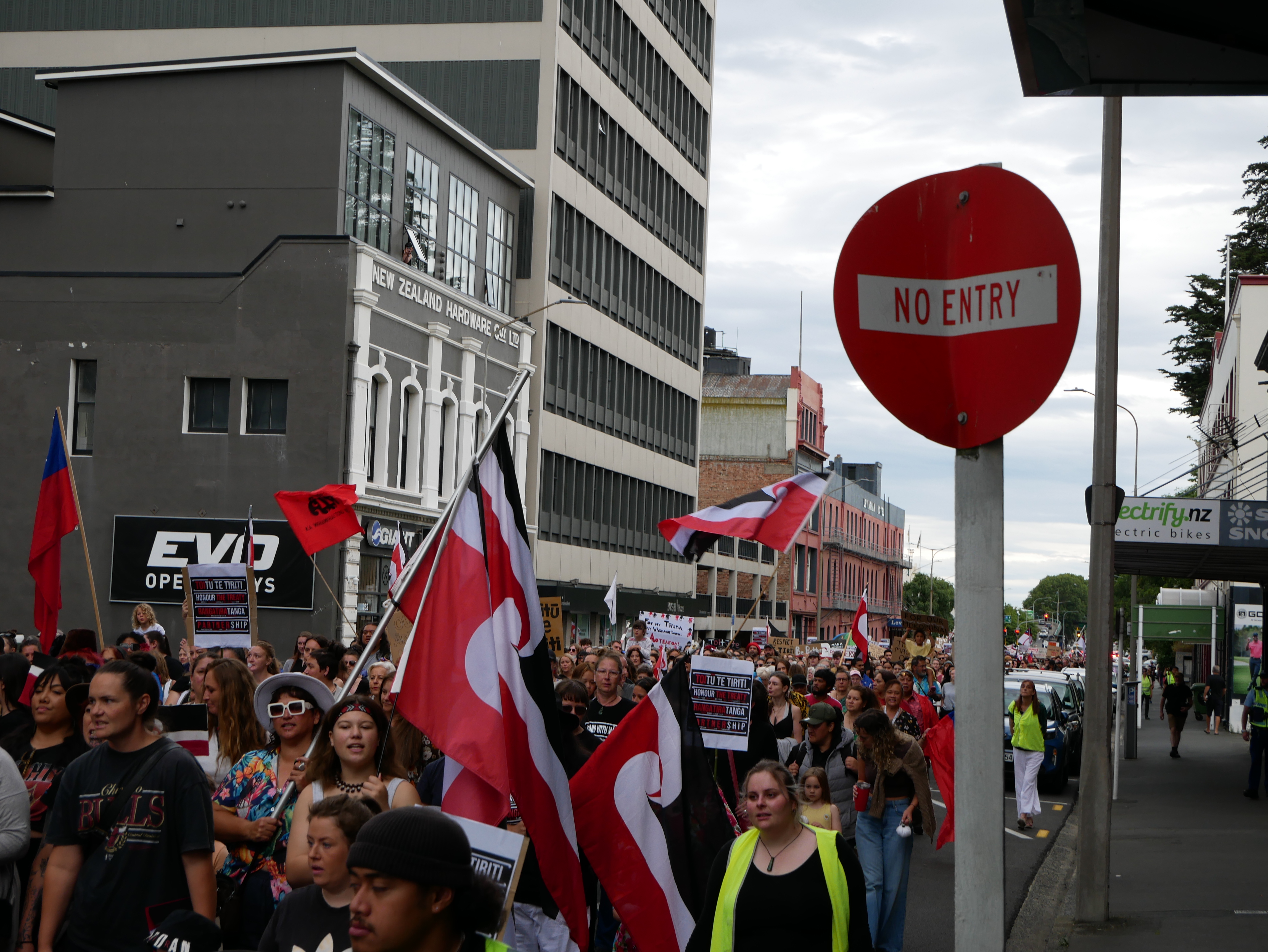
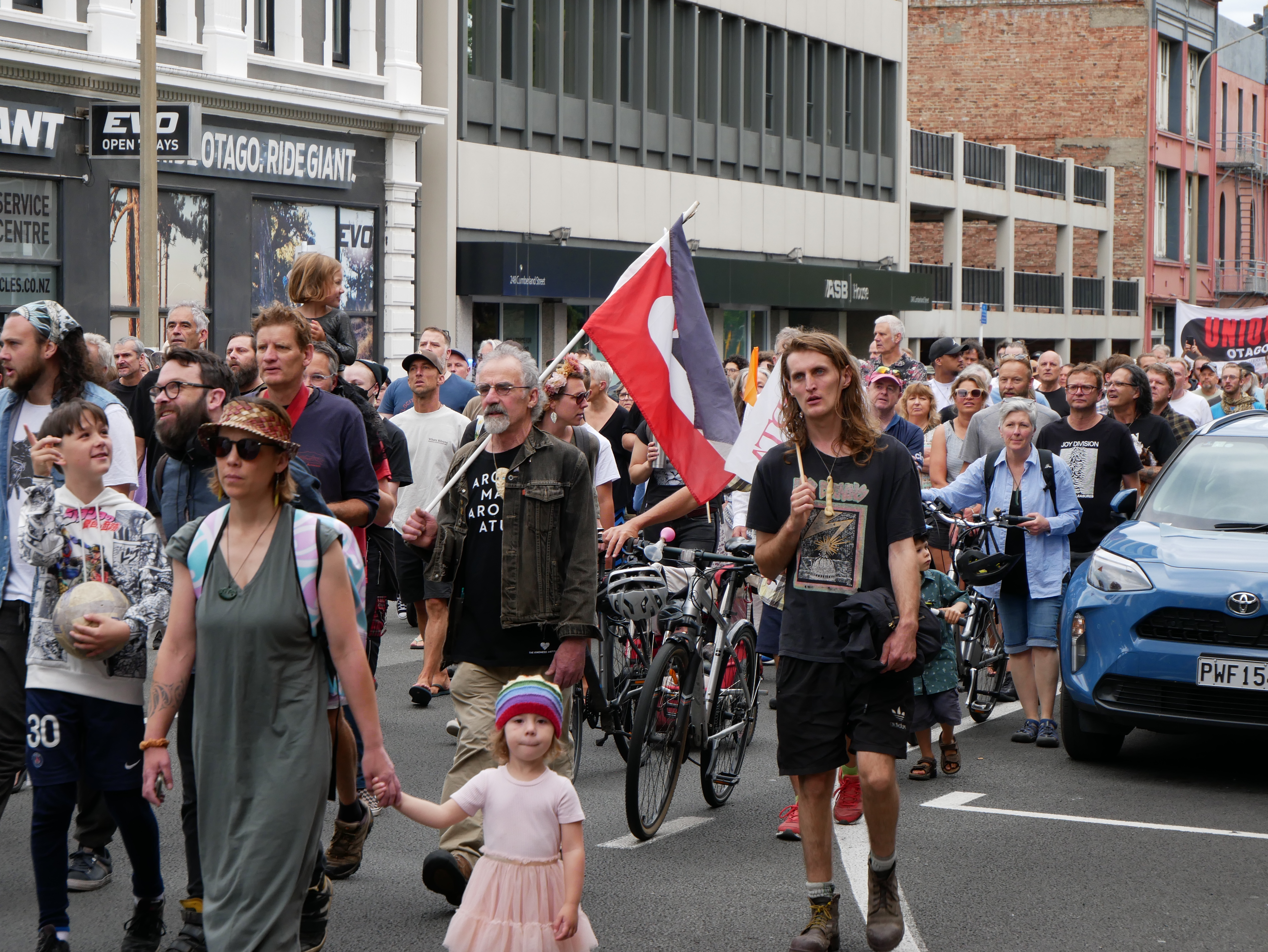
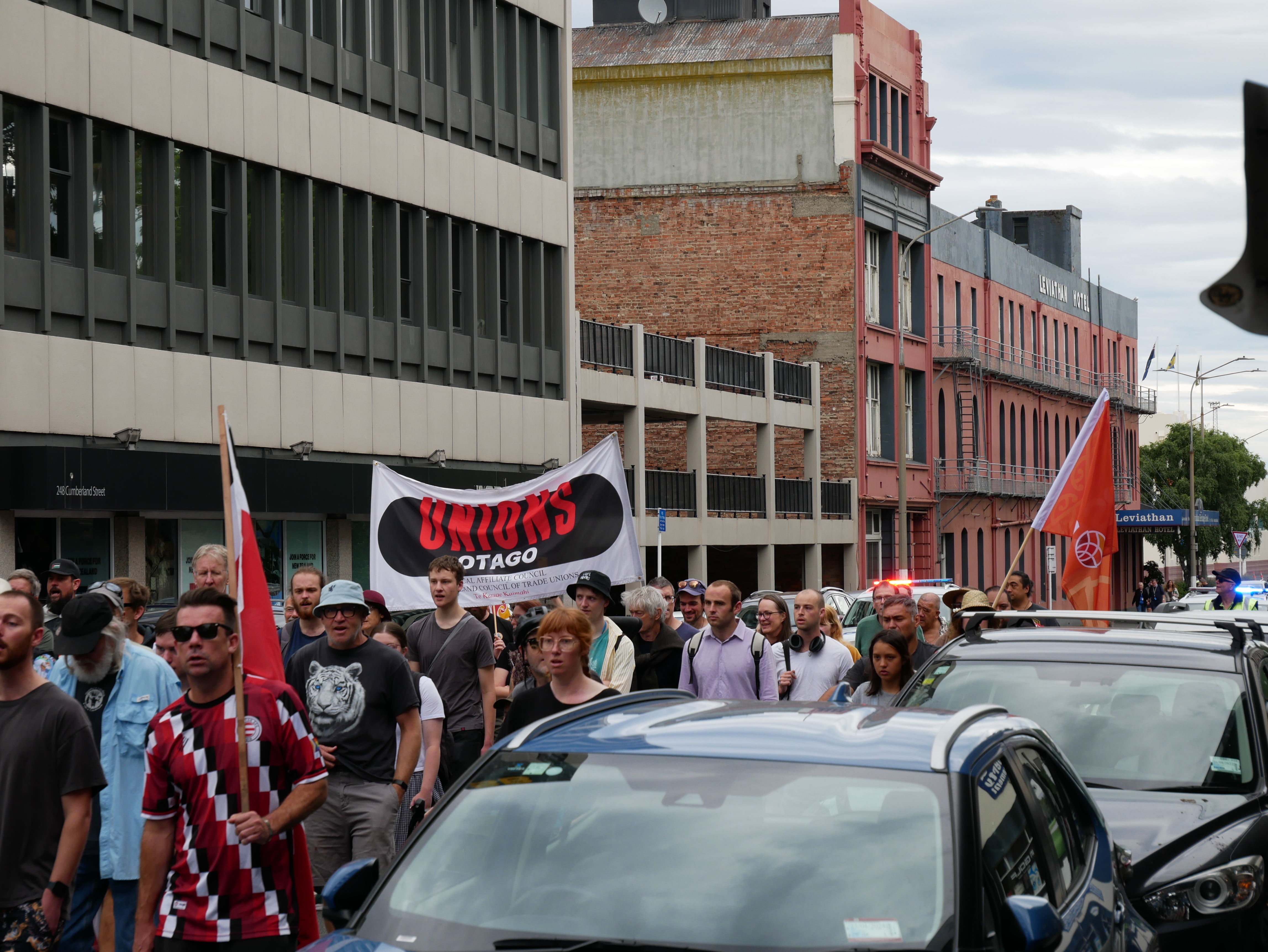
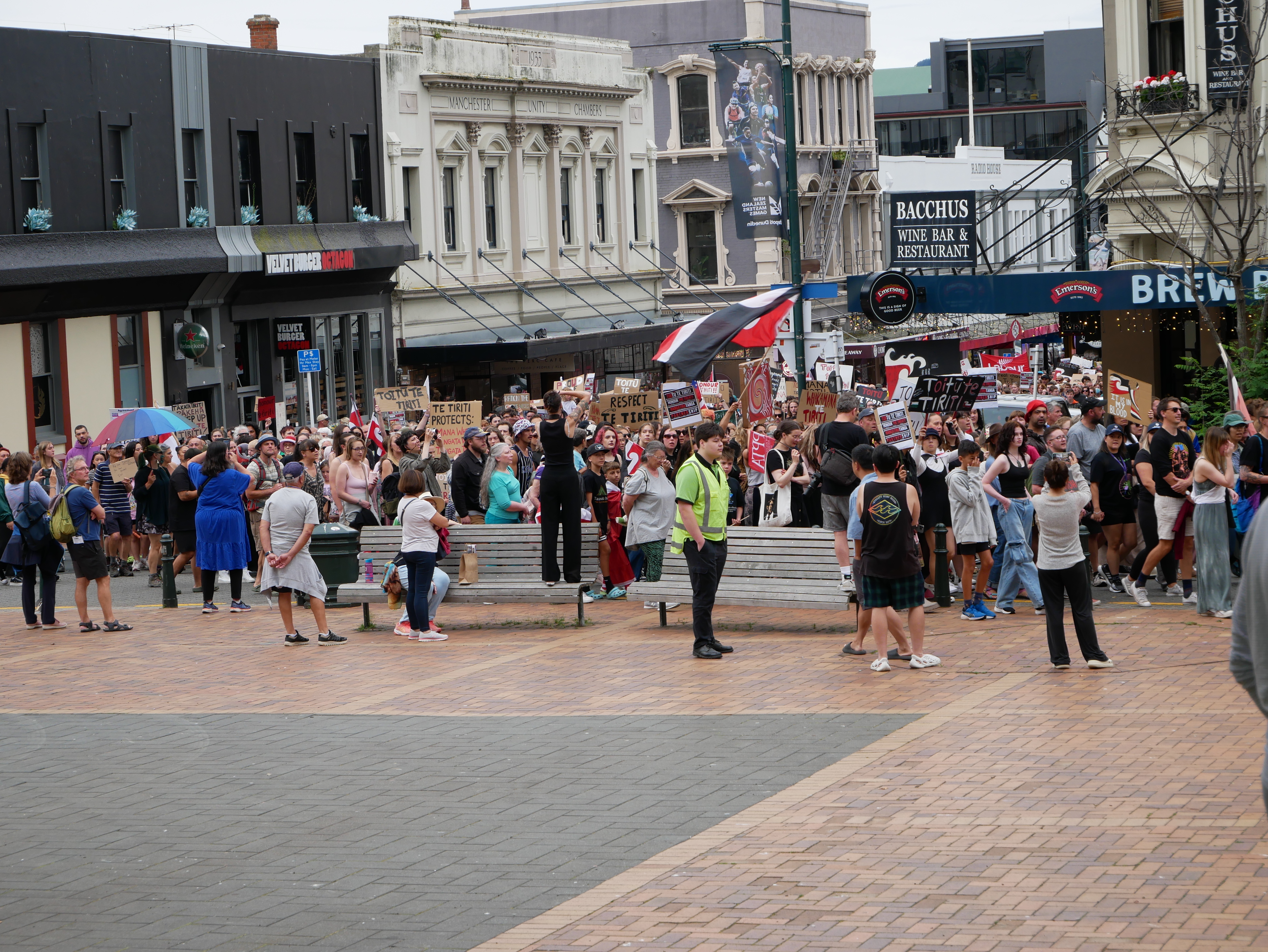
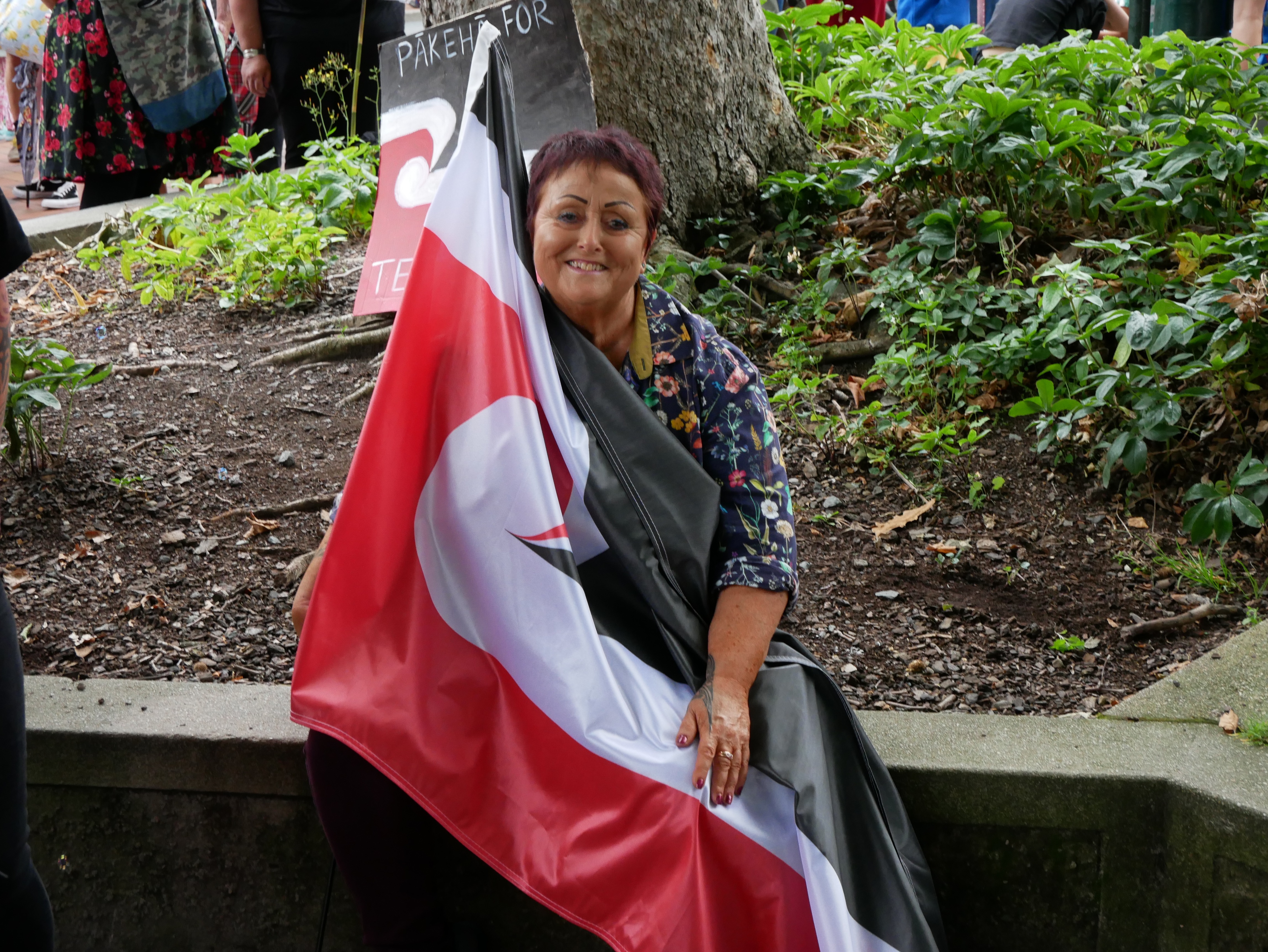
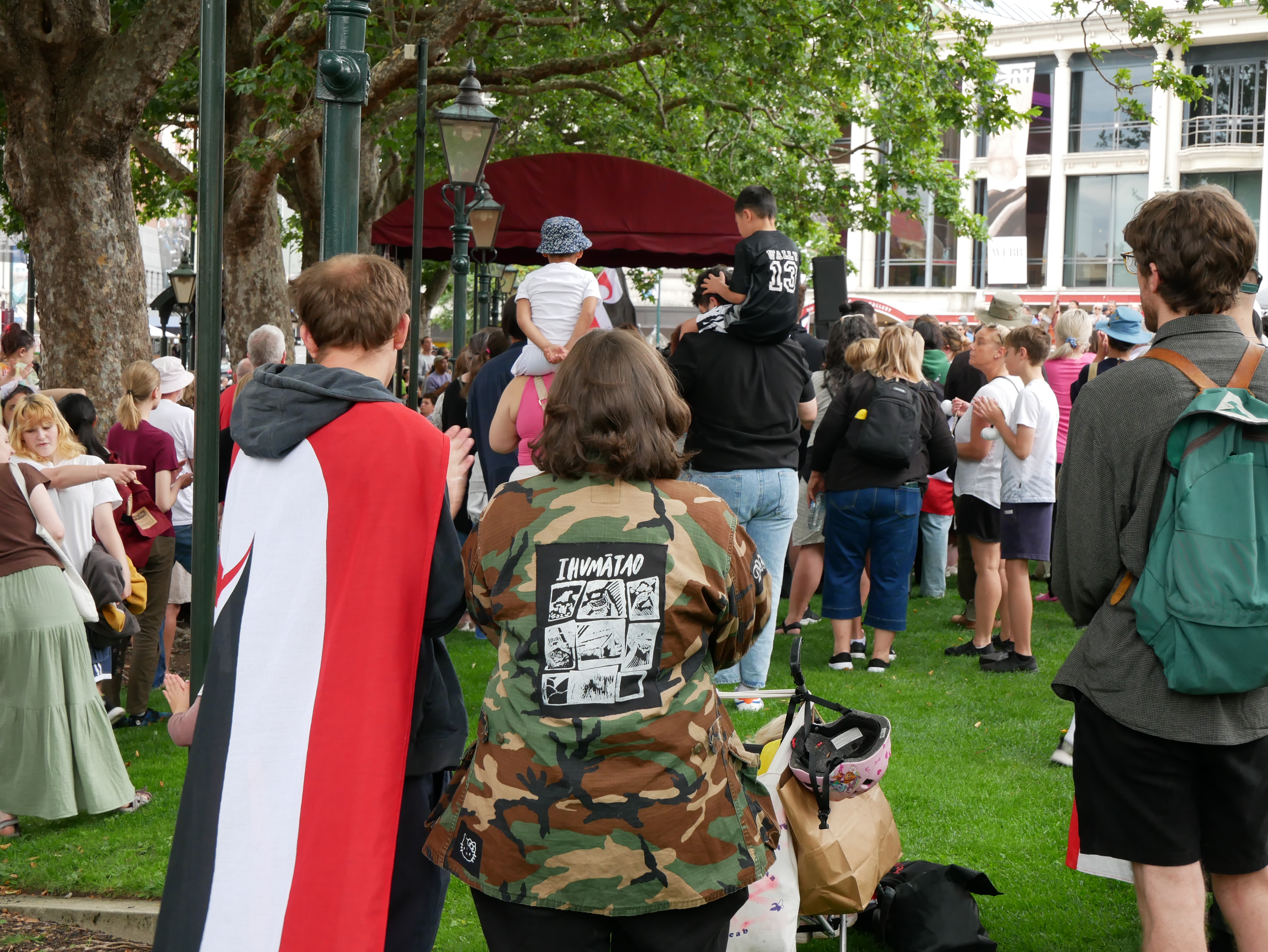
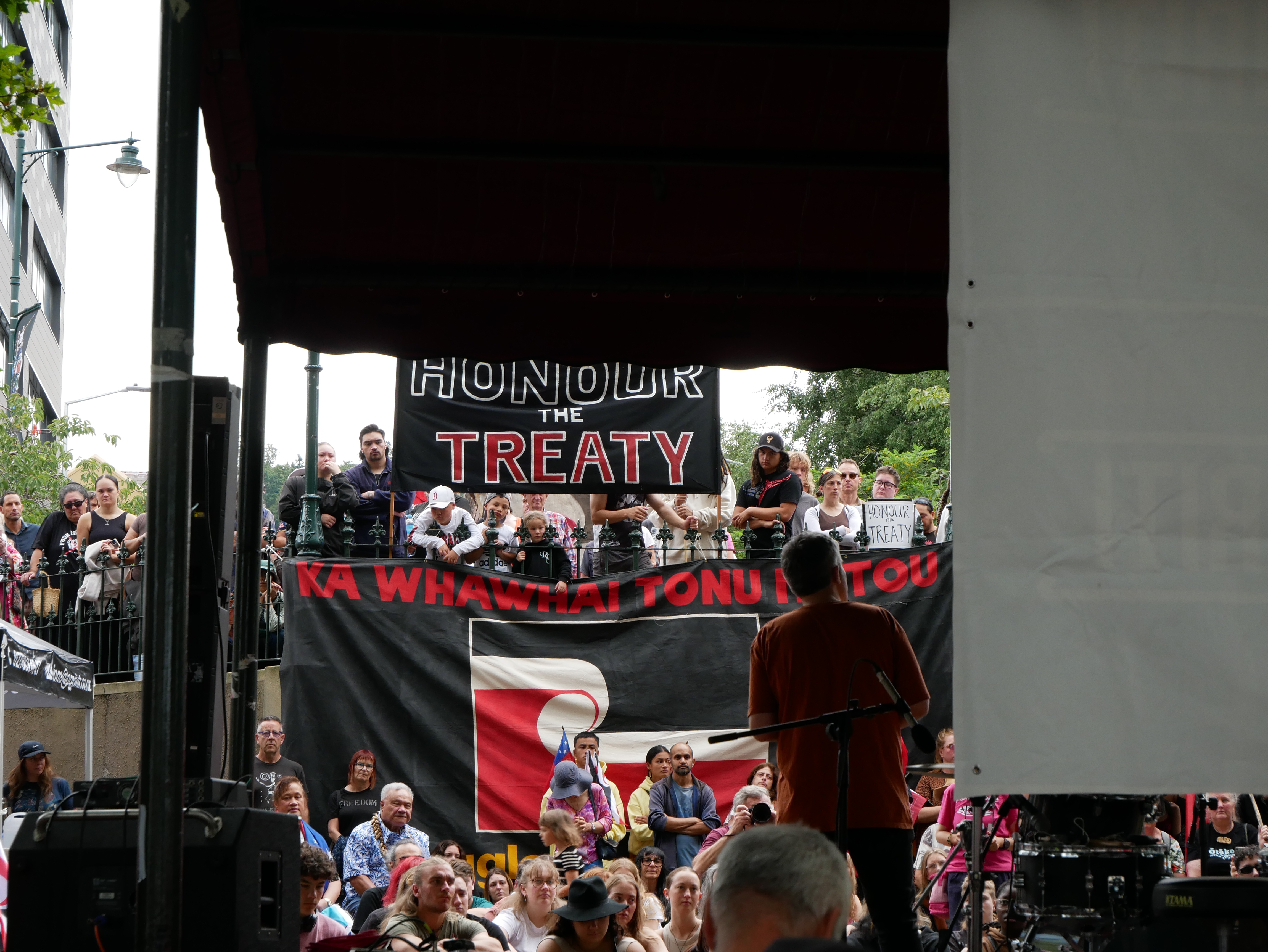
By the time those speakers began, the crowd had swelled to some thousands, although it was unclear from among the crowd how many. As the speakers began getting people in place, I took up a spot to get some shots and try to make a decent head count. It became clear fairly quick that the crowd must have numbered around 3,000 to 5,000. Perhaps on the lower end of that in hindsight but certainly many more than the 1,500 which the local media estimated on the day. As the crowd made its way up lower Stuart Street onto the lower Octagon, the last stragglers were just leaving Queen’s Gardens, which given the length of that area and broad width of the crowd I am fairly confident could not have been filled by the crowd without being much more thinly stretched out if it were around 1,500 people.
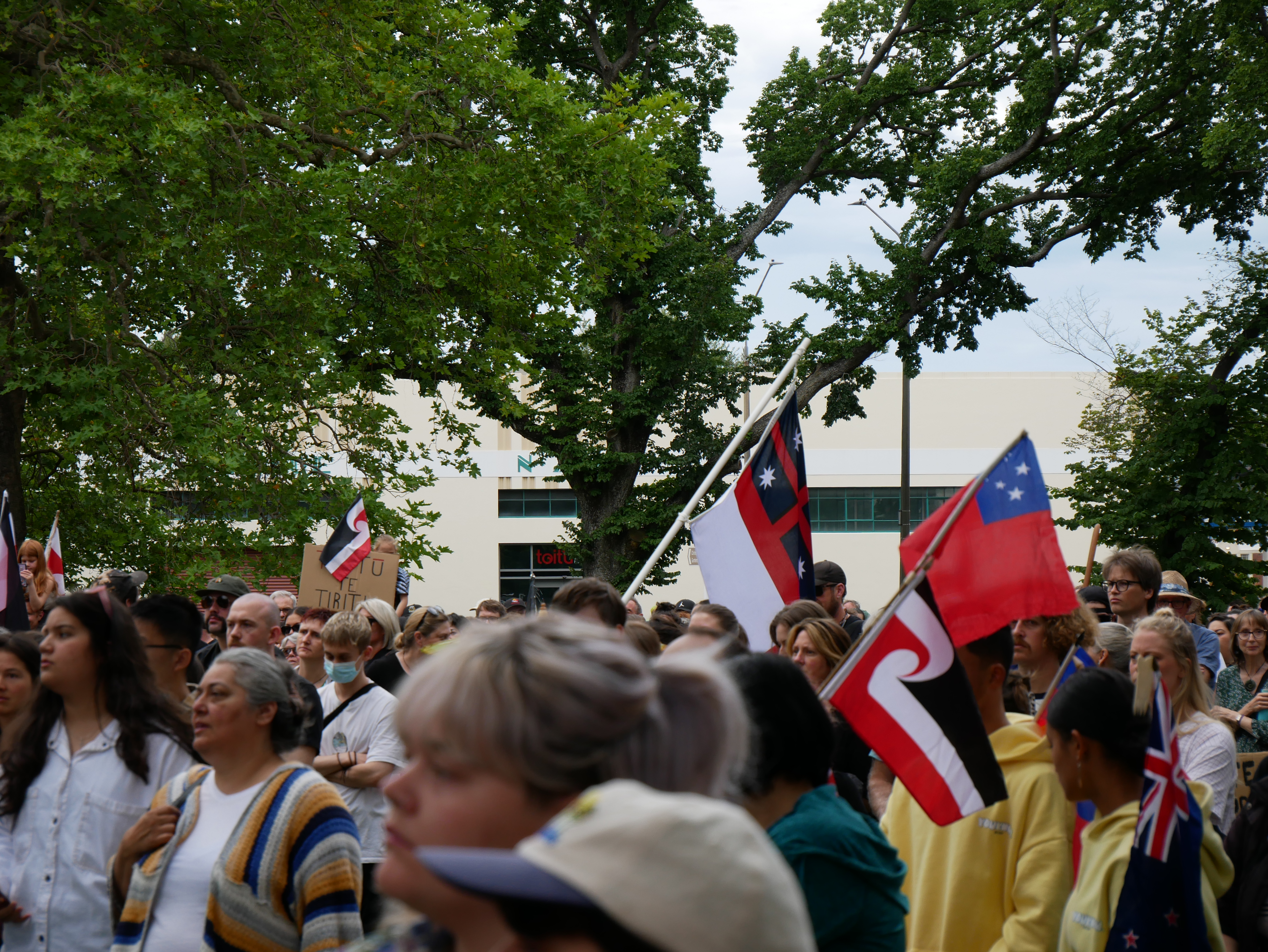
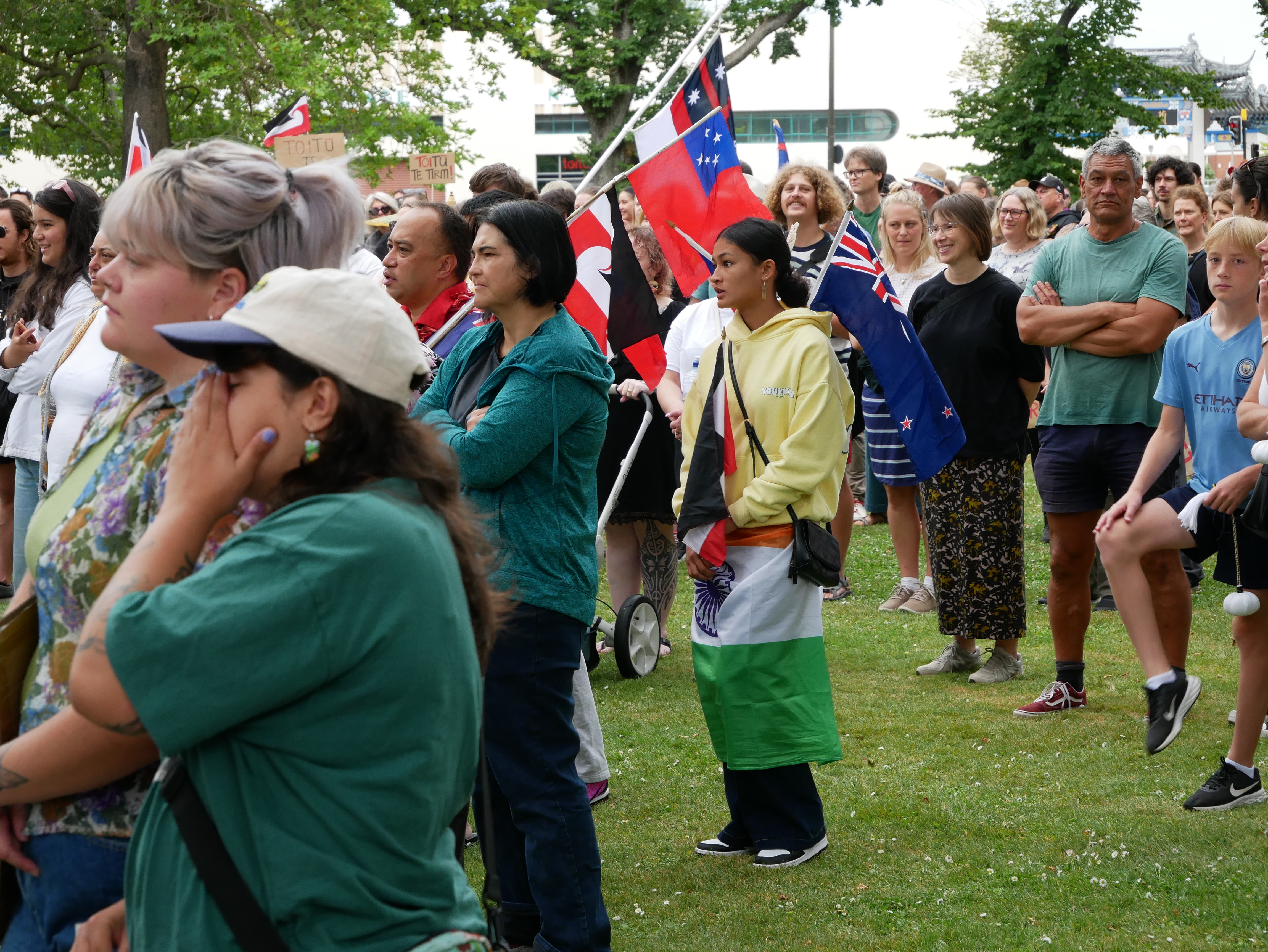
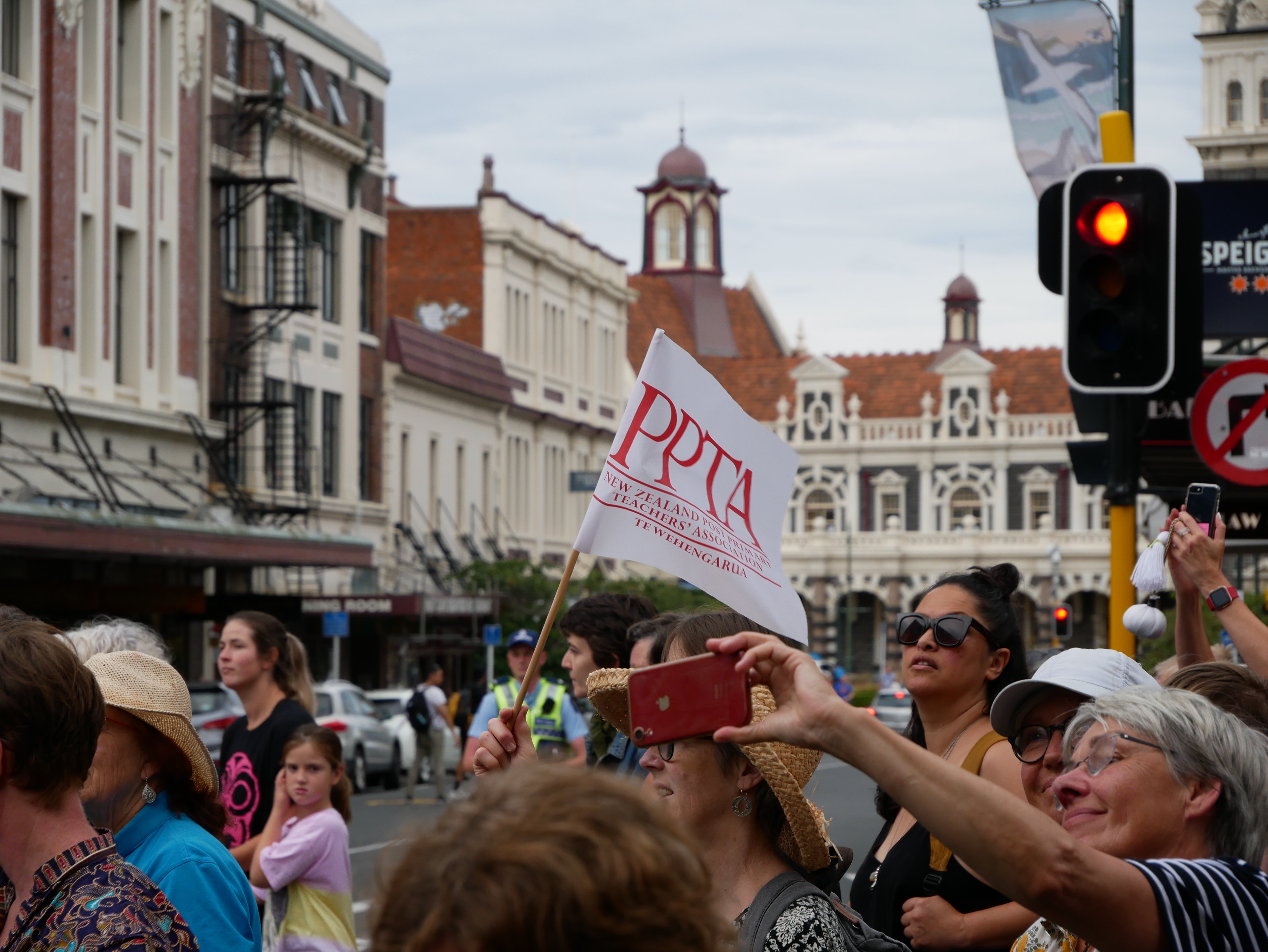
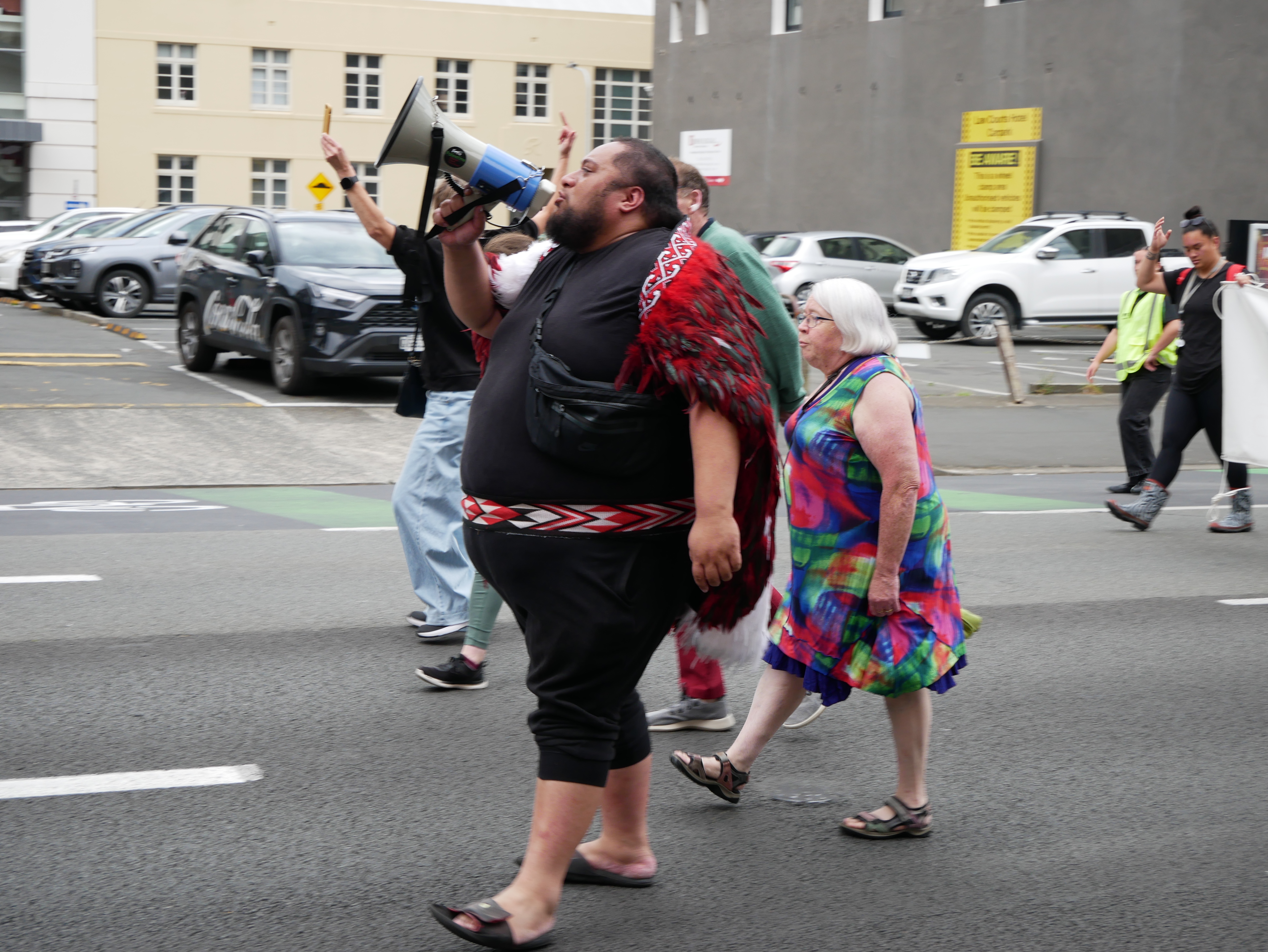
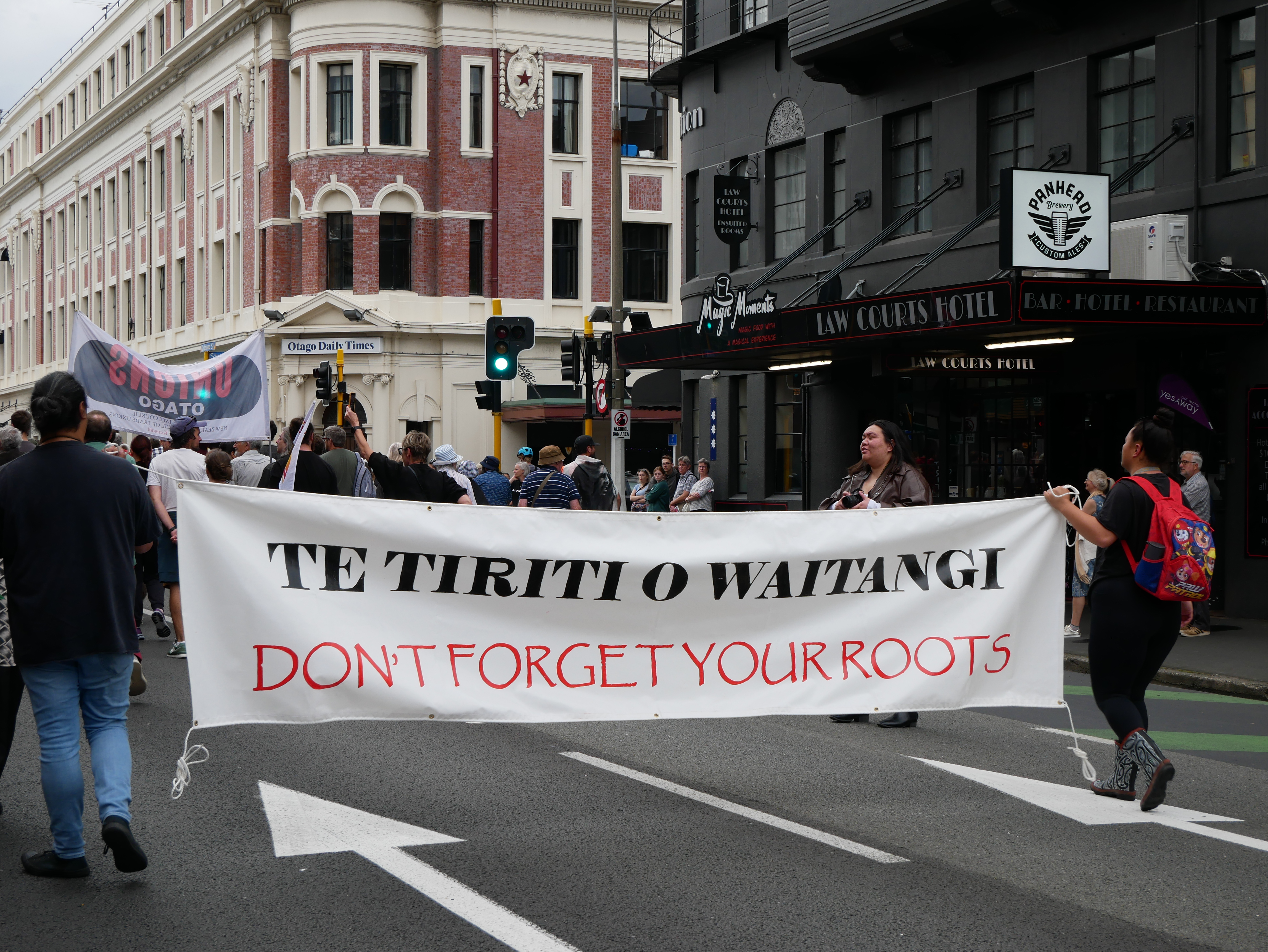
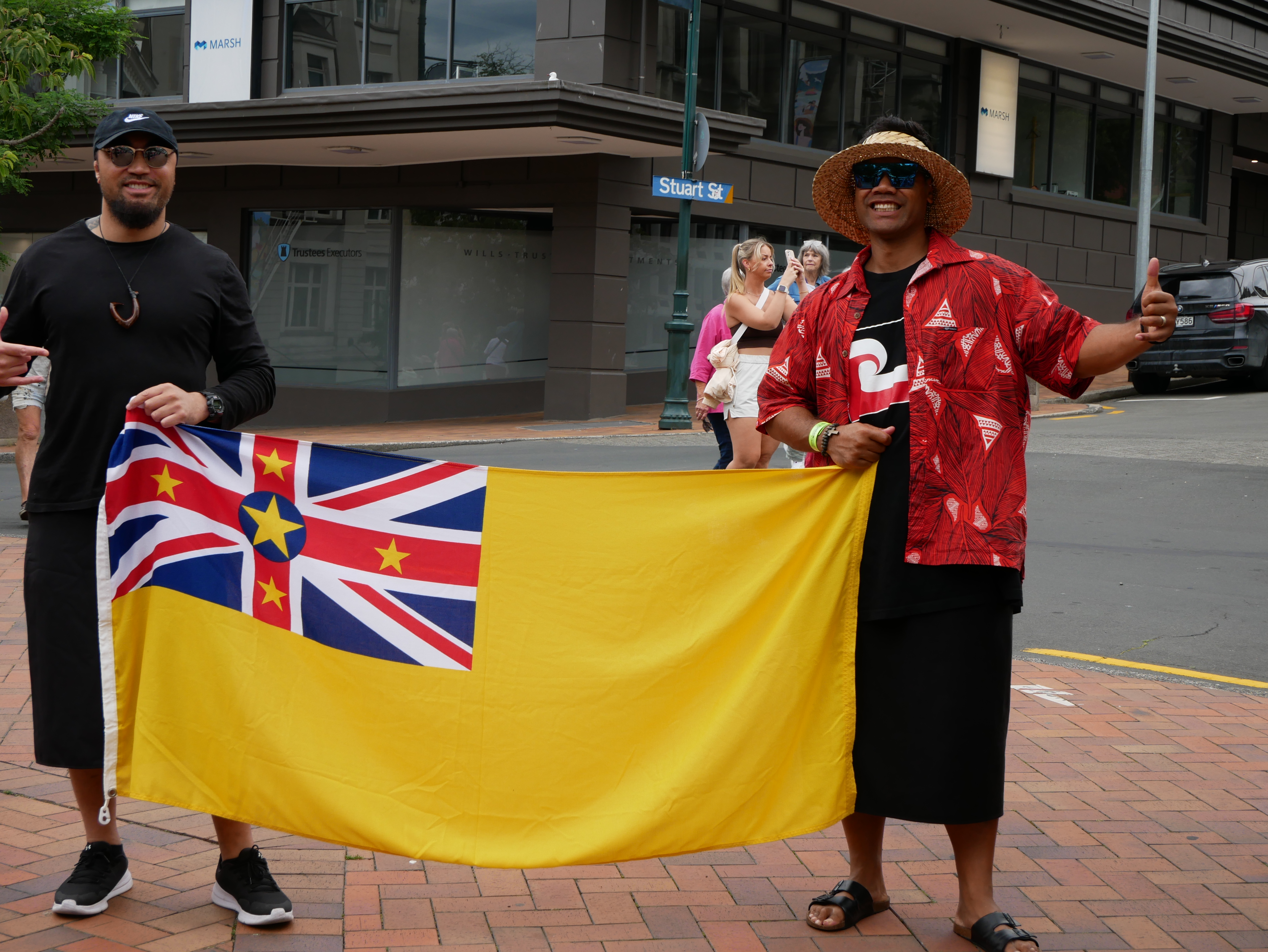
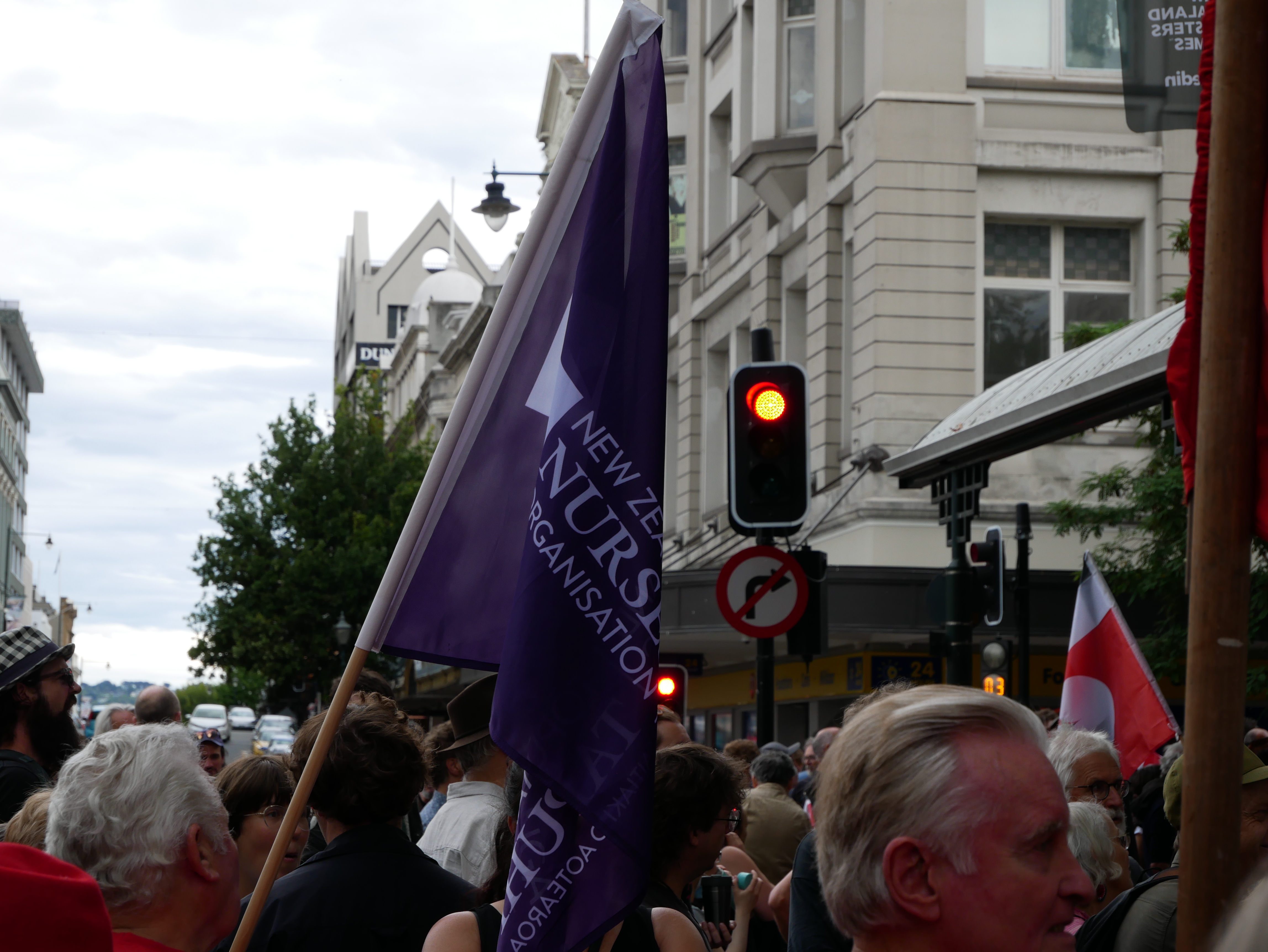
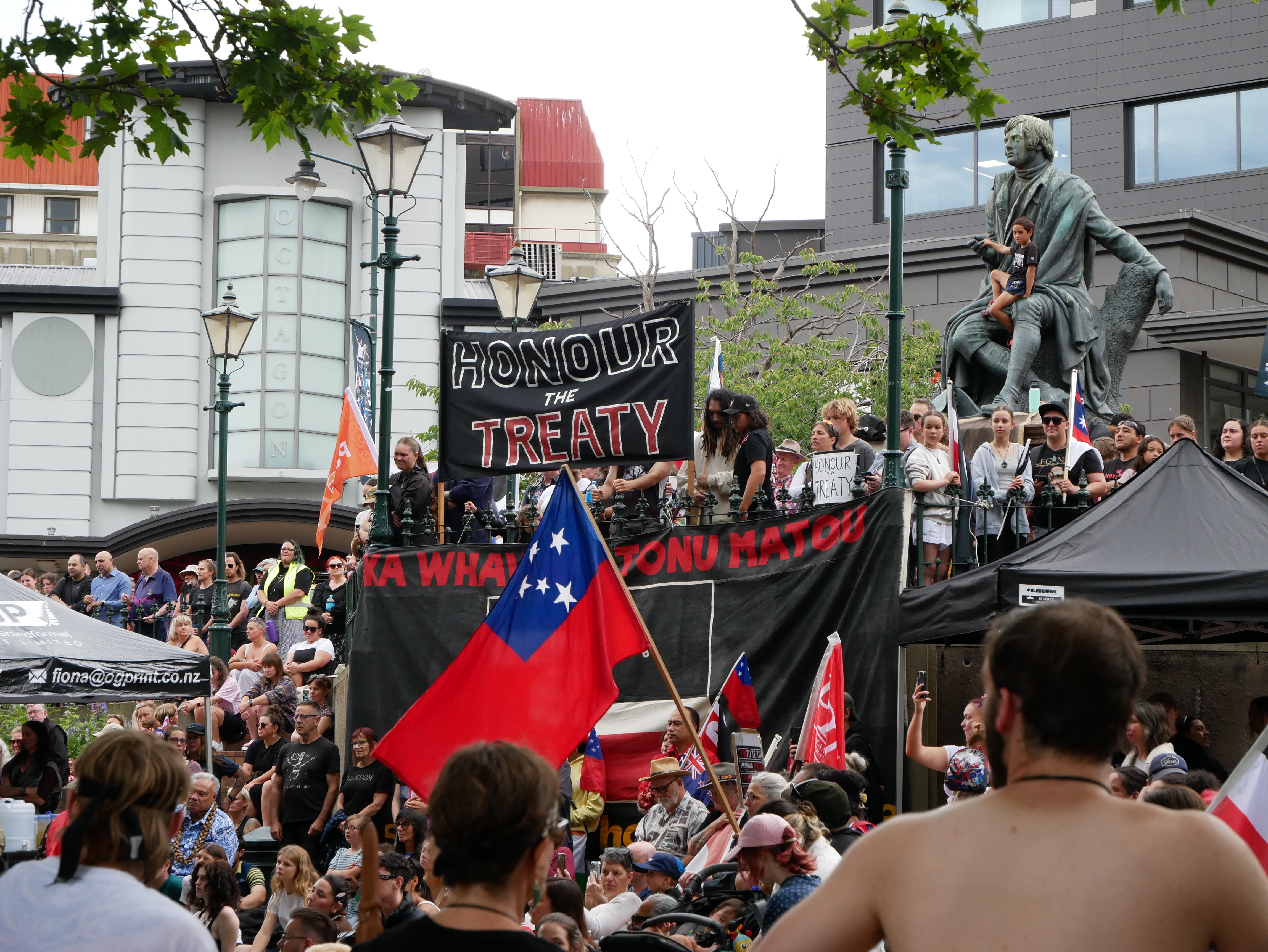
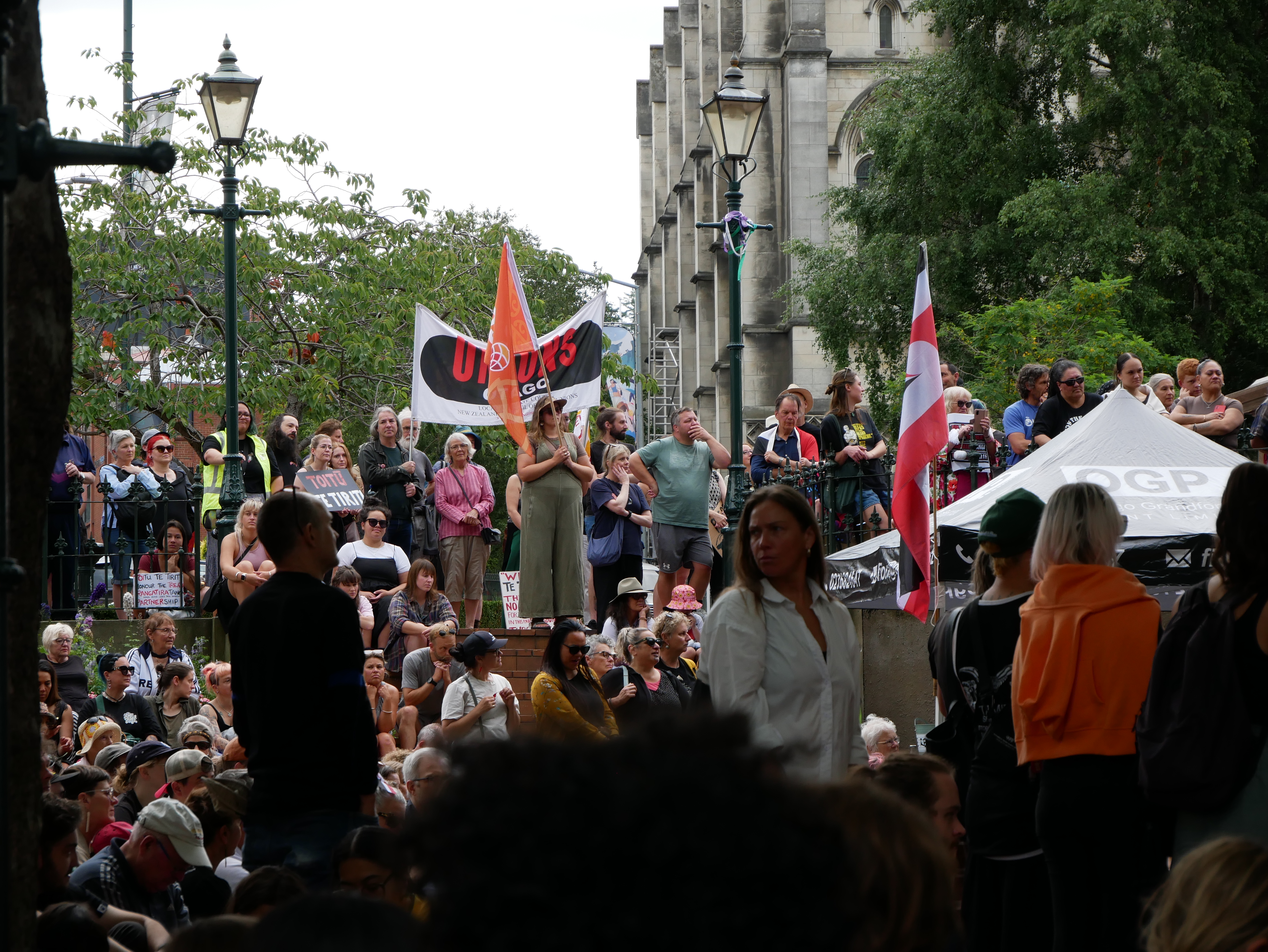
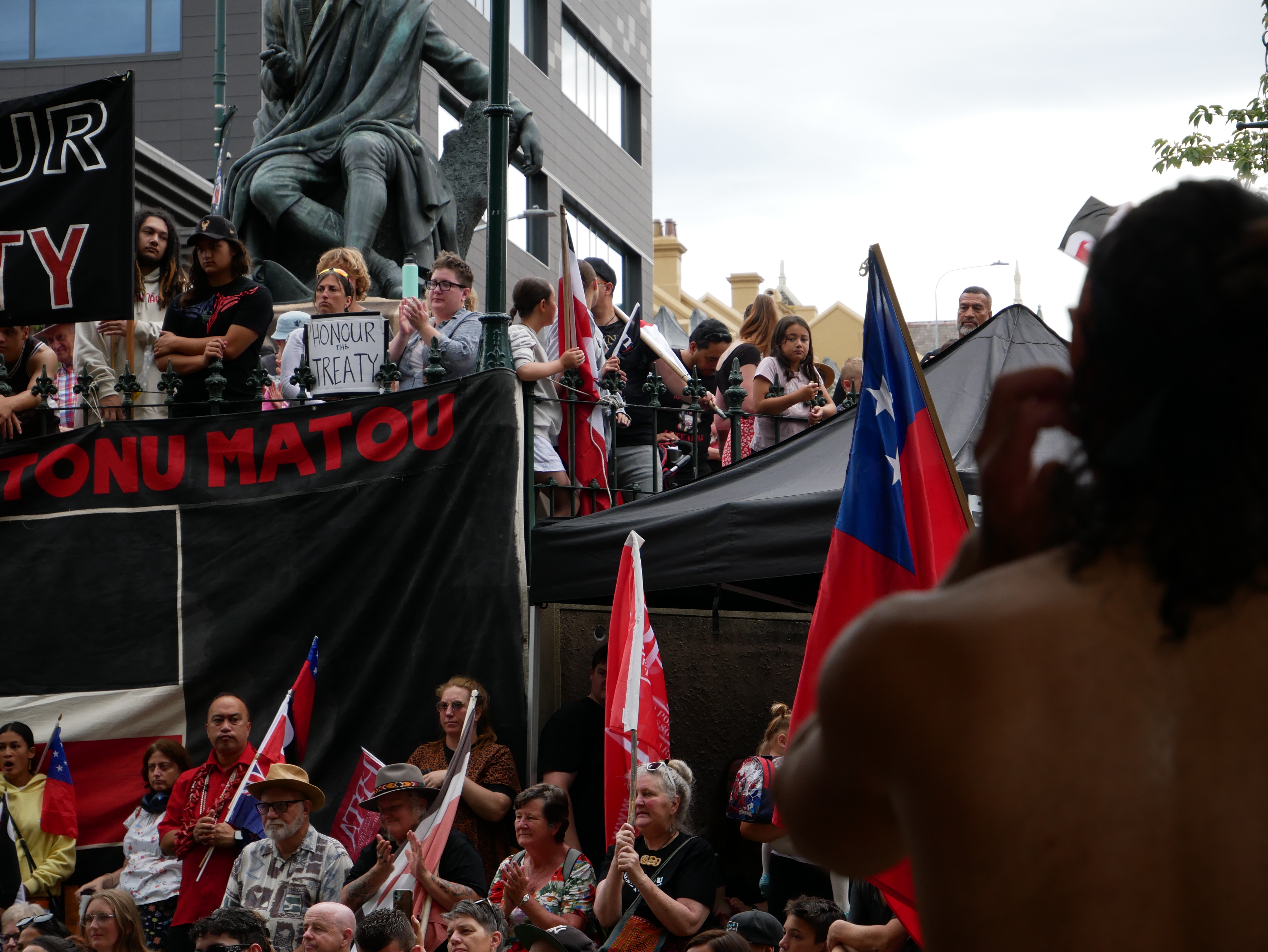
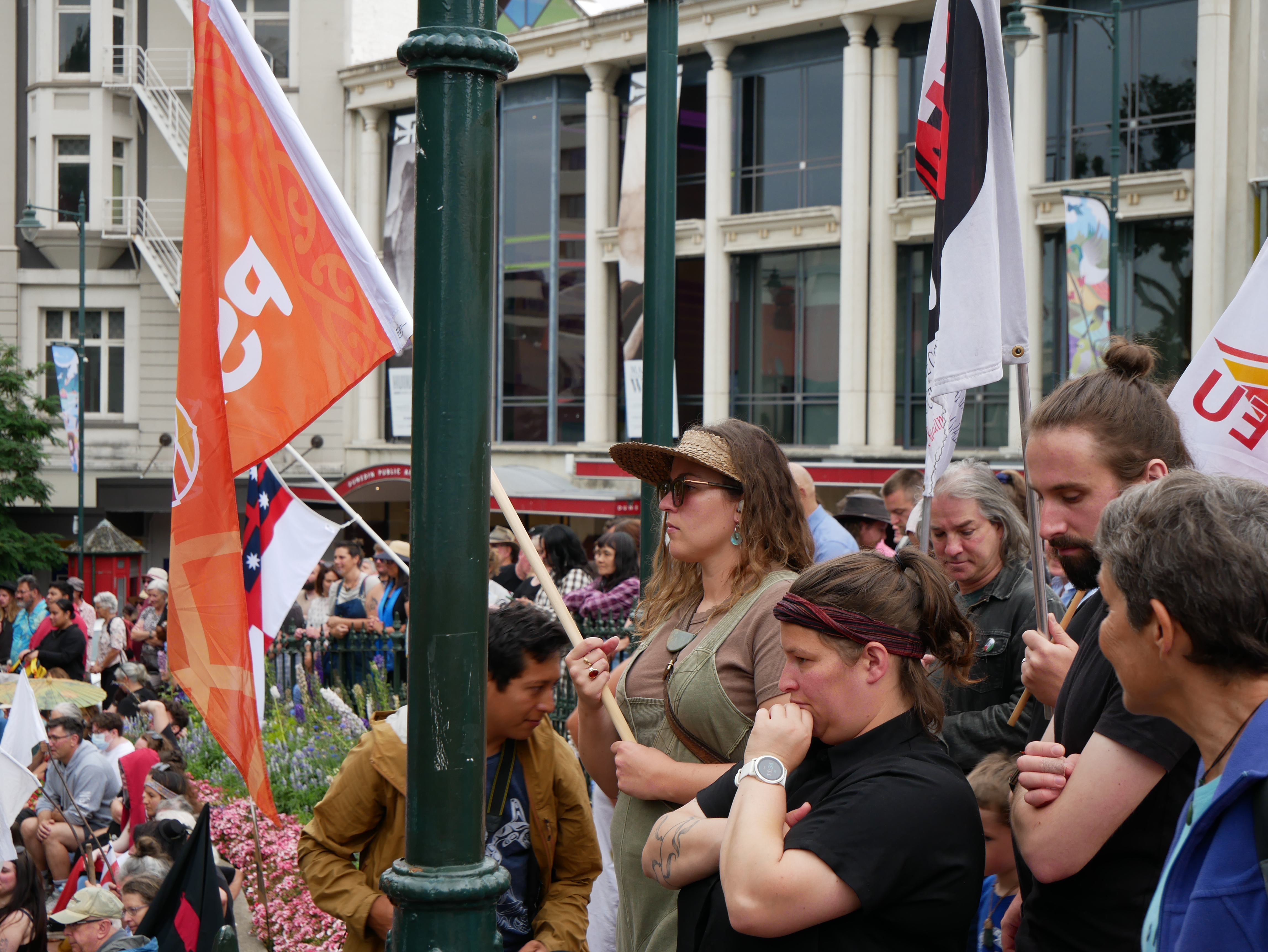
I think it worth noting the great deal of visible support the demonstration had from Pacific Island communities and unions. You will notice both crop up in the photo gallery below. It’s worth noting because much like the “rent-a-mob” epithet so common during the Key/English years (and before) for any protest nominally opposed to the government of the day, much Māori political protest is often dismissed as a solely “Māori thing” without much connection to the rest of the social body. A fairly transparent but not ineffective diversion to try cut off discontent from other sections of society, and a rather racist one which both treats Māori as an unthinking political monolith and establishes a basis for the patronizing “good Māori” trope whenever anyone can be found as a talking head to side against the demonstrators in whatever issue of the day it might be. While this country is often far more ethnically ambiguous than gets let on (thanks in part to a great deal of inter-communal marriage from quite early on in colonial history), I would nevertheless wager that a sizable chunk of the crowd were themselves Pākehā or otherwise traced no familial descent to Māori or the Pacific Islands more generally. These would be the people who might consider themselves, not just be considered from the outside, as Tangata Tiriti – people for whom living in New Zealand is self-conceptualized as an agreement of mutual respect with the Māori people (though, of course, fissures are inevitable).
I bring this up because it was a strong theme in the speeches made after the march. A great deal of camaraderie was encouraged across ethnic lines, within the context of mass opposition to the indigenous policies of the governing National-ACT-NZ First coalition and in particular the Treaty Principles Bill which at the time was still some months off (and as I finish this article is presently being churned through Parliamentary Counsel to turn its draft into a presentable potential law). It would be a lie to imply this is always the case, to much consternation at times, so a national idea (limited as it is) which recognizes and seeks to overcome that indigenous/non-indigenous division is welcome. This is a formulation in which a class politics opposed to divisions between native and immigrant labour at least has room to be debated, something which is not always the case (at least discursively). Though such a politics, if treated as a static and permanent feature, would run into the same problems as the national question necessarily implies anywhere, the room is made for necessary political and intellectual development.
And it must be said, this kind of debate is the exact thing that the other side of the fence denies the nominal left is capable of. Part of the scare-mongering in favor of the Treaty Principles Bill or scaling back co-governance is that the left and (implicitly) Māori generally are so censorious on issues of race that nobody who isn’t Māori or in lockstep favor of everything the left is would be genuinely threatened, essentially that Māori or the left should never be allowed to govern. They aren’t capable of such. This, of course, dovetails into any number of other arguments which get deployed to offer support for this general scaling back of hard won political and cultural gains by Māori. This image, however, is as much mirage as real. It relies on a fanciful and terminally online perception of reality which has little to no living expression beyond fringe sects and an alienated few. Māori political life is equally as diverse and fractious as Pākehā or anyone else’s political life, the notion of its monolithic and hegemonic nature is frankly a racist lie. And for all we on the left may joke at our own expense about our various flaws, it would be daft to suggest that a lack of diverse worldviews (often contrasted to one another) is one of those flaws.
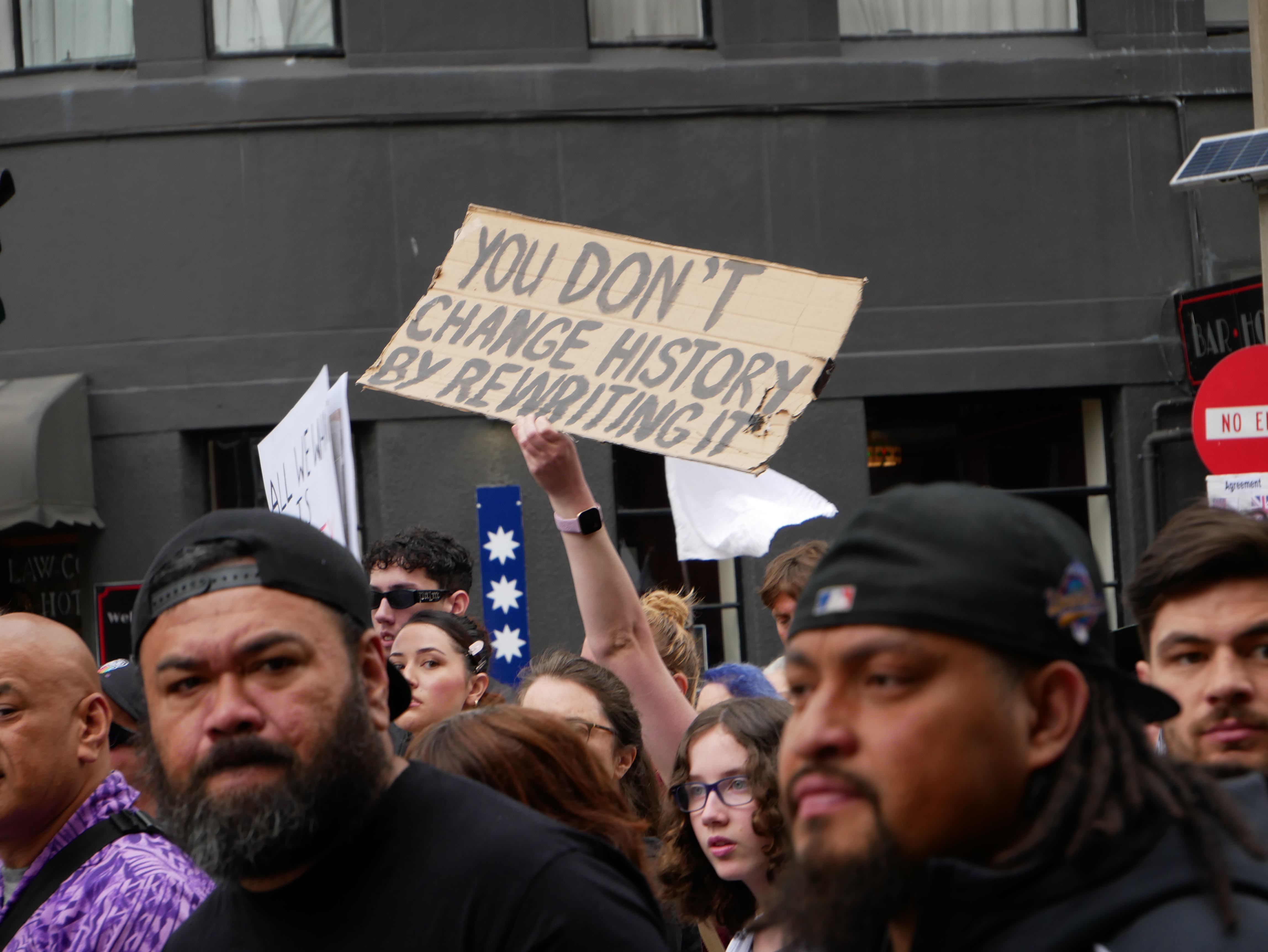
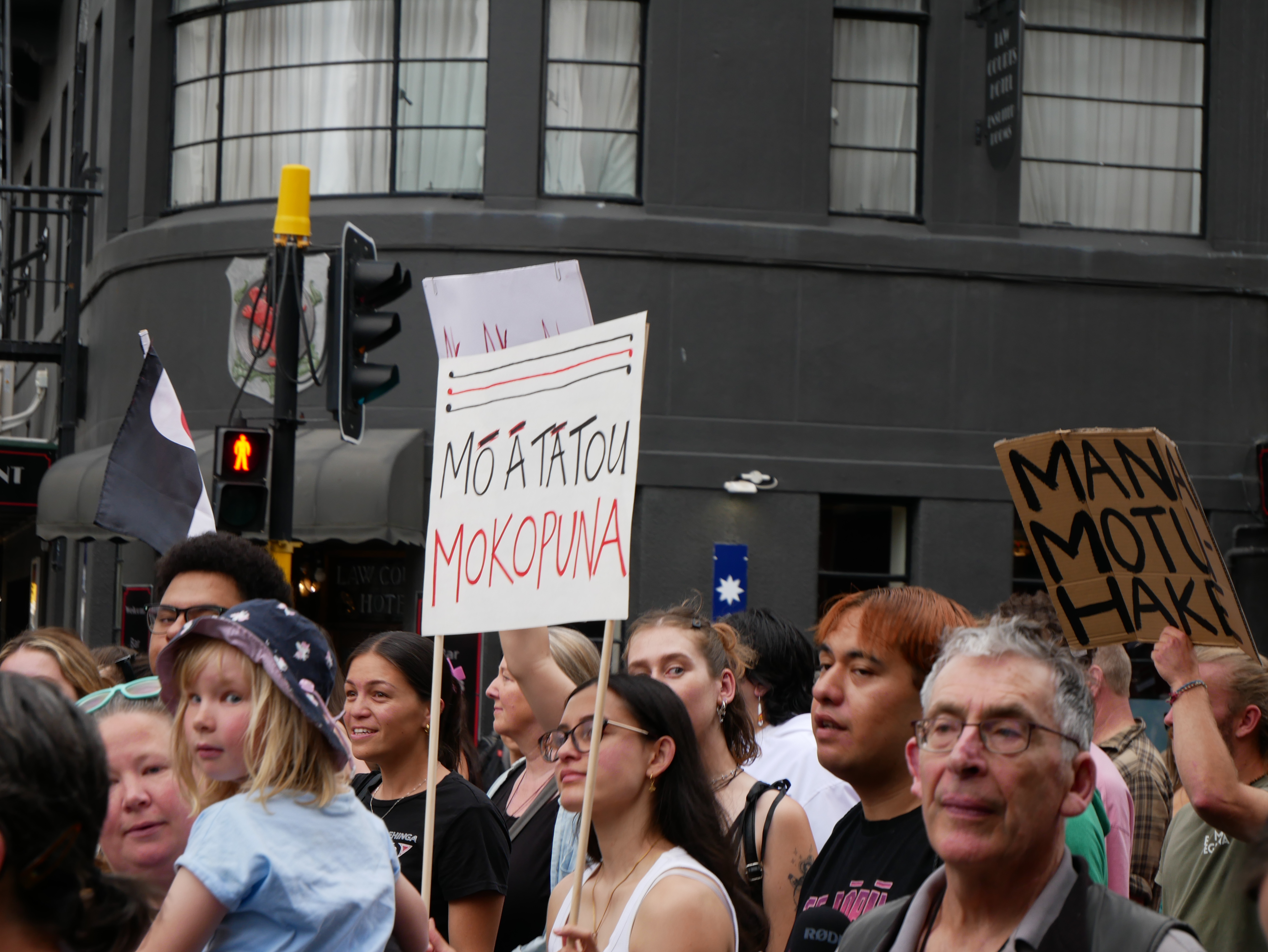
To bring things back to this year’s Waitangi Day, I would say that the right-wing canard of Waitangi Day as a solely “radical Māori” affair disconnected from “normal” New Zealand politics could not be further from the truth. The people there were not restricted by ethnic cleavage, and I doubt the crowd to be anything other than ordinary people who care just as much about more “bread and butter” affairs as anyone else. Even within the speeches there was a diversity of ideas present that were not always compatible, they were more importantly all working towards the same goal. In the context of the present political moment, it felt there was a lot of room to talk.
A final word on the day before I sign off. In terms of an analysis of the day from a social movement perspective, given the issues underpinning the scale of the demonstration are not going anywhere for awhile yet, there was a lot for the organisers to work with here. The crowd was passionate, and receptive to further action. This seems like a “build it and they will come” issue for those who want to push this politics further, and any future longer-term political infrastructure would have fertile ground to get a start in. Whether next year’s Waitangi Day in Ōtepoti is comparable to this one likely depends on how well in advance it begins to be organised, because I doubt the issues underpinning the large turnout this year will be gone by next.





 Notes South from Nowhere
Leave a comment